






Manila Bulletin
 Business
The Stock Market
PSE slams regulator over sandbox trade approval for crypto giant
Business
The Stock Market
PSE slams regulator over sandbox trade approval for crypto giant
Business
The Stock Market
PSE slams regulator over sandbox trade approval for crypto giant
PSE slams regulator over sandbox trade approval for crypto giant
Published Jul 8, 2026 02:07 pm


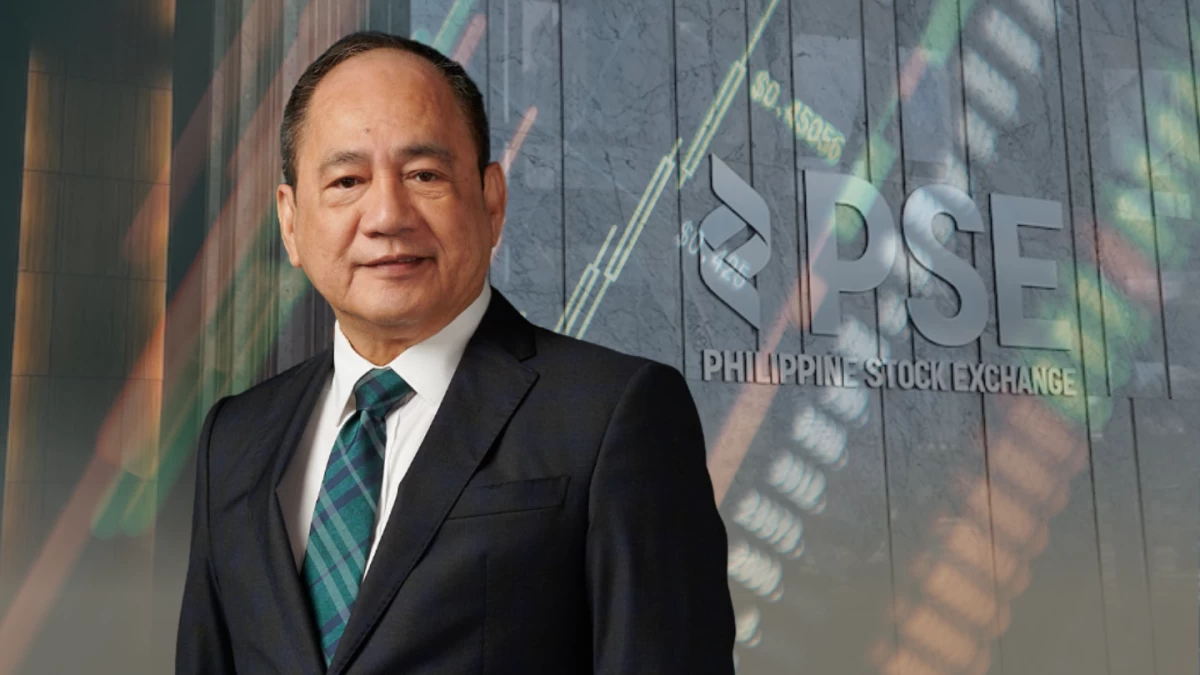
Ramon S. Monzon, PSE president and chief executive officer
The Philippine Stock Exchange (PSE) is pushing back against the securities regulator’s decision to open the door to cryptocurrency trading, warning that the move risks siphoning individual investors away from traditional equities and undermining capital market development.
The critique follows the Securities and Exchange Commission’s (SEC) approval of Blockshoals Technologies Inc.—a local partner of global digital-asset giant Binance—into its regulatory sandbox, a testing framework for nascent financial products.
“The SEC is supposed to be our partner in developing the capital market,” PSE President Ramon S. Monzon said in a briefing. “I’m also surprised why they allowed it. I know, for a long, long time, they have not allowed Binance to operate here or any other crypto exchange. So, it surprised me.”
Monzon emphasized that the local bourse does not intend to cede ground to digital assets, framing the development as the latest front in an ongoing battle for the disposable income of smaller investors.
Local equities have long competed against alternative channels, including foreign-exchange trading and online gambling platforms.
To counteract the shift, the PSE is turning its attention to structural barriers that have kept domestic retail participation low compared with regional peers. Monzon pointed to Vietnam as a model for retail-driven liquidity, noting that the neighboring market regularly generates about $900 million a day in total turnover, with individual investors driving roughly 80 percent of that volume.
The disparity is particularly stark given the similar economic profiles of the two nations. The Philippines has a per capita income of approximately $4,850, trailing slightly behind Vietnam's level of just over $5,000.
According to Vietnamese market participants, the country’s high retail volume is sustained by a vast network of sub-agents attached to its 80 to 85 licensed stock brokerages. Under that framework, independent agents capture 70 percent of trading commissions, leaving 30 percent for the clearing broker—an arrangement that incentivizes aggressive retail recruitment.
Monzon said he raised the structural contrast with SEC Chairman Francis E. Lim, urging a review of local licensing hurdles. Local stock agents must pass rigorous regulatory examinations, severely limiting headcount compared to the thousands of agents deployed by domestic insurance firms.
The bourse chief also criticized the Philippines' restrictive margin trading rules under the Securities Regulation Code. Current mandates require individual traders to post collateral equal to 150 percent of their trades. In contrast, Vietnam allows short-exposure coverage as low as 110 percent.
“Margin trading in the Philippines is practically not open to retail investors,” Monzon said. “So that's something that we will be working on also to encourage more volume from retail investors.”