






 Philippines
National
Marcos scraps selective school feeding, expands program nationwide
Philippines
National
Marcos scraps selective school feeding, expands program nationwide
Marcos scraps selective school feeding, expands program nationwide


At A Glance
- President Marcos said the government has expanded the school feeding program nationwide, ending the previous practice of limiting assistance to selected beneficiaries.
- The President said feeding all learners would help address hunger, improve classroom performance, and combat child stunting.
- Marcos also directed government agencies to prioritize buying food from local farmers and suppliers for the program.
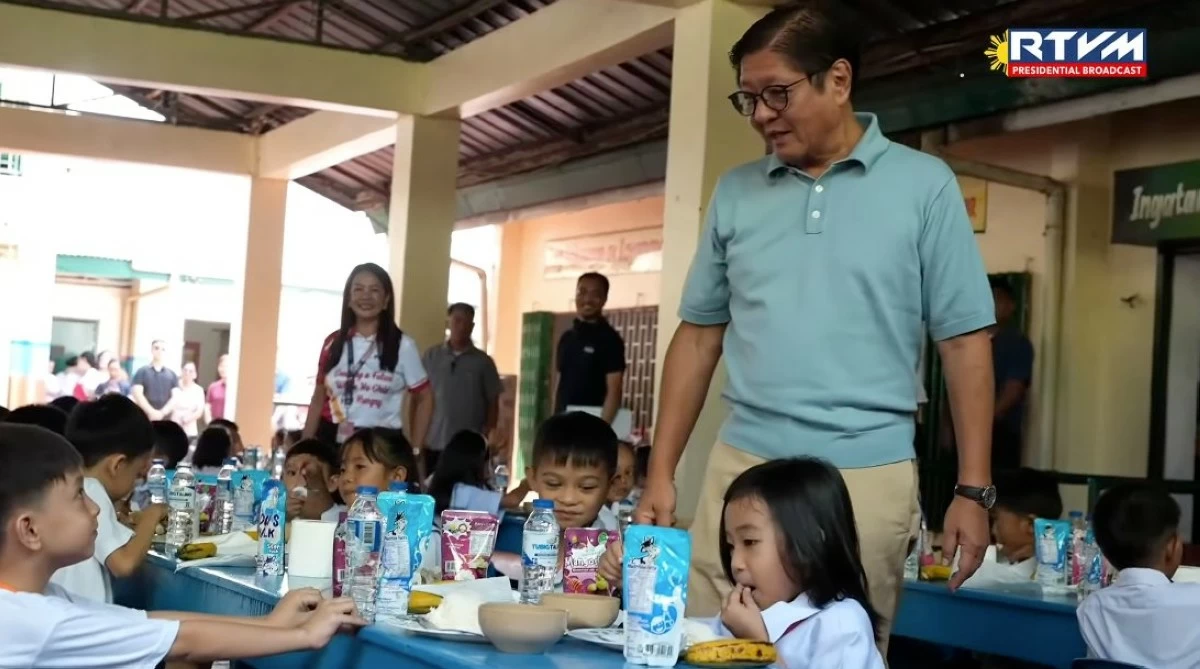
President Marcos said the government has expanded its school feeding program to cover more learners nationwide, saying no child should be left out simply because of beneficiary selection.
Leading the 2026 National Kick-off of the School-Based Feeding Program and Milk Feeding Activity in Pulilan, Bulacan, the President said the government decided to move away from the previous approach of identifying only selected undernourished learners for feeding assistance.
"Alam n'yo po, meron tayong feeding program noon pero kulang-kulang dahil namimili pa tayo kung sino 'yung kulang ang pagkain, hindi nakakain nang mabuti, kaya't hindi makapag-aral nang mabuti (We had a feeding program before, but it was limited because we still had to choose who was not getting enough food and therefore could not study well),” he said on Wednesday, July 8.
"Natuklasan naman namin na karamihan naman ay dapat talaga pakainin na lang natin. Huwag na natin piliin kung sino 'yung mga dapat bigyan at sino ang hindi kasama sa feeding program (We realized that most of them should simply be fed. We should no longer choose who should receive assistance and who should not be included in the feeding program),” he added.
The President said the initiative marks the first time the Philippines has implemented a nationwide school feeding program.
"Ito ay sa buong kasaysayan ng Pilipinas; hindi pa natin nagagawa ito, kaya ako ay natutuwa na mabuksan ngayon ang ating nationwide feeding program (This is something we have never done in the country's history, so I am pleased that we are launching our nationwide feeding program today),” he said.
The simultaneous rollout covered public schools across the country.
Fighting hunger, improving learning
Marcos said the expanded program seeks to remove hunger as a barrier to learning by ensuring that students no longer have to worry about their next meal while attending school.
"Napakalaking bagay para sa akin dahil alam naman natin na kung minsan ang nagiging dahilan kung bakit hindi makapag-aral nang mabuti ang mga kabataan ay kulang sa pagkain (This is very important to me because we know that one reason young people are unable to study well is that they do not have enough food),” he said.
"Tinanggal na natin ang problemang 'yan para tiyak tayo na lahat ng mga pumapasok na nag-aaral ay hindi na kailangang alalahanin ang kanilang kakainin (We have removed that problem so that we can be sure students no longer have to worry about what they will eat),” he added.
The Department of Education (DepEd)'s School-Based Feeding Program has traditionally targeted undernourished kindergarten and elementary learners. The expanded implementation forms part of the administration's broader efforts to improve nutrition, classroom attendance, and learning outcomes.
Addressing child stunting
The President also said the program would help address child stunting and other health concerns associated with malnutrition.
"Meron po tayo kasing problema. Marami po sa ating mga kabataan ay parang masyadong maliit dahil kulang sa pagkain, stunted kung tawagin (We have a problem because many of our children are smaller than they should be due to lack of food—what we call stunting),” he said.
"At madalas magkasakit (And they often get sick),” he added.
According to the government, reducing malnutrition is among its priorities, as studies have shown that poor nutrition affects children's physical growth, cognitive development, and academic performance.
Buying local
Marcos said the nationwide feeding program would also provide economic opportunities for local farmers and food producers.
He said the Department of Agriculture (DA) has been tasked with helping source food supplies while government agencies have been instructed to prioritize purchasing locally produced goods.
"Hindi kami bumibili sa malalaking grocery (We are not buying from large grocery chains),” the President said.
"Hanggat maaari, lahat ng ibinibigay ng pamahalaan, hindi lamang dito sa feeding program, pati sa DSWD, lahat po ng ahensiya ng gobyerno, inuuna po ang pagbili ng mga lokal na produkto (As much as possible, everything procured by the government—not only for the feeding program but also by the Department of Social Welfare and Development and other government agencies—will prioritize locally produced products),” he added.
According to President Marcos, local suppliers participating in the program would now have a stable market for their products.
"Mula ngayon, garantisado na ang kanilang merkado dahil dito namin dadalhin para ipakain natin sa ating mga kabataan (From now on, their market is guaranteed because this is where we will source the food that will be served to our children),” he said.
Marcos said investing in children's nutrition is ultimately an investment in the country's future.
"Alam naman po natin ang pinakamahalaga sa ating mga buhay, ang ating mga anak (We all know that the most important people in our lives are our children),” he said.
"Kaya sila ang inuuna natin na alagaan... para hinanda na natin ang ating mga kabataan para sa kanilang kinabukasan at sa kinabukasan ng Pilipinas (That is why we are prioritizing their welfare... so that we can prepare our young people for their future and for the future of the Philippines),” he added.