






 Philippines
National
Hontiveros asks defense if Lopez's detention prompted VP Sara's alleged threats; counsel says yes
Philippines
National
Hontiveros asks defense if Lopez's detention prompted VP Sara's alleged threats; counsel says yes
Hontiveros asks defense if Lopez's detention prompted VP Sara's alleged threats; counsel says yes


At A Glance
- On the third day of the impeachment trial of Vice President Sara Duterte, Sen. Risa Hontiveros posed this question to the defense panel after cross-examining National Bureau of Investigation (NBI) Senior Agent John Mark Calilung who also presented the USB drive containing the supposed video of the online press briefing where Lopez emotionally lamented the attempt of the House panel to transfer and commit her to a women's correctional facility in the middle of the night.
Senator-judge Risa Hontiveros on Wednesday, July 8, managed to question the defense panel if indeed Vice President Sara Duterte’s alleged threats against President Ferdinand “Bongbong” Marcos Jr., his wife First Lady Liza Araneta-Marcos and former House Speaker Martin Romualdez was prompted by the detention of her Chief of Staff Atty. Zuleika Lopez.
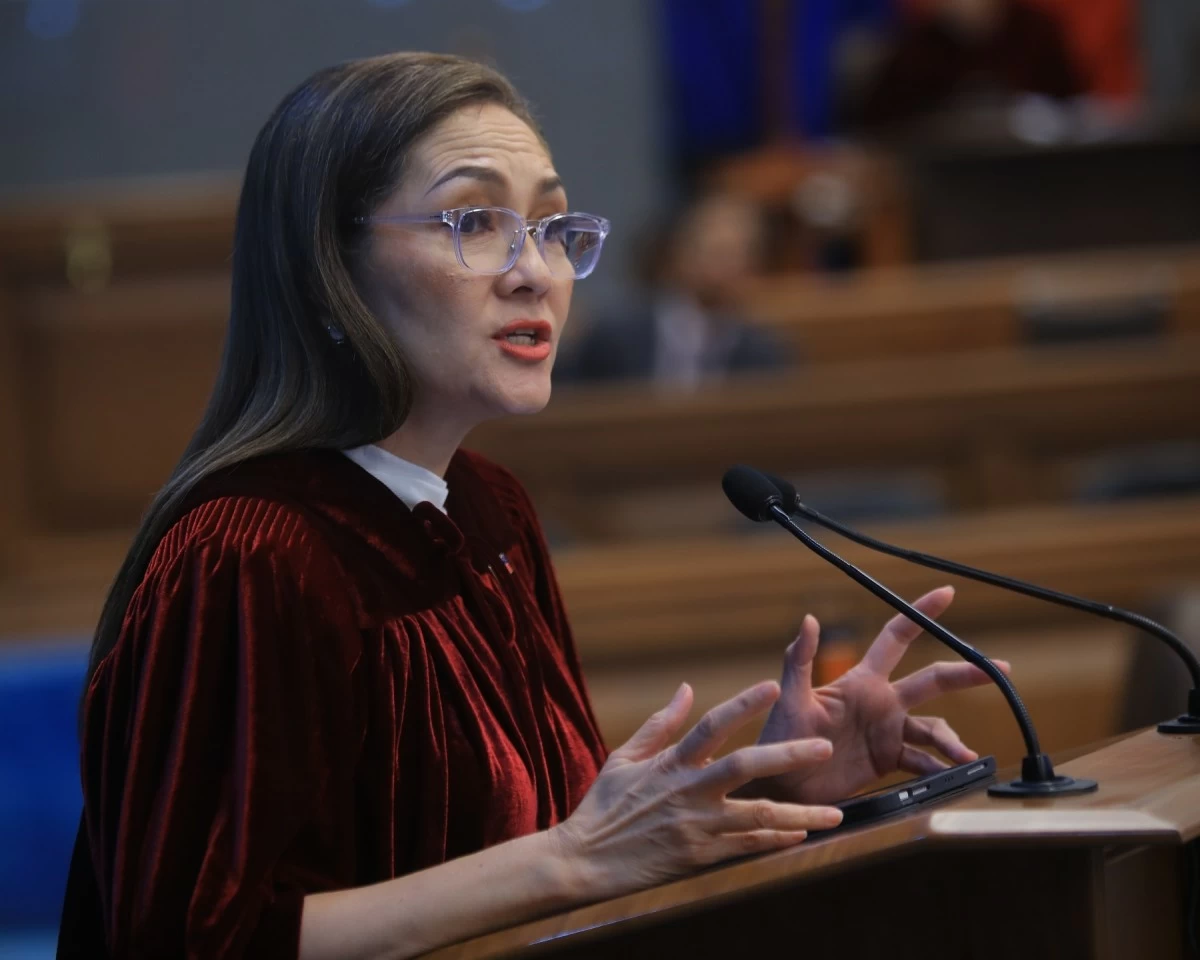
Atty. Carlo Narvasa, a member of Duterte’s defense team, answered in the affirmative, pointing to the incident in November 2023, when Lopez was briefly detained at the Batasan Pambansa Complex after being cited in contempt by the House Committee on Good Governance and Public Accountability.
“Yes, your honor. There was a system of oppression made by the House of Representatives even before the mini trial,” Narvasa said in response to the senator.
On the third day of the impeachment trial, the defense panel cross-examined National Bureau of Investigation (NBI) Senior Agent John Mark Calilung who also presented the USB drive containing the supposed video of the online press briefing where Lopez emotionally lamented the attempt of the House panel to transfer and commit her to a women’s correctional facility in the middle of the night.
This prompted Hontiveros to ask the defense about the relevance of the video and to clarify if the evidence presented was meant to justify the alleged threats or incitements the Vice President made against the President, Mrs. Marcos and Romualdez.
Narvasa agreed and mentioned the committee headed by Rep. Joel Chua who led the investigation on the Vice President and her people.
It can be recalled that Chua, who heads the House panel on public accountability launched an investigation into the alleged misuse of P612.5-million worth of confidential funds by the Office of the Vice President (OVP) and the Department of Education (DepEd), which Duterte previously headed.
Narvasa argued that even if Lopez was responding to the House panel’s questions “faithfully and to the best of her ability,” she was still cited in contempt and detained by the committee.
“Even if she was answering questions faithfully and to the best of her ability, she was cited in contempt, detained. Her lawyer was not allowed to be with her when they were trying to detain her at the women’s correctional facility your honor,” Narvasa said, again, responding to Hontiveros.
When Hontiveros asked if it is the defense team’s position that the alleged grave threats made by the Vice President can be excused if there is a legitimate reason for making a threat, the defense counsel also affirmed this.
But Impeachment Court Presiding Officer Sen. Francis “Chiz” Escudero immediately issued a reminder to all senator-judges to be circumspect in asking lawyers of both parties that would make them draw immediate conclusions to the case.
“Though he already answered in the affirmative, may I, or we’d like to remind our senator-judges to be cautious in making counsel for either party from making conclusion from law and fact, instead of presenting witnesses that they will present through direct or cross-examination or re-cross-examination,” Escudero reiterated.
“Because if he answers, Senator-judge Hontiveros, that will effecitvely place on record the conclusion of fact and law, not drawn from a witness,” he said, addressing the lawmaker.
Hontiveros, however, defended her position even as she said she is accepting and submitting to the ruling of the presiding officer.
“I have also carefully studied past impeachment trials, and the approach to allowing questions was considerably more liberal back then—questions posed by senator-judges simply to clarify various points,” Hontiveros said.