

ADVERTISEMENT

El Niño farm losses push jobless Filipinos to 2.5 million in May

Published Jul 8, 2026 01:14 pm

At A Glance

  • Jobless Filipinos increased in number by nearly half a million to 2.5 million in May 2026 from 2.03 million a year earlier, driven largely by employment losses in the agriculture and forestry sectors as weather-related disruptions, including El Niño, weighed on opportunities.
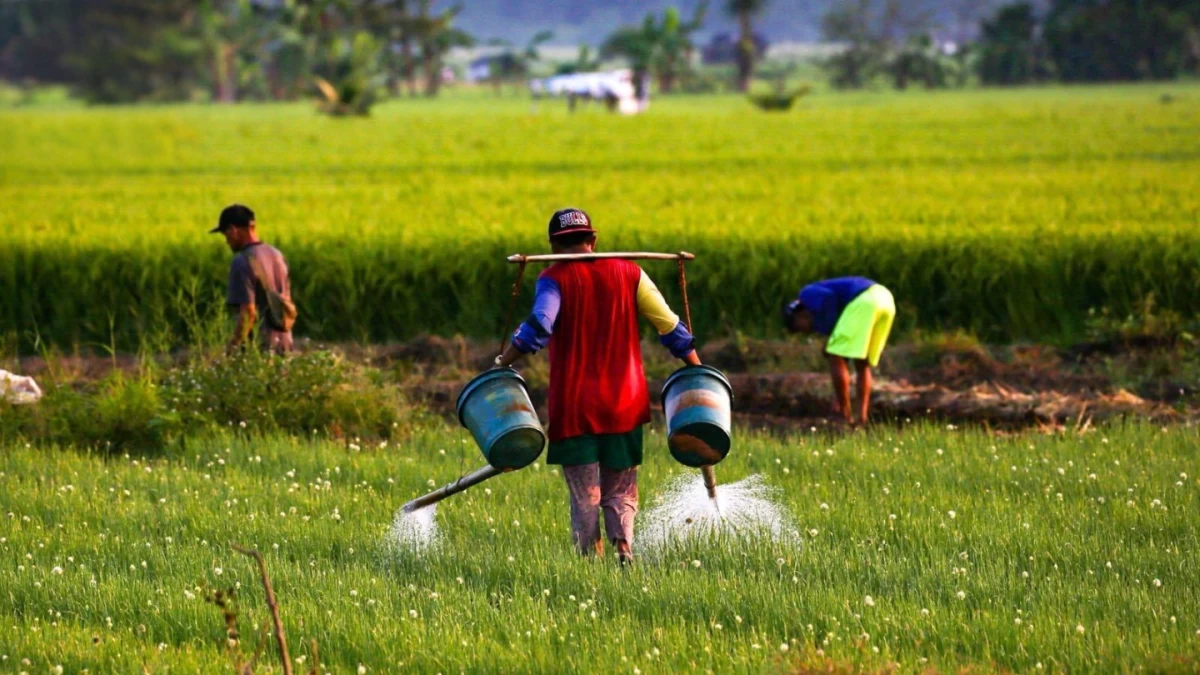
Farmers cultivate the land and water spring onions in Brgy. Sulib, Pangil, Laguna on April 12, 2026. This preparation ensures the plots are ready for the next planting cycle. (Photo by John Louie Abrina I Manila Bulletin)

Jobless Filipinos increased in number by nearly half a million to 2.5 million in May from 2.03 million a year ago, driven largely by employment losses in the agriculture and forestry sectors as weather-related disruptions, including El Niño, weighed on opportunities.

National Statistician Claire Dennis S. Mapa reported on Wednesday, July 8, that the magnitude of the country’s unemployment climbed by 23.2 percent from May 2025 and 3.7 percent from 2.41 million in April.

This translated to a higher unemployment rate, which climbed to 4.8 percent in May from 3.9 percent in May 2025. It also stood higher month-on-month from 4.7 percent in April.

According to Mapa, the sector that sustained the biggest losses was agriculture and forestry. “This was likely due to the weather conditions in May 2026. As we know, we were experiencing El Niño, and that is one possible factor,” Mapa said.

Mapa noted that employment losses were concentrated in specific crop industries, particularly the growing of paddy rice, corn excluding young corn or vegetables, and spices, aromatic, drug, and pharmaceutical crops.

Philippine Statistics Authority (PSA) data showed that the agriculture and forestry subsector alone shed 905,000 workers year-on-year.

Another significant contributor to the job losses was the “other service activities” subsector, which saw a reduction of 442,000 individuals. Mapa suggested this may be indicative of a shift in consumer behavior.

He said losses in domestic services accounted for the largest decline in this subsector, particularly among household helpers, drivers, and gardeners. “It’s possible that households are tightening their spending,” Mapa said, resulting in the layoff of household workers.

Similarly, a decline in employment was also observed in public administration and defense, which dropped by 213,000, and wholesale and retail trade, which saw 141,000 fewer workers compared with May 2025.

Some sectors showed resilience, with the administrative and support service subsector—driven by call centers and private security—adding 329,000 jobs, while mining and quarrying grew by 184,000.

Human health and social work activities also posted a significant gain of 173,000 workers year-on-year.

Consequently, the total number of employed persons was recorded at 49.63 million, a decrease from 50.29 million a year ago.

In contrast to rising unemployment, the underemployment rate improved to 12.2 percent in May from 13.1 percent in the same month last year and 15.2 percent in April.

Underemployed persons are defined as those already employed who express the desire to have additional hours of work in their present job, have an additional job, or have a new job with longer hours of work.

Those who remained employed worked longer hours on average, the survey found, with the average workweek increasing to 41.1 hours during the month from 39.8 hours in May last year.

For the first five months of 2026, the unemployment rate remained elevated at 5.1 percent, higher than four percent in the same period in 2025. This translated to an average of 2.62 million unemployed Filipinos, up from 2.03 million in the same period last year.

Chinabank Research said that while the May labor market remained soft, it still “performed better than expected,” considering that the Philippines continued to face persistent uncertainties and price pressures stemming from the Middle East war.

“Improving business sentiment as global tensions ease could support stronger economic activity and hiring in the coming months,” Chinabank said.

“However, downside risks also remain, particularly from the potential impact of El Niño on the agricultural sector and the effects of minimum wage hikes on labor-intensive industries, such as food services and wholesale and retail trade,” it added.

Related Tags

Philippine Statistic Authority (PSA) Chinabank Research El Niño
ADVERTISEMENT
.most-popular .layout-ratio{ padding-bottom: 79.13%; } @media (min-width: 768px) and (max-width: 1024px) { .widget-title { font-size: 15px !important; } }

{{ articles_filter_1561_widget.title }}

.most-popular .layout-ratio{ padding-bottom: 79.13%; } @media (min-width: 768px) and (max-width: 1024px) { .widget-title { font-size: 15px !important; } }

{{ static_articles_1562_widget.title }}

.most-popular .layout-ratio{ padding-bottom: 79.13%; } @media (min-width: 768px) and (max-width: 1024px) { .widget-title { font-size: 15px !important; } }

{{ articles_filter_1563_widget.title }}

{{ articles_filter_1564_widget.title }}

.mb-article-details { position: relative; } .mb-article-details .article-body-preview, .mb-article-details .article-body-summary{ font-size: 17px; line-height: 30px; font-family: "Libre Caslon Text", serif; color: #000; } .mb-article-details .article-body-preview iframe , .mb-article-details .article-body-summary iframe{ width: 100%; margin: auto; } .read-more-background { background: linear-gradient(180deg, color(display-p3 1.000 1.000 1.000 / 0) 13.75%, color(display-p3 1.000 1.000 1.000 / 0.8) 30.79%, color(display-p3 1.000 1.000 1.000) 72.5%); position: absolute; height: 200px; width: 100%; bottom: 0; display: flex; justify-content: center; align-items: center; padding: 0; } .read-more-background a{ color: #000; } .read-more-btn { padding: 17px 45px; font-family: Inter; font-weight: 700; font-size: 18px; line-height: 16px; text-align: center; vertical-align: middle; border: 1px solid black; background-color: white; } .hidden { display: none; }
function initializeAllSwipers() { // Get all hidden inputs with cms_article_id document.querySelectorAll('[id^="cms_article_id_"]').forEach(function (input) { const cmsArticleId = input.value; const articleSelector = '#article-' + cmsArticleId + ' .body_images'; const swiperElement = document.querySelector(articleSelector); if (swiperElement && !swiperElement.classList.contains('swiper-initialized')) { new Swiper(articleSelector, { loop: true, pagination: false, navigation: { nextEl: '#article-' + cmsArticleId + ' .swiper-button-next', prevEl: '#article-' + cmsArticleId + ' .swiper-button-prev', }, }); } }); } setTimeout(initializeAllSwipers, 3000); const intersectionObserver = new IntersectionObserver( (entries) => { entries.forEach((entry) => { if (entry.isIntersecting) { const newUrl = entry.target.getAttribute("data-url"); if (newUrl) { history.pushState(null, null, newUrl); let article = entry.target; // Extract metadata const author = article.querySelector('.author-section').textContent.replace('By', '').trim(); const section = article.querySelector('.section-info ').textContent.replace(' ', ' '); const title = article.querySelector('.article-title h1').textContent; // Parse URL for Chartbeat path format const parsedUrl = new URL(newUrl, window.location.origin); const cleanUrl = parsedUrl.host + parsedUrl.pathname; // Update Chartbeat configuration if (typeof window._sf_async_config !== 'undefined') { window._sf_async_config.path = cleanUrl; window._sf_async_config.sections = section; window._sf_async_config.authors = author; } // Track virtual page view with Chartbeat if (typeof pSUPERFLY !== 'undefined' && typeof pSUPERFLY.virtualPage === 'function') { try { pSUPERFLY.virtualPage({ path: cleanUrl, title: title, sections: section, authors: author }); } catch (error) { console.error('ping error', error); } } // Optional: Update document title if (title && title !== document.title) { document.title = title; } } } }); }, { threshold: 0.1 } ); function showArticleBody(button) { const article = button.closest("article"); const summary = article.querySelector(".article-body-summary"); const body = article.querySelector(".article-body-preview"); const readMoreSection = article.querySelector(".read-more-background"); // Hide summary and read-more section summary.style.display = "none"; readMoreSection.style.display = "none"; // Show the full article body body.classList.remove("hidden"); } document.addEventListener("DOMContentLoaded", () => { let loadCount = 0; // Track how many times articles are loaded const offset = [1, 2, 3, 4, 5, 6, 7, 8, 9, 10]; // Offset values const currentUrl = window.location.pathname.substring(1); let isLoading = false; // Prevent multiple calls if (!currentUrl) { console.log("Current URL is invalid."); return; } const sentinel = document.getElementById("load-more-sentinel"); if (!sentinel) { console.log("Sentinel element not found."); return; } function isSentinelVisible() { const rect = sentinel.getBoundingClientRect(); return ( rect.top < window.innerHeight && rect.bottom >= 0 ); } function onScroll() { if (isLoading) return; if (isSentinelVisible()) { if (loadCount >= offset.length) { console.log("Maximum load attempts reached."); window.removeEventListener("scroll", onScroll); return; } isLoading = true; const currentOffset = offset[loadCount]; window.loadMoreItems().then(() => { let article = document.querySelector('#widget_1690 > div:nth-last-of-type(2) article'); intersectionObserver.observe(article) loadCount++; }).catch(error => { console.error("Error loading more items:", error); }).finally(() => { isLoading = false; }); } } window.addEventListener("scroll", onScroll); });

Sign up by email to receive news.