






Manila Bulletin
 Philippines
National
NBI witness confirms VP Sara death threat video in impeachment trial
Philippines
National
NBI witness confirms VP Sara death threat video in impeachment trial
Philippines
National
NBI witness confirms VP Sara death threat video in impeachment trial
NBI witness confirms VP Sara death threat video in impeachment trial
Published Jul 7, 2026 08:28 pm


At A Glance
- NBI Senior Agent John Mark Calilung testifies before the Senate impeachment court, authenticating video evidence of Vice President Sara Duterte's death threats against President Marcos and the First Family.
- Calilung details the forensic process, including screen recording, hash value generation, and preservation requests to Meta, while prosecutors present both the Nov. 23 and Oct. 18, 2024 recordings to support Article IV.
- Prosecutors emphasize that Duterte's repeated violent remarks raise constitutional questions on values expected of high officials, framing the threats as culpable violations and betrayal of public trust.
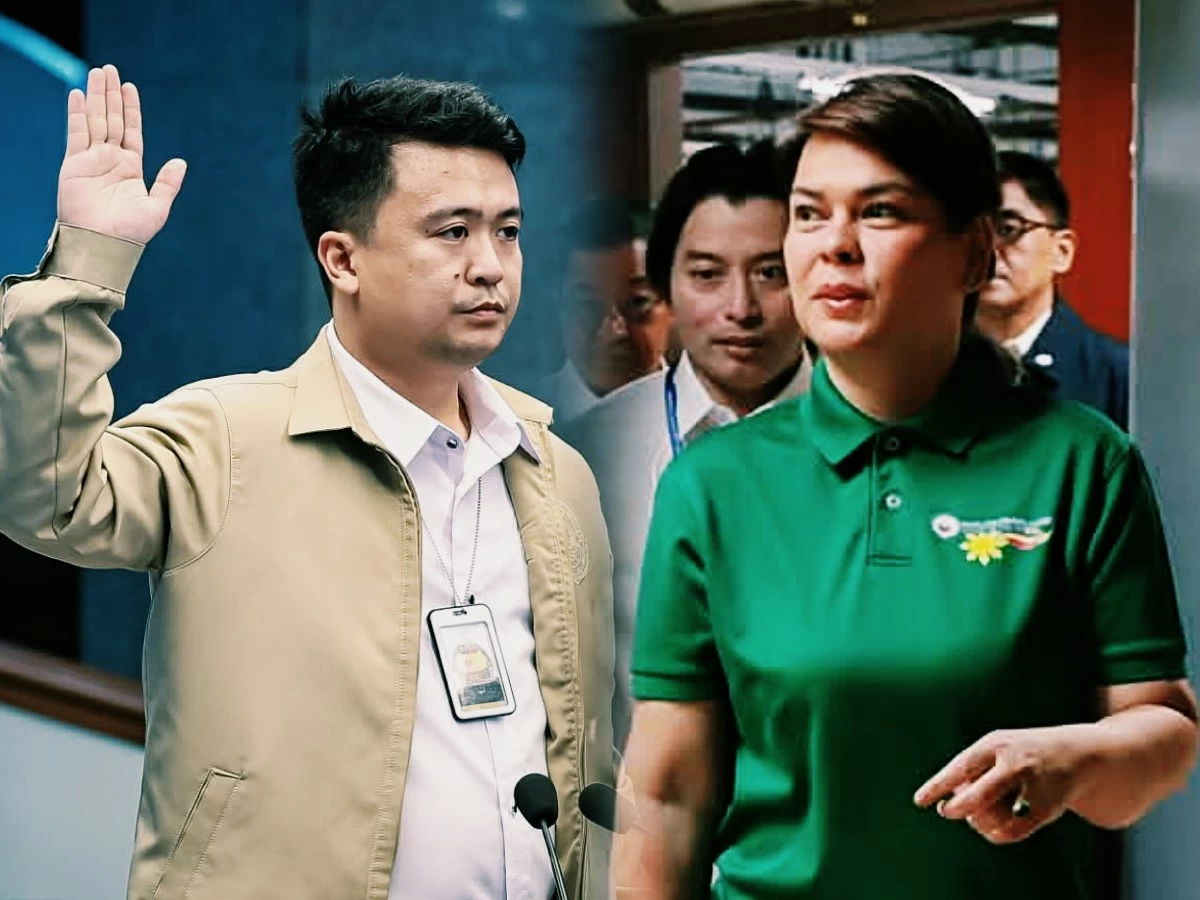
NBI Senior Agent John Mark Calilung (left), Vice President Sara Duterte (Senate PRIB)
National Bureau of Investigation (NBI) Senior Agent John Mark Calilung was able to confirm before the Senate impeachment court on Tuesday, July 7 a video supporting the allegation that Vice President Sara Duterte made death threats to President Marcos and other members of the First Family.
Calilung--a cybercrime investigator--was the first witness to be placed on the stand by the House prosecution panel tasked to gain a conviction on Duterte.
Lawyer Amando Virgil Ligutan, a counsel for the House prosecutors,was the one who carried out direct examination on the witness during the second day of the high-stakes proceedings.
The respondent made the now-infamous death threats during a virtual press conference on Nov. 23, 2024 while she was at the House of Representatives.
Calilung told the senator-judges that he was the “agent on case”, and that his role was to gather evidence for the investigation into Duterte’s threats against Marcos, his wife First Lady Liza Araneta-Marcos, and his cousin former House Speaker Martin Romualdez.
“It means that I viewed, identified, preserved, collected, and authenticated digital evidence in the course of the investigation,” Calilung said during direct examination.
Among the evidence gathered by the NBI was the video of Duterte’s online press briefing, as shared on Facebook by former presidential spokesperson Harry Roque.
The investigator testified that he authenticated the recording by comparing a screen-recorded copy with the original livestream.
“After screen recording, there’s an output video. I compared the output video with the Nov. 23, 2024 video and ensured that the contents are identical,” he said.
“After ensuring that the contents are identical, I generated a hash value calculation on the video to ensure that the video won’t be tampered until presented in court,” the witness said.
After Calilung identified the relevant timestamp, prosecutors played the authenticated portion of the recording before the impeachment court.
In the video, Duterte said: “Huwag kang mag-alala, ma’am, sa security ko, kasi may kinausap na ako na tao. Sinabi ko sa kanya, kapag pinatay ako, patayin mo si BBM (Bongbong Marcos), si Liza Araneta, at si Martin Romualdez. No joke. No joke. Nagbilin na ako, ma’am, ’pag namatay ako, sabi ko, huwag ka tumigil, ha, hanggang ‘di mo mapatay sila. And then he said yes.”
(Don’t worry, ma’am, about my security, because I already spoke to someone. I told him, if I get killed, kill BBM, Liza Araneta, and Martin Romualdez. No joke. No joke. I already instructed him, ma’am, if I die, don’t stop until you kill them. And then he said yes.)
Ironically, Duterte, the one who made these remarks, dropped by at the Senate earlier Tuesday, but did not stay for the trial proper.
Calilung testified that investigators focused on that statement, which he identified as appearing between the 1-hour, 15-minute mark and the 1-hour, 17-minute, 18-second mark of the more than two-hour recording.
He said the NBI also submitted a preservation request to Meta, Facebook’s parent company, to preserve the recording and later executed an Affidavit of Authentication of Digital Evidence documenting the forensic process.
Calilung further testified that the NBI conducted an open-source investigation to determine whether Duterte had made similar statements before the Nov. 23 briefing.
'Cut off his head'
Investigators also identified an Oct. 18, 2024 online press conference in which Duterte made remarks directed at President Marcos, including statements about imagining "cutting off his head"; criticizing his leadership; and threatening to exhume the remains of his father, late President Ferdinand Marcos Sr. and throw them into the West Philippine Sea (WPS).
The prosecution presented the earlier recording to place Duterte’s Nov. 23 remarks in its proper context, and said both videos support Article IV of the articles of impeachment, covering culpable violation of the Constitution and betrayal of public trust over alleged grave threats.
Calilung also authenticated official statements issued by the Philippine National Police (PNP), the Armed Forces of the Philippines (AFP), the National Security Council (NSC) and other government agencies in response to Duterte’s remarks.
He told the impeachment court that he personally captured screenshots of the AFP’s official website, the PNP’s official Facebook page and the NSC statement posted on the Presidential Communications Office website using his laptop.
Calilung testified that he preserved electronic copies of the screenshots, printed them and submitted them to the House Committee on Justice, which initiated the impeachment proceedings last Feb. 23.
Through the witness' testimony, the prosecution sought to establish not only the authenticity of Duterte’s recorded statements but also that the country’s principal law enforcement, military and national security institutions officially responded to the remarks, placing those responses into the evidentiary record before the Senate impeachment court.
'Violent' public official?
Solon-prosecutor Iloilo 3rd district Rep. Lorenz Defensor, who laid the basis for Calilung's appearance Tuesday, said the discussion on the fourth article touches on a larger constitutional question.
“At the heart of this impeachment proceeding lies a fundamental question para sa ating lahat (for all of us): Can we continue to entrust one of the highest constitutional offices to a public official who, on multiple occasions, purposely and willfully, and repeatedly, resorted to threats of violence against the very institutions that she swore to uphold and protect?” he said.
Defensor said the proceedings also challenge the nation to define the values expected of those entrusted with its highest offices.
“What values do we expect from those who occupy the highest office in the land? Delicadeza, palabra de honor, integrity, and loyalty to your oath of office. These are not outdated ideals; they are the foundations of honorable public office,” he noted.