






 Business
Trade & Industry
Meat imports jump 22% at end-May as local production remains subpar
Business
Trade & Industry
Meat imports jump 22% at end-May as local production remains subpar
Meat imports jump 22% at end-May as local production remains subpar


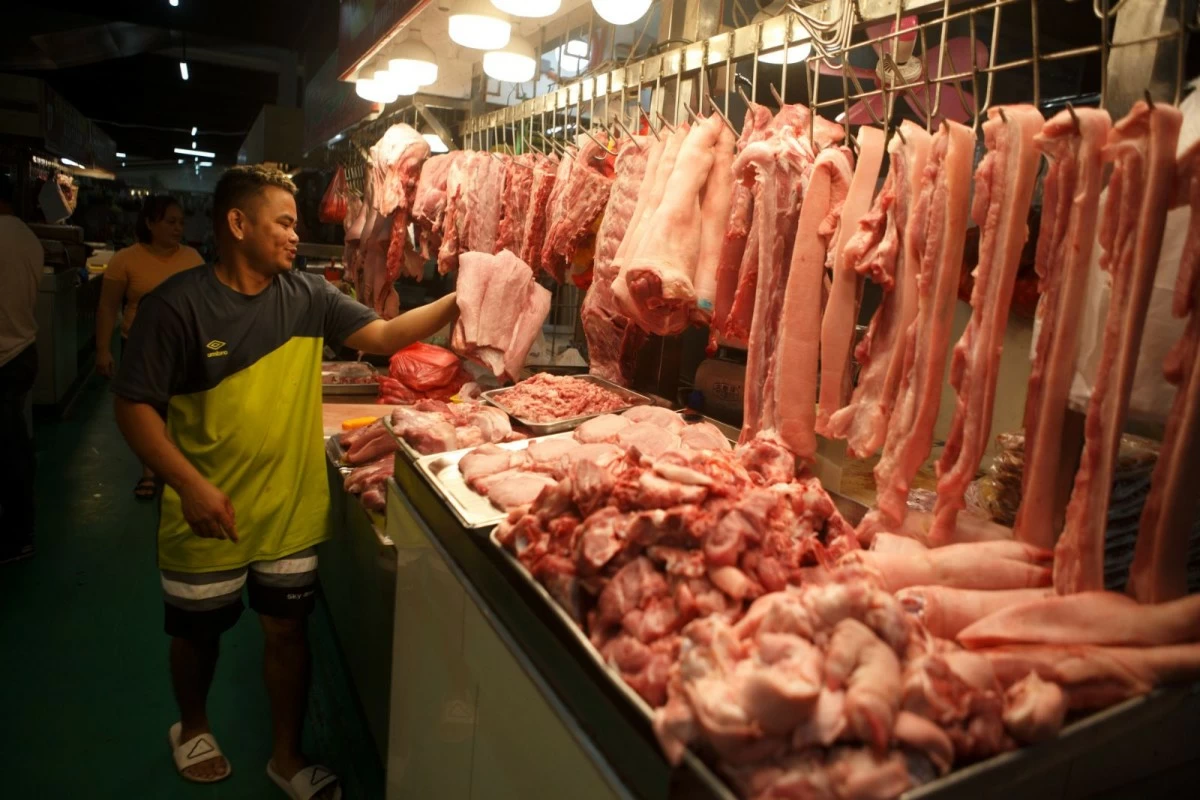
The country’s meat imports in the first five months of the year rose by nearly 22 percent to more than 720,000 metric tons (MT), as shipments from abroad continued to supplement subpar domestic production.
Citing the latest Bureau of Customs (BOC) data, the Congressional Policy and Budget Research Department (CPBRD) said the country imported 726,936 MT of meat products from January to May, higher than the 596,619 MT recorded in the same period last year.
The House of Representatives’ think tank said the country continues to rely on imported meat to augment local production, which is still reeling from the impact of animal diseases such as African swine fever (ASF).
“This comes at a time when global demand is steadily increasing and is expected to continue rising through 2034, with the Philippines projected to be one of the top meat importers in Asia,” CPBRD said.
BOC data showed that pork imports remained the country’s top meat commodity during the five-month period, with total volume growing by over 23 percent to 395,022 MT from 319,665 MT last year.
During the same period, chicken imports expanded by 19 percent to 244,959 MT from 205,232 MT. In addition, purchases of beef from abroad increased by 21 percent to 86,955 MT from 71,722 MT a year ago.
CPBRD said these meat imports were largely frozen cuts, accounting for approximately 544,900 MT, or around 75 percent of the total import volume from January to May.
Rather than fresh or chilled alternatives, CPBRD said deep-freezing is a necessity for the Philippines given the geographic distances and extended transit times from major international suppliers.
“Freezing also allows for strategic stockpiling in cold storage facilities, enabling traders to build inventory buffers while effectively slowing microbial growth and helping prevent spoilage before the meat reaches processing facilities and retail chains,” it said.
Of the country’s top three meat imports, CPBRD said Brazil maintained its position as the leading supplier with around 396,600 MT, or 55 percent of the total import volume by the end of May.
CPBRD said the South American country’s dominance in the import market is driven by its aggressive pricing, massive domestic production capacity, and relative stability.
As of May, the BOC had collected a total of ₱10.47 billion in tariff and value-added tax (VAT) revenues from pork, chicken, and beef imports, according to CPBRD.
These funds, along with revenues generated from other livestock, poultry, and dairy imports, will be used to finance the Animal Competitiveness Enhancement Fund (AnCEF), as mandated by the Animal Industry Development and Competitiveness Act.
AnCEF aims to strengthen the local livestock, poultry, and dairy sectors through a guaranteed annual allocation of ₱20 billion over a 10-year period.
Agriculture Secretary Francisco Tiu Laurel said last week that this fund will likely be integrated into the 2027 budget of the Department of Agriculture (DA), instead of remaining separate, due to the country’s tighter fiscal space.
Last year, the government collected ₱22.42 billion in revenues from imported meat products, an increase of nearly 30 percent from the ₱17.28 billion recorded in 2024.