ADVERTISEMENT

Manila Water cuts Angat reliance as El Niño threatens water supply

Published Jul 7, 2026 01:53 pm
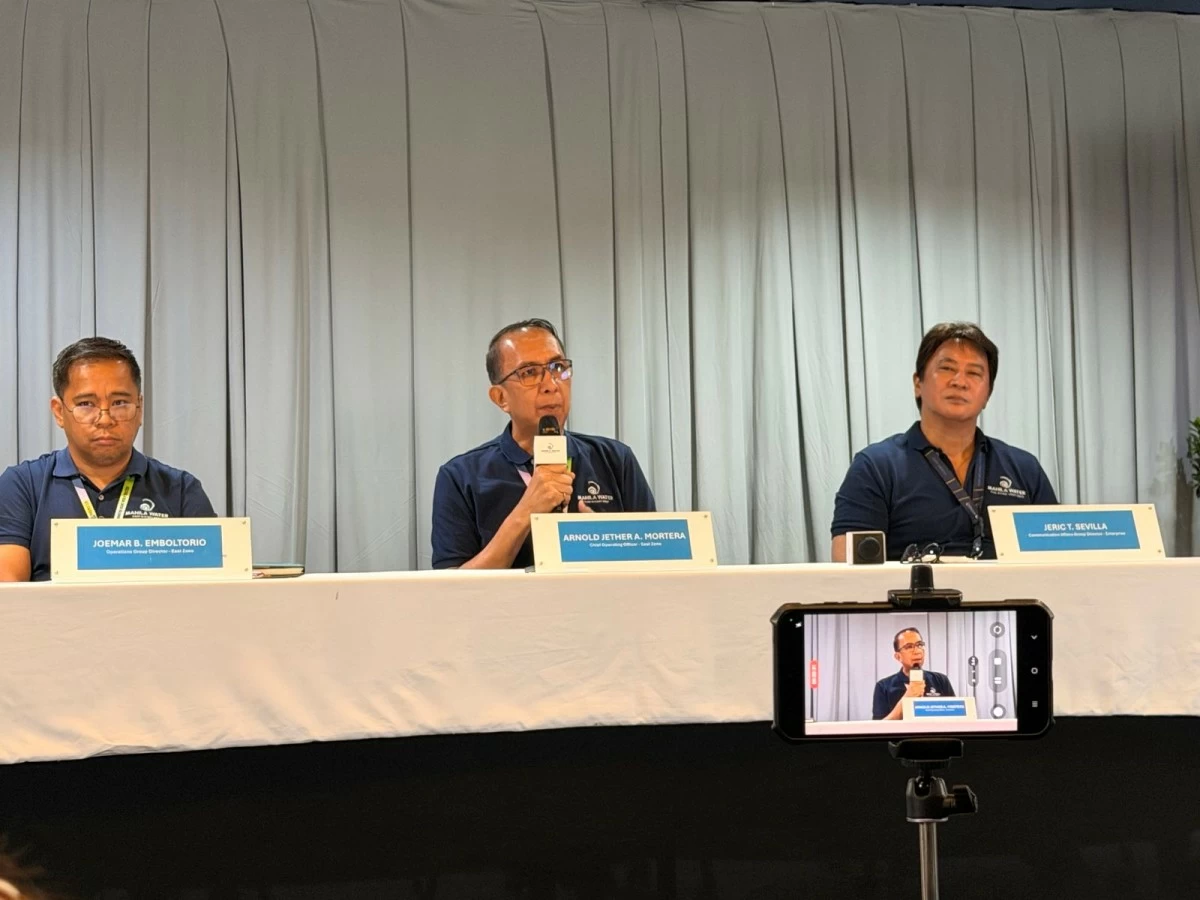
L-R: Joemar B. Emboltorio, East Zone operations group director; Arnold Jether Mortera, East Zone chief operating officer; Jeric T. Sevilla, head of corporate communications.

East Zone concessionaire Manila Water Co. Inc. is working to minimize its reliance on Angat Dam by diversifying its supply sources to accommodate growing customer demand.

In a media briefing on Tuesday, July 7, Manila Water East Zone Chief Operating Officer (COO) Arnold Jether Mortera explained that reducing its allocation from Angat Dam is part of the company’s efforts to address the impact of the prolonged dry spell due to El Niño.

“Since we have supplementary sources and activation of two new treatment plans in the last quarter of this year, there will be no interruptions in this concession area,” Mortera said, citing the commissioning of the Kaysakat and phase two of the East Bay water treatment plants.

The Kaysakat plant in Antipolo City, Rizal province, would produce 220 million liters per day (MLD) of water and source its supply from Upper Wawa Dam, while the 200-MLD East Bay treatment plant would source its water from the eastern part of Laguna Lake. These would be completed between September and October this year.

Mortera said the alternative sources would allow the company to build a resilient water network.

“With the integration of the Upper Wawa Dam and the expansion of our distribution capacity, we are now better equipped to protect our customers from severe supply disruptions even during El Niño,” he added.

The COO mentioned that these improvements and retrofitting works are part of the company’s investments but noted that the capital outlay is not mainly allotted for mitigation plans alone.

“We have invested in major improvements in investment in new sources, supplementary sources… So that in any event of shortages in water supply, we still have this less dependency from Angat and we can supply our customers via these new sets of water sources or systems.”

The need to diversify water sources came after the company set goals to lessen its dependence on a single water source. Joemar B. Emboltorio, operations group director of the East Zone, shared that the baseline allocation from Angat Dam has been cut to 48 cubic meters per second (cms) from the average 52 cms, which translates to nearly five billion liters of water daily.

Moving forward, the concessionaire has laid out a full-year sourcing plan by utilizing Laguna Lake to supply Rizal, Taguig City, and Pateros town; Wawa-Tayabasan dam to deliver water to Antipolo, Teresa town in Rizal, and Pasig City; and the Angat-Ipo-La Mesa dam systems to supply select service areas in Quezon City, Marikina City, San Juan City, Cainta and Taytay towns in Rizal, Pasig City, Makati City, Mandaluyong City, and Manila.

As of May 2026, Manila Water was supplying about 1,728 MLD of water to 7.93 million customers. Its non-revenue water (NRW) stood at 13.45 percent. NRW is the supply that has been treated and pumped into the distribution system but never reaches the end consumer.
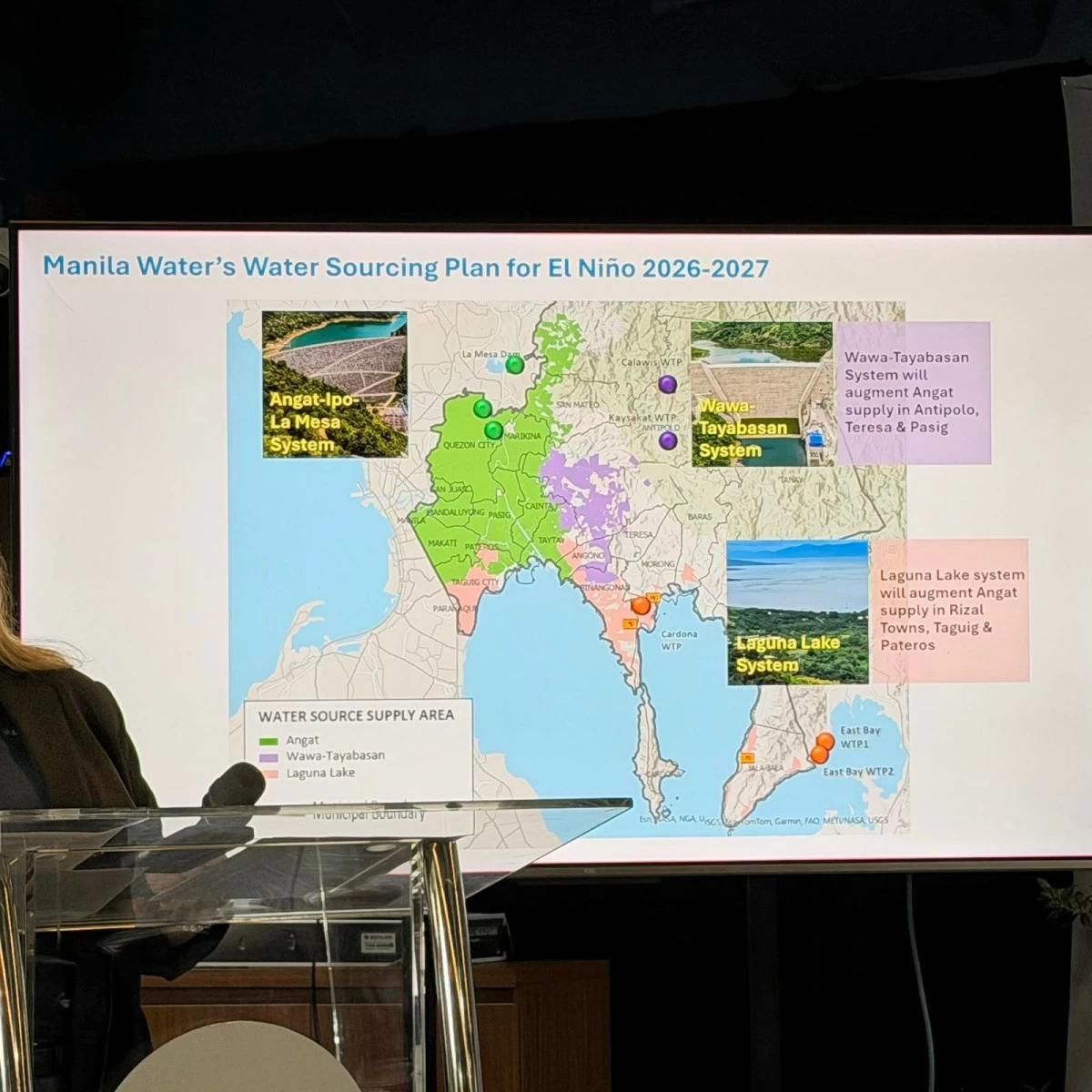
Manila Water's sourcing plan for El Niño 2026-2027.

Related Tags

Manila Water EL NIÑO ANGAT DAM
ADVERTISEMENT
.most-popular .layout-ratio{ padding-bottom: 79.13%; } @media (min-width: 768px) and (max-width: 1024px) { .widget-title { font-size: 15px !important; } }

{{ articles_filter_1561_widget.title }}

.most-popular .layout-ratio{ padding-bottom: 79.13%; } @media (min-width: 768px) and (max-width: 1024px) { .widget-title { font-size: 15px !important; } }

{{ static_articles_1562_widget.title }}

.most-popular .layout-ratio{ padding-bottom: 79.13%; } @media (min-width: 768px) and (max-width: 1024px) { .widget-title { font-size: 15px !important; } }

{{ articles_filter_1563_widget.title }}

{{ articles_filter_1564_widget.title }}

.mb-article-details { position: relative; } .mb-article-details .article-body-preview, .mb-article-details .article-body-summary{ font-size: 17px; line-height: 30px; font-family: "Libre Caslon Text", serif; color: #000; } .mb-article-details .article-body-preview iframe , .mb-article-details .article-body-summary iframe{ width: 100%; margin: auto; } .read-more-background { background: linear-gradient(180deg, color(display-p3 1.000 1.000 1.000 / 0) 13.75%, color(display-p3 1.000 1.000 1.000 / 0.8) 30.79%, color(display-p3 1.000 1.000 1.000) 72.5%); position: absolute; height: 200px; width: 100%; bottom: 0; display: flex; justify-content: center; align-items: center; padding: 0; } .read-more-background a{ color: #000; } .read-more-btn { padding: 17px 45px; font-family: Inter; font-weight: 700; font-size: 18px; line-height: 16px; text-align: center; vertical-align: middle; border: 1px solid black; background-color: white; } .hidden { display: none; }
function initializeAllSwipers() { // Get all hidden inputs with cms_article_id document.querySelectorAll('[id^="cms_article_id_"]').forEach(function (input) { const cmsArticleId = input.value; const articleSelector = '#article-' + cmsArticleId + ' .body_images'; const swiperElement = document.querySelector(articleSelector); if (swiperElement && !swiperElement.classList.contains('swiper-initialized')) { new Swiper(articleSelector, { loop: true, pagination: false, navigation: { nextEl: '#article-' + cmsArticleId + ' .swiper-button-next', prevEl: '#article-' + cmsArticleId + ' .swiper-button-prev', }, }); } }); } setTimeout(initializeAllSwipers, 3000); const intersectionObserver = new IntersectionObserver( (entries) => { entries.forEach((entry) => { if (entry.isIntersecting) { const newUrl = entry.target.getAttribute("data-url"); if (newUrl) { history.pushState(null, null, newUrl); let article = entry.target; // Extract metadata const author = article.querySelector('.author-section').textContent.replace('By', '').trim(); const section = article.querySelector('.section-info ').textContent.replace(' ', ' '); const title = article.querySelector('.article-title h1').textContent; // Parse URL for Chartbeat path format const parsedUrl = new URL(newUrl, window.location.origin); const cleanUrl = parsedUrl.host + parsedUrl.pathname; // Update Chartbeat configuration if (typeof window._sf_async_config !== 'undefined') { window._sf_async_config.path = cleanUrl; window._sf_async_config.sections = section; window._sf_async_config.authors = author; } // Track virtual page view with Chartbeat if (typeof pSUPERFLY !== 'undefined' && typeof pSUPERFLY.virtualPage === 'function') { try { pSUPERFLY.virtualPage({ path: cleanUrl, title: title, sections: section, authors: author }); } catch (error) { console.error('ping error', error); } } // Optional: Update document title if (title && title !== document.title) { document.title = title; } } } }); }, { threshold: 0.1 } ); function showArticleBody(button) { const article = button.closest("article"); const summary = article.querySelector(".article-body-summary"); const body = article.querySelector(".article-body-preview"); const readMoreSection = article.querySelector(".read-more-background"); // Hide summary and read-more section summary.style.display = "none"; readMoreSection.style.display = "none"; // Show the full article body body.classList.remove("hidden"); } document.addEventListener("DOMContentLoaded", () => { let loadCount = 0; // Track how many times articles are loaded const offset = [1, 2, 3, 4, 5, 6, 7, 8, 9, 10]; // Offset values const currentUrl = window.location.pathname.substring(1); let isLoading = false; // Prevent multiple calls if (!currentUrl) { console.log("Current URL is invalid."); return; } const sentinel = document.getElementById("load-more-sentinel"); if (!sentinel) { console.log("Sentinel element not found."); return; } function isSentinelVisible() { const rect = sentinel.getBoundingClientRect(); return ( rect.top < window.innerHeight && rect.bottom >= 0 ); } function onScroll() { if (isLoading) return; if (isSentinelVisible()) { if (loadCount >= offset.length) { console.log("Maximum load attempts reached."); window.removeEventListener("scroll", onScroll); return; } isLoading = true; const currentOffset = offset[loadCount]; window.loadMoreItems().then(() => { let article = document.querySelector('#widget_1690 > div:nth-last-of-type(2) article'); intersectionObserver.observe(article) loadCount++; }).catch(error => { console.error("Error loading more items:", error); }).finally(() => { isLoading = false; }); } } window.addEventListener("scroll", onScroll); });

Sign up by email to receive news.