






Manila Bulletin
 Philippines
National
Senator-judges clash on who should be presiding officer; Chiz gets majority's nod
Philippines
National
Senator-judges clash on who should be presiding officer; Chiz gets majority's nod
Philippines
National
Senator-judges clash on who should be presiding officer; Chiz gets majority's nod
Senator-judges clash on who should be presiding officer; Chiz gets majority's nod
By Dhel Nazario
Published Jul 6, 2026 03:31 pm


At A Glance
- Senator-Judge Francis "Chiz" Escudero was elected presiding officer of the impeachment court in a 12-8 vote after a lengthy constitutional debate over who should lead the trial of Vice President Sara Duterte.
- Senator-Judge Alan Peter Cayetano argued that the Constitution requires the Senate President to preside over all impeachment trials except when the President is the respondent, warning that electing another presiding officer could invite legal challenges.
- enator-Judge Francis "Kiko" Pangilinan states that the Senate validly amended and ratified its impeachment rules under its constitutional rule-making power, giving the process a presumption of regularity.
The first day of the impeachment trial of Vice President Sara Duterte got off to a turbulent start on Monday, July 6, as senators became embroiled in a constitutional battle over who should preside over the proceedings, culminating in the election of Senator-Judge Francis 'Chiz' Escudero as presiding officer by a 12-8 vote.
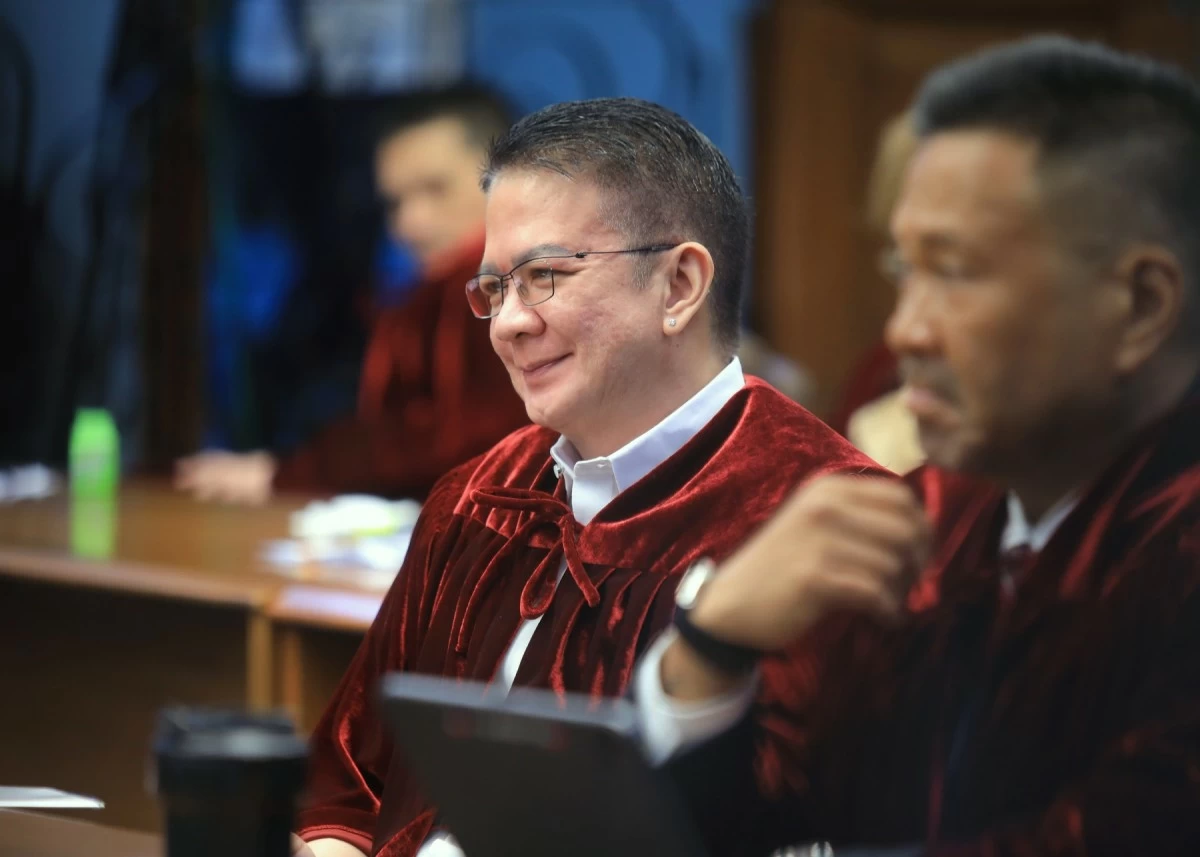
Senator-Judge Francis "Chiz" Escudero (Senate PRIB photo)
The proceedings took an unexpected turn after Senate President Sherwin Gatchalian, who initially presided over the impeachment trial, raised the matter of electing a presiding officer for the impeachment court. The proposal immediately triggered a lengthy debate on whether the Senate could choose its presiding officer or whether the Constitution required the Senate President to preside.
Among those who challenged the move was Senator-Judge Alan Peter Cayetano, who raised a point of order arguing that the Constitution clearly designates the Senate President as the presiding officer in all impeachment trials except when the President of the Philippines is on trial.
Citing Article XI, Section 3 of the 1987 Constitution, Cayetano argued that while the Constitution explicitly provides that the Chief Justice presides only when the President is the respondent, the records of the Constitutional Commission show that the framers intended the Senate President to preside in all other impeachment proceedings.
He quoted deliberations from the 1986 Constitutional Commission, including an exchange involving former Chief Justice Hilario Davide Jr., where an amendment expressly stating that the Senate President shall preside was withdrawn after commissioners agreed that such authority was already understood under the Constitution.
"The spirit of the Constitution is that it is the Senate President who will preside," Cayetano said, stressing that the framers deliberately recognized the Senate President's role because the position is elected by the majority of senators.
Cayetano warned that allowing another senator to preside could undermine the legitimacy of the proceedings and expose any eventual verdict to constitutional challenge before the Supreme Court.
"We need to protect the legitimacy of these proceedings," he said, adding that a conviction or acquittal reached under what he described as a constitutionally defective process could cast doubt on the validity of the entire trial.
He also argued that the authority to preside "must come from the Constitution or the governing law, not from the vote of a tribunal," saying proceedings before a decision-maker lacking legal authority could be declared void regardless of whether the trial was conducted fairly.
Meanwhile, Senator-Judge Pia Cayetano urged her colleagues to carefully examine the records of the 1986 Constitutional Commission, arguing that the framers' deliberations support the position that the Senate President should preside over impeachment trials other than those involving the President.
She challenged her colleagues, particularly those in the majority, to consult their legal advisers and review the constitutional debates themselves.
Cayetano also disputed the argument that amendments to the Senate's impeachment rules required the chamber to convene in a regular or special legislative session. She noted that Malacañang had previously called a special session to pass other measures and said that, if necessary, the same could have been done for impeachment-related amendments.
However, she maintained that because the Senate had already convened as an impeachment court, any amendments to its impeachment rules should be made within the court itself.
"I take the position that we are in impeachment court. We are already in impeachment court. Therefore, the amendments must happen here," she said.
But Senator Francis "Kiko" Pangilinan stated that Senator Alan Cayetano's point of order is improper and the debate on this matter in the impeachment court is out of order.
Pangilinan pointed out that what the Constitution provides is that when the President is undergoing impeachment, going through the trial, is being tried, the Chief Justice must preside.
"Nowhere in the Constitution, in the provisions on public accountability and impeachment does it say that the Senate President must preside when the Vice President is under trial or any other impeachable officer," he said.
Pangilinan also defended the Senate's authority to elect its presiding officer, arguing that the Constitution grants Congress the power to promulgate its own rules. Pangilinan said the Senate exercised that rule-making authority when it approved amendments to the impeachment rules on June 3, which were later unanimously ratified during a special session on June 17. Because the amendments had been duly approved and ratified, he said they carry a presumption of regularity.
Despite Cayetano's objections, the Senate Impeachment Court proceeded to vote on the matter after Senator Panfilo Lacson made the motion to nominate Escudero as presiding officer.
Escudero was elected presiding officer by a vote of 12-8, formally taking over the chair for the impeachment trial.
Following the vote, Escudero moved to the rostrum and took his seat beside Gatchalian, symbolizing the transfer of the gavel for the impeachment proceedings while the Senate President remained at the dais.