






Manila Bulletin
 Environment and Sustainability
Philippines' national orchid waling-waling faces extinction, conservation efforts urged
Environment and Sustainability
Philippines' national orchid waling-waling faces extinction, conservation efforts urged
Environment and Sustainability
Philippines' national orchid waling-waling faces extinction, conservation efforts urged
Philippines' national orchid waling-waling faces extinction, conservation efforts urged
Published Jul 6, 2026 03:30 pm


Waling-waling, first discovered in the forests of Mount Apo, has never been declared the country’s national flower. That distinction belongs to the sampaguita, a flower that hails from India. But now, waling-waling has been officially recognized as the Philippines’ national orchid.
In a special session convened by President Ferdinand “Bongbong” Marcos Jr., the Senate passed on third and final reading, by a 13-0 vote with no abstentions, Senate Bill No. 2092, officially recognizing the waling-waling (Vanda sanderiana) as the national orchid of the Philippines.
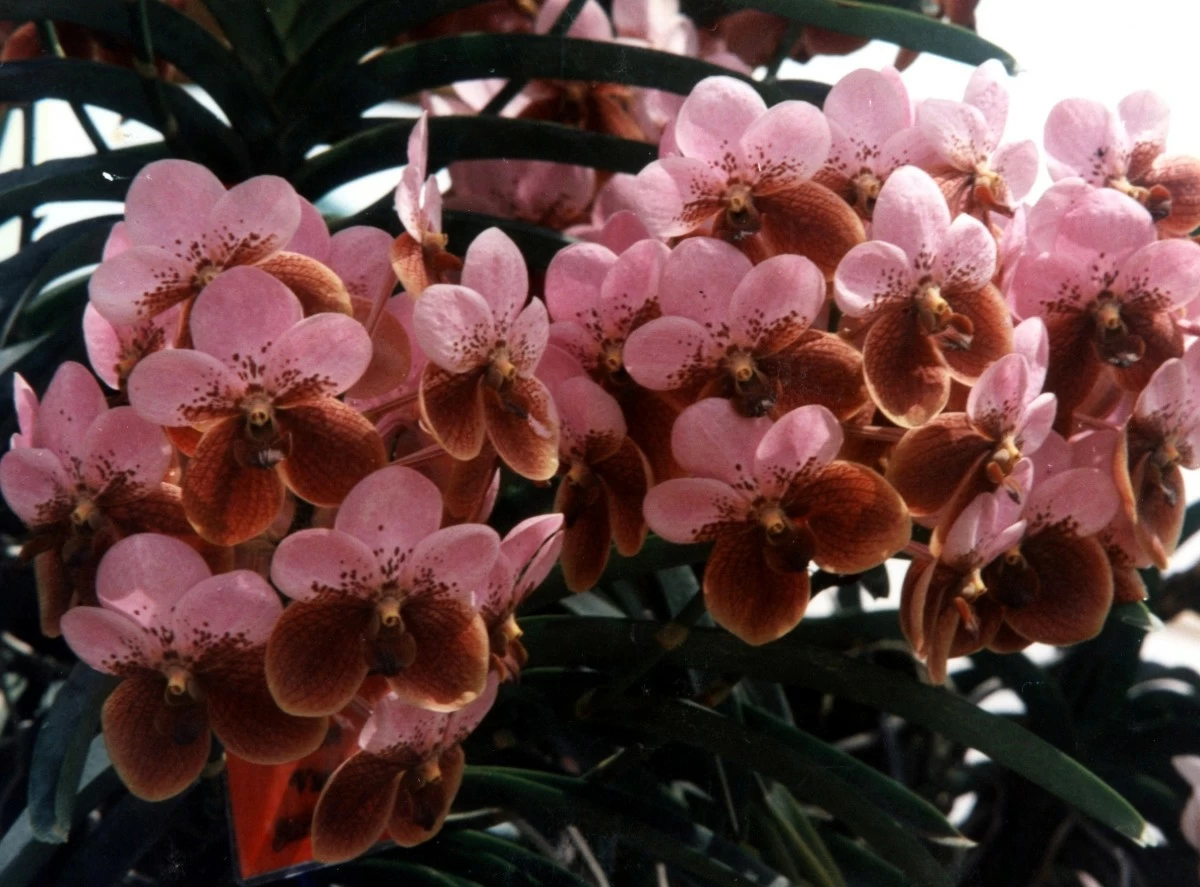
Waling-waling, queen of Philippine orchids, was proposed to be the country's second national flower.
The Philippines is home to more than 1,200 orchid species representing over 141 genera. Between 70 percent and 85 percent of these species are endemic, meaning they are found naturally nowhere else in the world.
The move follows an earlier effort in 2013, when Congress passed House Bill 5655 declaring the waling-waling a floral icon alongside the sampaguita, which was introduced to the Philippines during the Spanish colonial period and later became the country’s national flower.
The measure, however, was vetoed by then-President Benigno Aquino III, who said the orchid could be protected and preserved without designating it as a second national flower.
“The waling-waling’s beauty adorns our treetops, especially in Davao, Cotabato, and Zamboanga, where it is endemic. But there are threats to its survival, as the flowers that grow and thrive in the wild are harvested for commercial and decorative purposes, and their habitat is destroyed by deforestation,” said Senator Loren Legarda, author of the bill.
Dr. Helen Valmayor, in Orchidiana Philippiniana, described the waling-waling as “one of the finest orchid species endemic to the Philippines, desired by orchid growers and breeders alike for its showy and attractive flowers and ability to impart its vigor and floral characteristics to its progeny.”
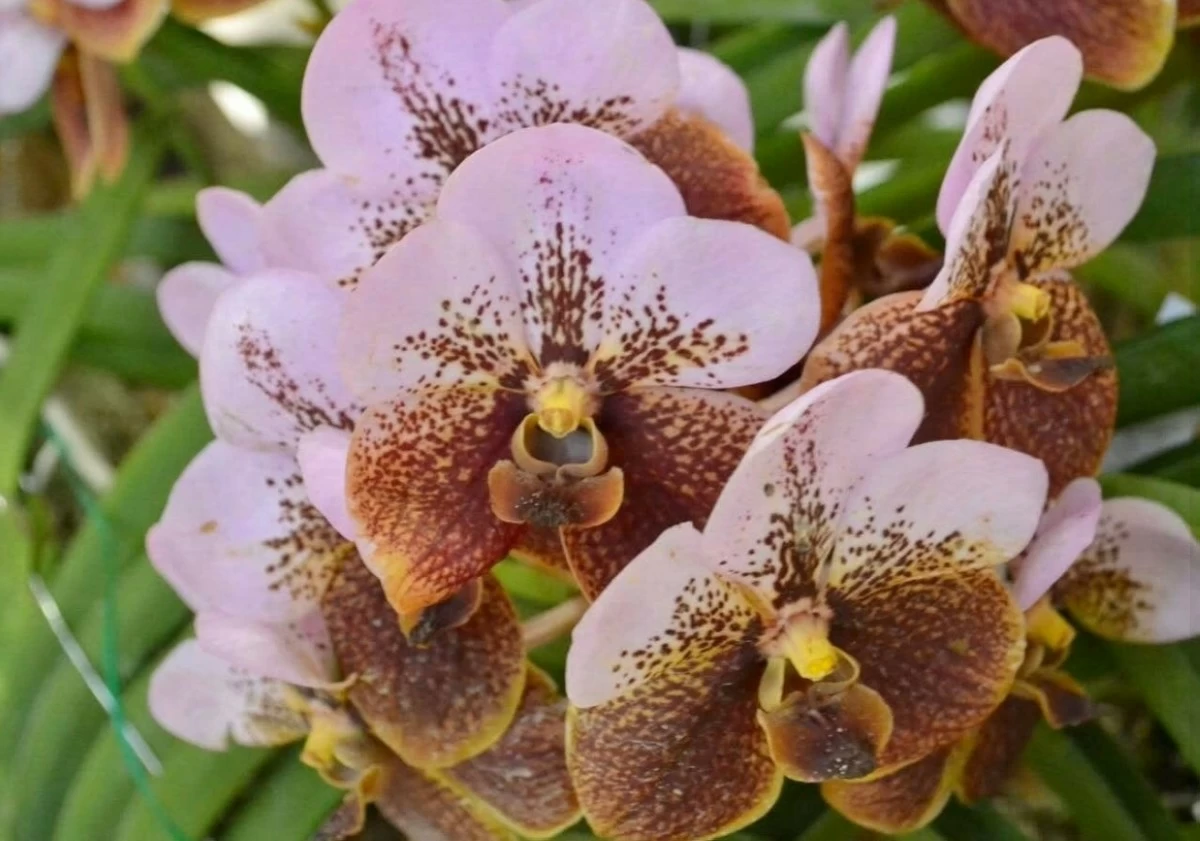
A stunning up-close view of the waling-waling orchid.
Named in allusion to “a moth in flight,” the waling-waling was first discovered in the forest of Mount Apo in Mindanao in 1880. It once thrived in the rainforests of Davao, Cotabato, and Zamboanga, growing on dipterocarp trees at elevations below 500 meters. The Bagobos revered the flower, calling it “waring-waring,” which means “beautiful goddess.”
Today, the orchid faces an uncertain future.
“The waling-waling is almost extinct in the wild,” said botanist Dr. Domingo Madulid. “Rarer varieties of this plant can only be found in expensive nurseries.”
Recent surveys indicate that the waling-waling is now cultivated more extensively in Singapore, Thailand, Hong Kong, and Hawaii than in the Philippines because of its rarity and high demand among orchid enthusiasts.
Madulid described it as the country’s finest orchid species and lamented that many Filipinos remain unaware of its economic potential. He noted that the systematic plunder of wild orchids began in the 1950’s, when rare Philippine orchids, including the waling-waling, were collected from forests and exported abroad.
The world first learned about the orchid through German plant collector Carl Roebelin, who was commissioned by English horticulturist Frederick Sander to search Mindanao for rare orchids.
According to Valmayor, Roebelin reached Mindanao in 1880 after hearing stories of a spectacular orchid growing deep in the forests. Although his first shipment of plants never reached England, he returned on another expedition and successfully brought specimens back to Europe.
When the orchid flowered in England in 1882, German taxonomist Heinrich Gustav Reichenbach named it Vanda sanderiana in honor of Sander. The following year, it was introduced to orchid enthusiasts in London and eventually became the parent of more than 1,000 vandaceous hybrids cultivated around the world.
For nearly a century, the waling-waling disappeared from gardens in Davao. Its return is largely due to the efforts of orchid enthusiast Charita Puentespina, who pioneered the mass propagation of the species through embryo culture in 1985.
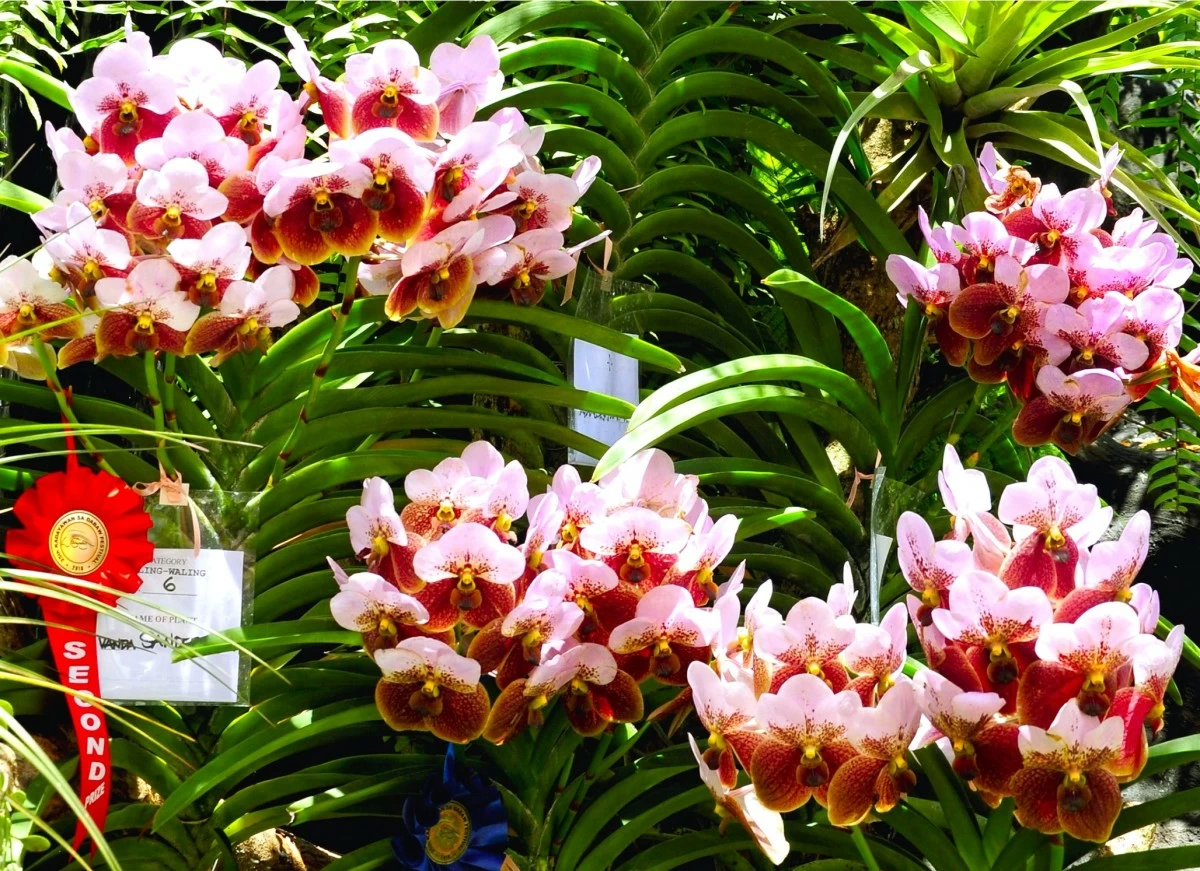
The waling-waling is one of the most prominent orchids displayed during the Kadayawan sa Dabaw festival.
During the 48th Araw ng Dabaw celebration, the first community pots of waling-waling seedlings were distributed to the public, sparking renewed interest among hobbyists and commercial growers. Since then, the orchid has become a familiar sight in gardens across Davao.
“The return of the waling-waling to every home garden in Davao and elsewhere in the country is one thing,” one author wrote. “It is another thing to see it bloom in its habitat at the foothills of Mount Apo.”
On Earth Day 2026, Edge Davao reported that Puentespinas launched Legacy in Bloom: Waling-waling Park at Malagos Garden Resort, a conservation initiative aimed at restoring one of the region's most iconic symbols.
“I think right now, Davao has Waling-waling as our city flower. It has become an emblem of who we are as Dabawenyos. But we’re really hoping for more awareness of waling-waling on the national level for it to be what it is, which is the Queen of the Philippine Orchids,” said Charisse Puentespina, president of Malagos Garden Resort.