







Face-to-face class suspension in Davao Occidental extended
Published Jul 6, 2026 03:12 pm


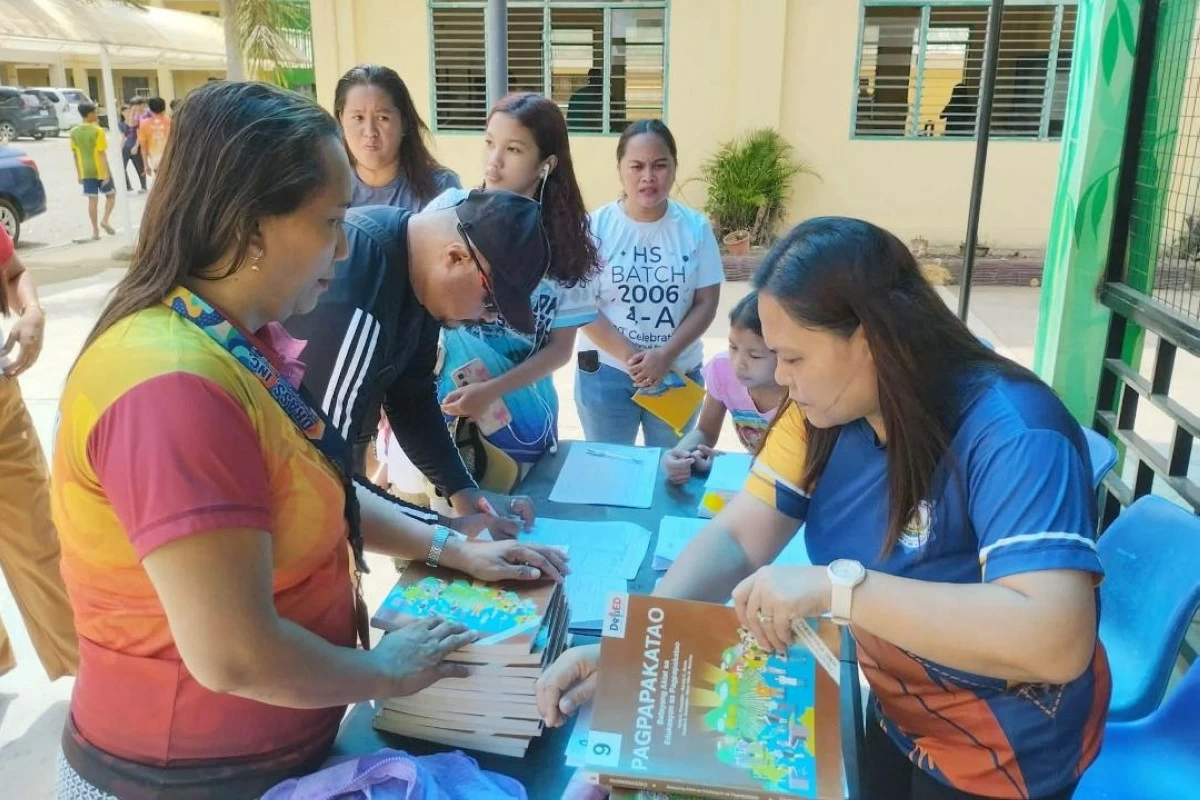
TEACHERS of Heracleo Casco Memorial National High School in Santa Maria, Davao Occidental distribute learning materials to parents. (DepEd-Davao Occidental photo)
DAVAO CITY – The provincial government of Davao Occidental has extended the suspension of face-to-face classes in the province as aftershocks from the magnitude-7.8 tremor on June 8 continue.
Gov. Franklin Bautista issued Memorandum Order No. 76 on June 27 directing school officials in the province to implement learning continuity measures as aftershocks continue.
On Sunday, July 5, Bautista announced that the directive will stay until further notice as the provincial government prioritizes the safety, well-being, and psychosocial support of learners and school personnel.
The Department of Education-Davao Occidental announced that all schools in the towns of Malita, Santa Maria, and Don Marcelino shall continue implementing Alternative Learning Modalities (ALMs) as determined by their school heads. Academic learning activities in schools in Jose Abad Santos (JAS) and Sarangani Island remain suspended.
“Parents, learners, teachers, and school administrators are advised to follow the guidance of their respective schools and stay updated through official announcements,” DepEd-Davao Occidental said in an announcement on Facebook page.
It said that teachers and other school personnel may be required to report only when necessary for essential school functions, subject to existing safety protocols.
DepEd-Davao Occidental directed schools to conduct psychological first aid (PFA) and stress debriefing for teachers, personnel, and learners before the resumption of regular face-to-face classes.
Davao Occidental, which shares a boundary with Sarangani province, is the most heavily-affected in Davao region, particularly the towns of JAS and Sarangani or Balut Island.
Both towns suffered heavy damage in the earthquake with an epicenter 32 kilometers west of Maasim town in Sarangani.
A month since the earthquake struck, Office of Civil Defense-11 chief Ednar Dayanghirang said various agencies have deployed personnel to conduct Post-Disaster Needs Assessment (PDNA) to prepare the province’s long-term recovery roadmap.
Among the agencies conducting the assessment is the Mines and Geosciences Bureau to determine if there are communities where various geohazards have been recorded that will be relocated pending ongoing assessments.
MGB-Davao region chief Beverly Brebante said that assessments are still ongoing in some schools, particularly those affected by massive landslides.
Initial results showed that two schools are set to be recommended by the agency for demolition due to threat of further landslides. The schools located in Jose Abad Santos were affected by the earthquake-induced landslide, Brebante said. “Scientifically, if the damage was caused by the earthquake, it collapsed because of structural integrity, and not because of hazards like flood or landslides, it’s possible to rebuild in those areas,” she said.
Meanwhile, the Davao Occidental Provincial Disaster Risk Reduction and Management Office (PDRRMO) said that they have yet to release the exact number of affected schools, pending ongoing validation.