







BSP braces for 'unusual' shock after Metro Manila wage hike
Remolona: Energy shock 'may be over'
By Derco Rosal
Published Jul 6, 2026 12:00 am
|
Updated Jul 4, 2026 03:20 pm


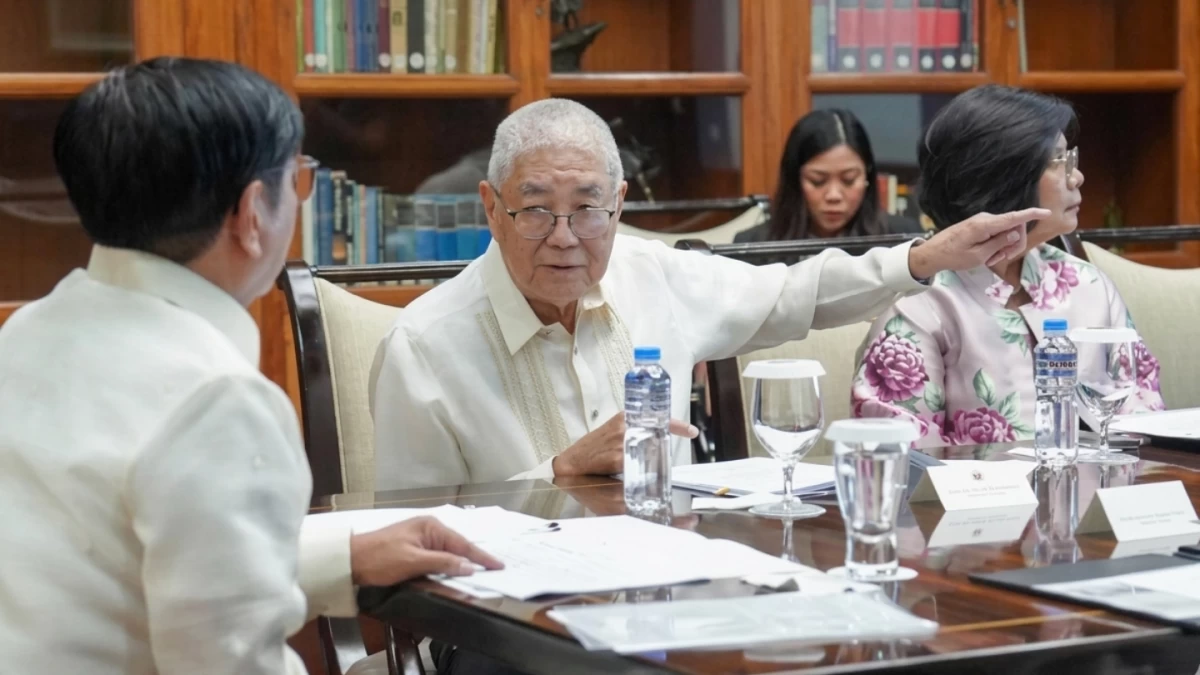
President Ferdinand R. Marcos Jr. discusses the country’s inflation rates and monetary policy with Bangko Sentral ng Pilipinas (BSP) Governor Eli Remolona. (PCO file photo taken in November 2025)
The central bank is grappling with an “unusual” inflation shock following the historic ₱85 daily minimum wage hike in Metro Manila, though a hyper-aggressive policy response is unlikely, according to Bangko Sentral ng Pilipinas (BSP) Governor Eli M. Remolona Jr.
On the sidelines of a BSP book launch, Remolona told reporters that while the inflationary pressures stemming from the capital region’s wage adjustment are “significant,” the development does not necessarily warrant an outsized monetary response.
The policy-setting Monetary Board will review incoming data at its meeting in August before deciding whether to front-load interest rate hikes to counter potential second-round effects.
Notably, Remolona explicitly dismissed the probability of a “jumbo” 50-basis-point rate increase in immediate response to the wage decision.
“A smaller wage adjustment” had already been taken into account under the BSP’s latest inflation forecasts, the central bank stated in an emailed response to the Manila Bulletin.
This implies the BSP may have been caught off guard when the Department of Labor and Employment (DOLE) announced the final size of the increase, prompting the governor to describe it as an “unusual” shock. According to DOLE, the wage hike will be rolled out in two tranches: a ₱60 increase starting July 19, followed by an additional ₱25 on January 20 next year.
Per the BSP, headline inflation is now expected to average 6.4 percent in 2026, up slightly from its previous forecast of 6.3 percent. Exactly how this approved wage hike will reshape the BSP’s stance will become clearer at the next policy meeting.
“The approved increase will be considered at the BSP’s upcoming monetary policy meeting in August, together with other incoming economic data,” the BSP said.
To date, the BSP has raised key borrowing costs by a cumulative 50 basis points to 4.75 percent since the flare-up of the United States-Iran conflict, which triggered a spike in global oil prices via the closure of the Strait of Hormuz. With that global energy shock now easing, Remolona suggested the worst may be behind them. “This energy shock... Maybe it’s over. We don’t know,” he said.
Yet, just as one threat begins to fade, another enters the scene. Remolona noted that the BSP is closely monitoring the looming El Niño phenomenon, which threatens to trigger fresh food supply disruptions. He added that the central bank is also keeping a close watch on inflation expectations, which he assessed to be “a bit different,” having previously cautioned that they could become de-anchored due to lingering price risks.
Further rate actions may also hinge on the June headline inflation figure releasing this week. “The BSP stands ready to take the appropriate policy action, as needed, to help steer inflation back to its three-percent target over the policy horizon,” the central bank reiterated.
Ruben Carlo O. Asuncion, chief economist at Union Bank of the Philippines (UnionBank), said that the June inflation data—which he expects to quicken to 6.9 percent—combined with the wage hike, reinforces the BSP’s hawkish bias.
“While oil prices have eased, wage-driven cost pressures and ongoing inflation pass-through effects suggest that the fight against inflation is not over,” Asuncion said, asserting that investors should remain selective and position portfolios for a higher-for-longer rate environment.
Asuncion warned that the recently approved daily wage hike could heat up consumer prices anew. Furthermore, it strengthens expectations that other regions across the Philippines may soon follow the National Capital Region’s (NCR) lead.