







A new chapter in US-PH relations
New US envoy arrives in Manila
Published Jul 6, 2026 11:31 am


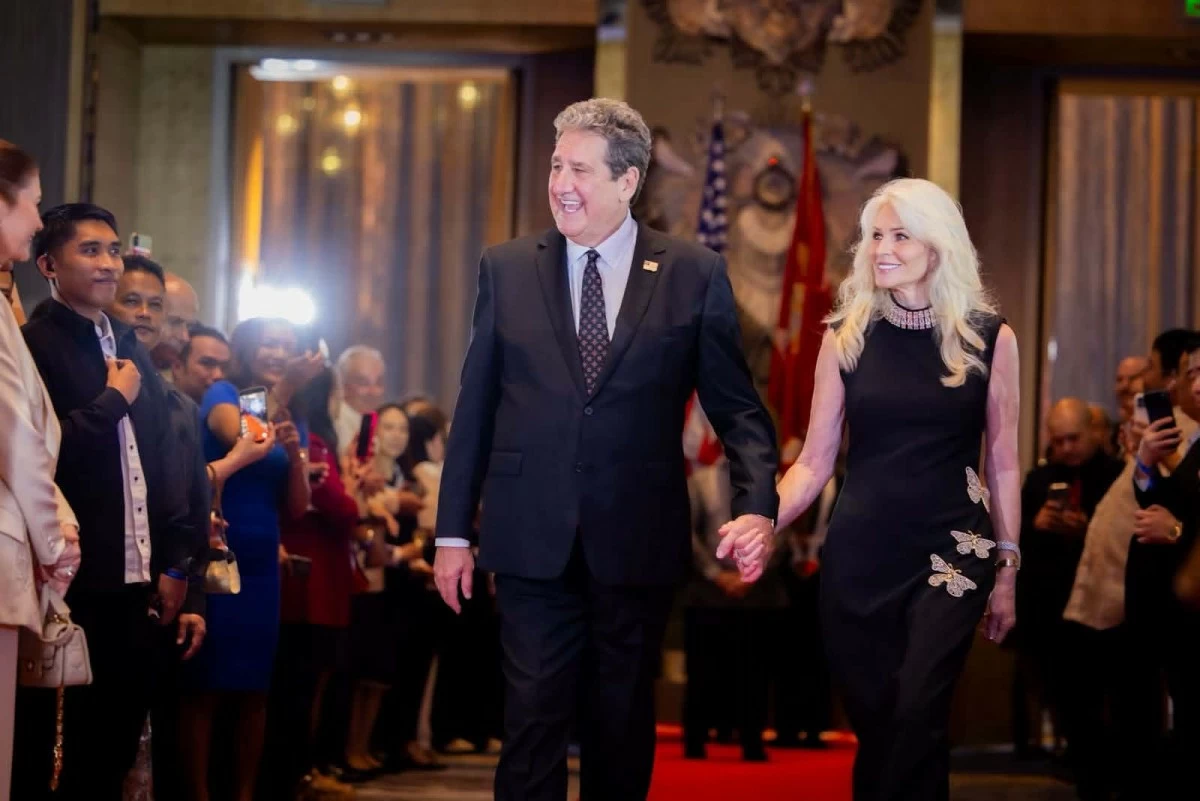
Newly arrived US Ambassador Lee Lipton and his wife Erika enjoy a warm Manila welcome. (Photo:: US Embassy)
“We’re going to make a difference, guys.”
Newly arrived U.S. Ambassador Lee Lipton delivered those words before more than 1,300 guests gathered at Shangri-La The Fort on July 2 to celebrate the 250th anniversary of American independence. With his glass raised for a toast, he was offering an early glimpse of the tone he hopes will define his tenure in Manila.
His audience included diplomats, government officials, business leaders, members of the media, and Americans who now call the Philippines home. To many, it sounded like a promise. For the staff of one of the United States’ largest diplomatic missions in the world, it also set the tone for the work ahead.
Barely four days after arriving in Manila with his wife, Erika, Lipton had already presented his credentials to President Ferdinand Marcos Jr. and paid a courtesy call on Secretary of Foreign Affairs Maria Theresa Lazaro. By the time he stepped onto the stage for America’s largest diplomatic celebration in the Philippines, he had wasted little time signaling his priorities.
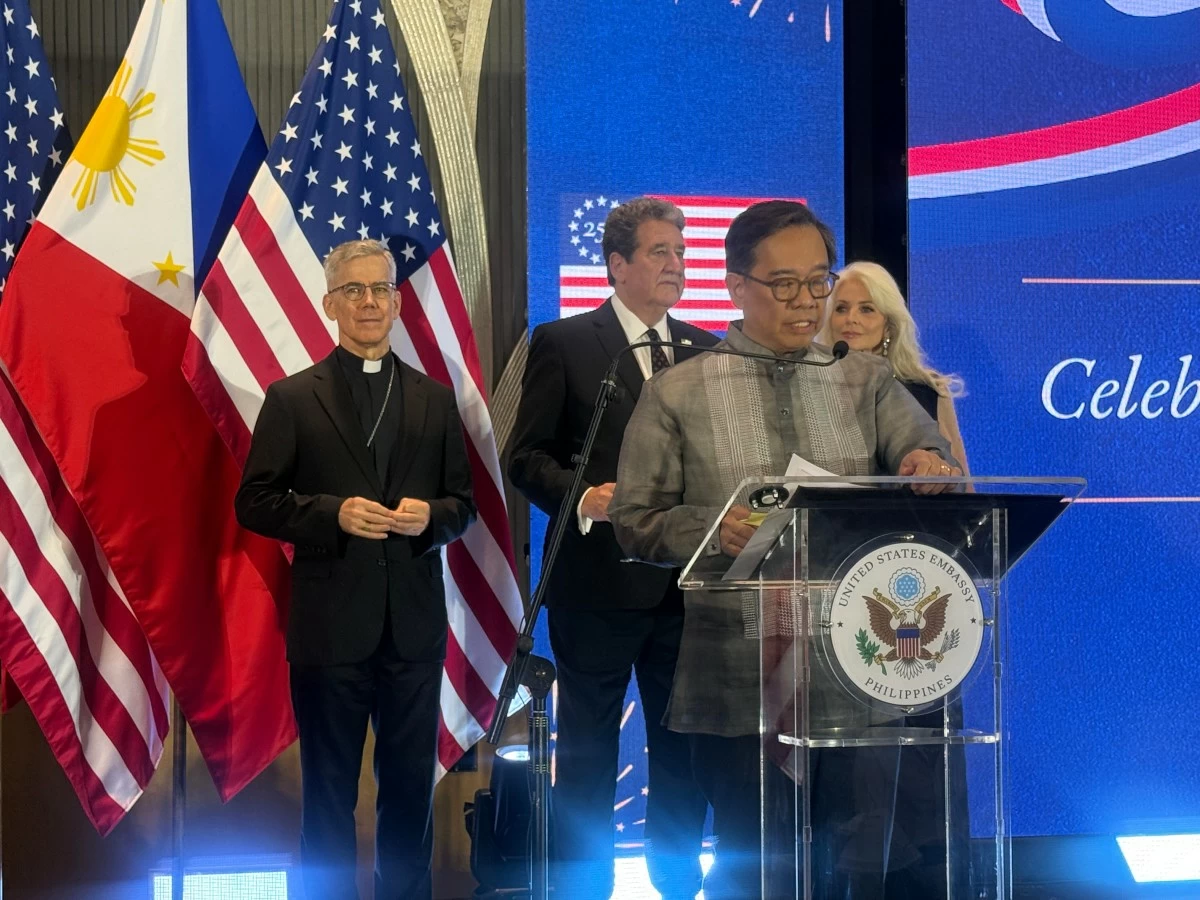
DFA Usec. Leo Herrera-Lim delivers his remarks as the guest of honor. (Photo: Carolyn Ramoran Hamilton/Manila Bulletin)
The reception marked more than the United States’ semiquincentennial. It also became the Philippine debut of Washington’s new chief diplomat at a particularly significant moment in one of America’s oldest alliances in Asia.
This year, the Philippines and the United States are celebrating 80 years of diplomatic relations, while 2026 also marks the 75th anniversary of the Mutual Defense Treaty. Together, the milestones reflect a partnership that has evolved well beyond traditional diplomacy into one spanning security, trade, education, disaster response, technology, and one of the largest people-to-people exchanges between any two nations.
Lipton succeeds Ambassador MaryKay Carlson, whose tour of duty saw the alliance deepen considerably through expanded defense cooperation, increased high-level exchanges, and growing economic engagement. In his first public address in Manila, Lipton signaled continuity while looking firmly toward the future.
“We have an amazing relationship with the Philippines,” he said. “We’re here to make it even better.”
His timing was also fitting.
Although Americans celebrate Independence Day on July 4, Lipton reminded guests that it was July 2, 1776, exactly 250 years earlier, when the Continental Congress voted for independence. Two days later, on July 4, the Declaration of Independence was formally adopted.
“While we celebrate the past tonight,” he said, “Erika and I are looking forward to an amazing future in this beautiful country.”
That future, he added, includes expanding American business, investment, jobs, and assistance programs.
Around the ballroom, the relationship was visible even in lighter ways as well.
Guests sampled familiar American favorites served alongside Shangri-La’s own creations. Burger King, Krispy Kreme, Dunkin’, Texas Roadhouse, TGI Fridays, and other iconic American brands that have long become part of everyday Filipino life joined the celebration, illustrating how American culture has become deeply woven into the Philippine experience. What once arrived as foreign brands have, over the decades, become familiar fixtures in Filipino malls, cities, and neighborhoods.
Representing the Philippine government, Department of Foreign Affairs Undersecretary Leo Herrera-Lim reflected on the alliance with equal parts diplomacy and his usual brand of wit and humor.
“The truest measure of this relationship has never been treaties or trade figures,” he said. “It is people.”
Few statistics illustrate that better than the approximately five million Filipinos and Filipino Americans who now call the United States home. Their contributions extend across healthcare, education, technology, business, public service, and the military, forming one of the largest and most dynamic Filipino communities overseas. At the same time, hundreds of thousands of Americans have made the Philippines their home as entrepreneurs, retirees, educators, development workers, and members of the diplomatic and business communities.
Those connections continue to reinforce an already substantial economic partnership.
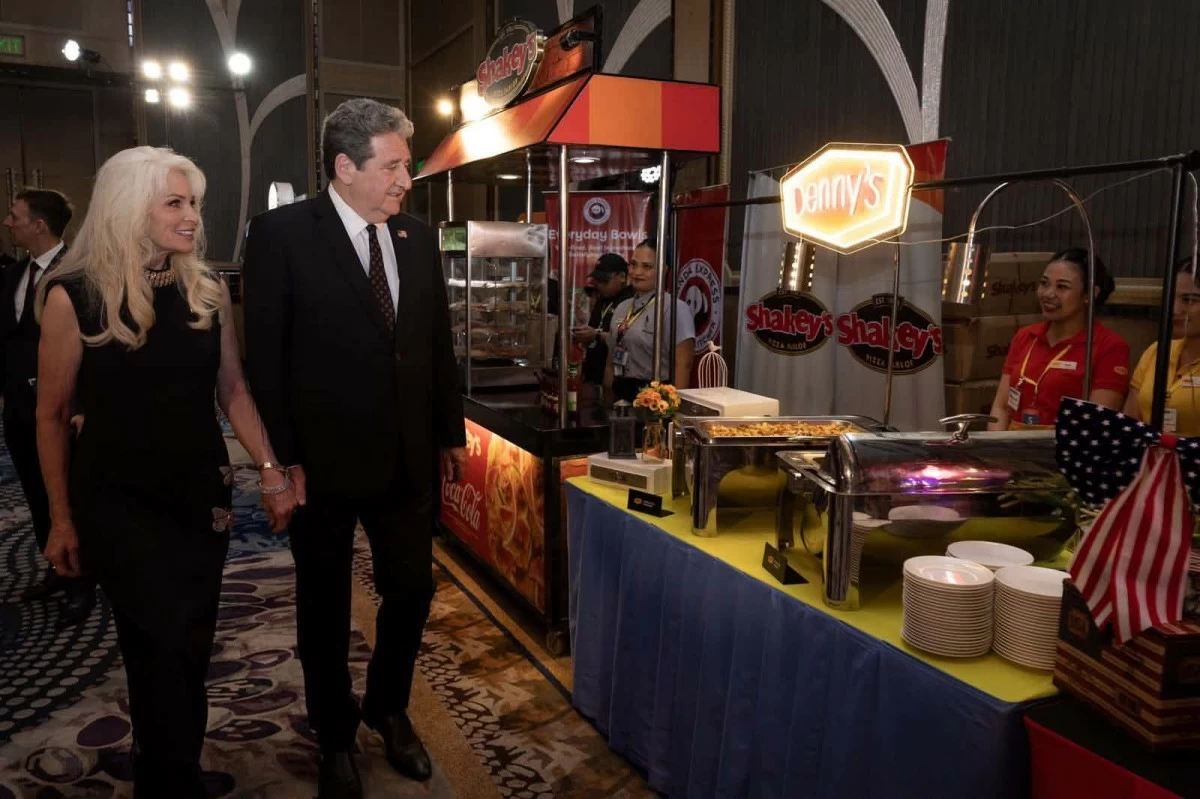
Fast food, soft power. US’ top envoy in the Philippines inspects the menu at the national day reception. (Photo: US Embassy)
Bilateral trade now exceeds $27 billion annually, while American companies remain among the Philippines’ largest investors and employers. Initiatives such as the Luzon Economic Corridor seek to expand cooperation in infrastructure, logistics, semiconductors, clean energy, and digital connectivity, translating strategic cooperation into tangible economic opportunities.
Security cooperation has likewise entered a new phase. From the Enhanced Defense Cooperation Agreement (EDCA) to this year’s record-setting Balikatan exercises involving 17,000 personnel, the alliance continues to adapt to an increasingly complex Indo-Pacific security environment while reinforcing both countries’ commitment to a rules-based international order.
Yet despite the discussion of defense agreements, investment, and geopolitics, both speakers repeatedly returned to the same conclusion: alliances ultimately endure because of the people behind them.
Herrera-Lim perhaps summed it up best.
“Anniversaries like this are not finish lines,” he said. “They are checkpoints.”
It was a fitting reminder that relationships between nations are never static. They are renewed through each generation of diplomats, entrepreneurs, students, military personnel, scholars, tourists, and families who continue to strengthen the ties between them.
Every ambassador inherits a relationship shaped by those who came before. What defines a posting is what is added to that foundation.
For Ambassador Lee Lipton, the introductions have already been made. The work—and the opportunity to leave his own mark on one of the United States’ longest-standing partnerships in Asia—has only just begun.