







Swimming with whale sharks in Pintuyan
Why Southern Leyte is your 'sharky pitstop' to Siargao
Published Jul 5, 2026 10:33 am


We call them butanding, but they’re also known as balilan, kaytan tokke, and balyiran. Here in the province of Southern Leyte, they’re known as tiki-tiki.
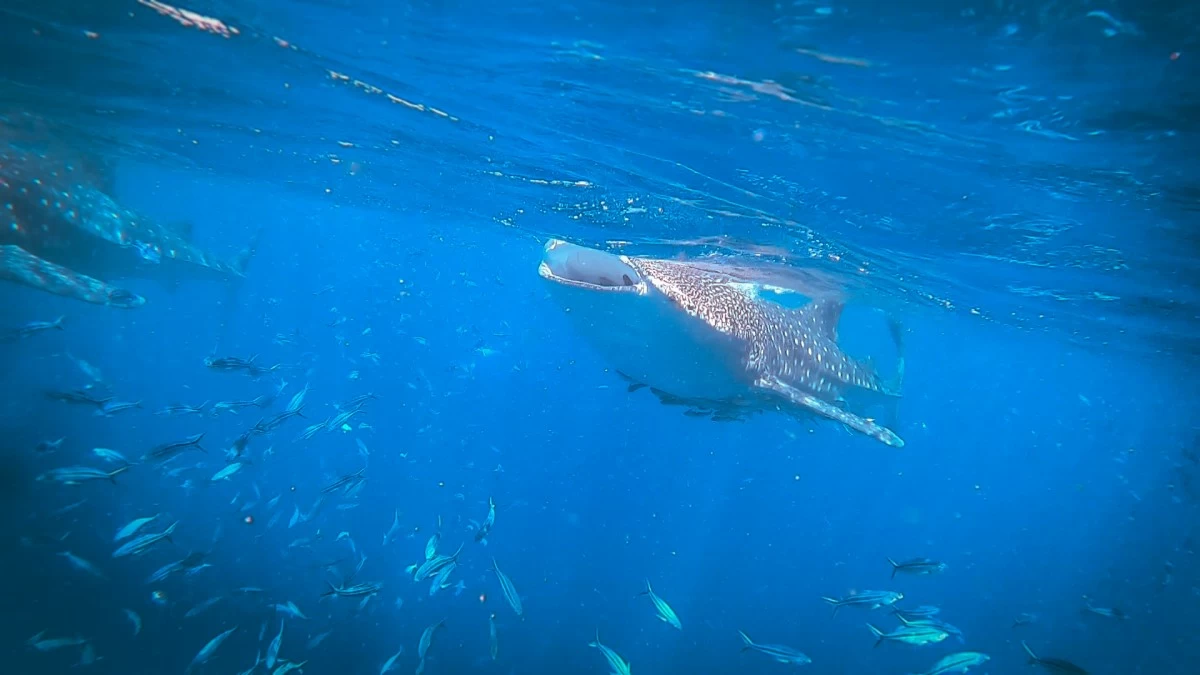
GENTLE GIANTS A pair of tiki-tiki or whale sharks cruises near the water’s surface in Pintuyan, Southern Leyte. (Photos: Gregg Yan)
Whale sharks (Rhincodon typus) are the most commonly seen fish in the Philippines, not because they’re found in markets like tilapia or bangus, but because they’re printed on the back of the new P100 bill (which is my daily allowance from my wife).
Though certainly large enough, they aren’t whales. They’re the largest of the three known filter-feeding sharks, growing over 50 feet and weighing as much as six adult elephants. While they are the Earth’s largest fish, they’re completely harmless, eating only plankton, tiny fish, shrimp, and squid.
These harmless giants have since transitioned from mere wildlife to money magnets, generating millions of pesos through ecotourism. Donsol in Southern Luzon remains the country’s traditional hotbed for wild whale shark encounters. Oslob in Southern Cebu is the cash cow, raking in big bucks and huge crowds through a controversial feeding practice that alters natural shark behavior and keeps sharks in place for most of the year.
Pintuyan in Southern Leyte’s Sogod Bay is the newcomer, working quietly to establish itself as an ethical whale shark destination, modeled after Donsol. Other whale shark watching destinations include Palawan and Bohol.
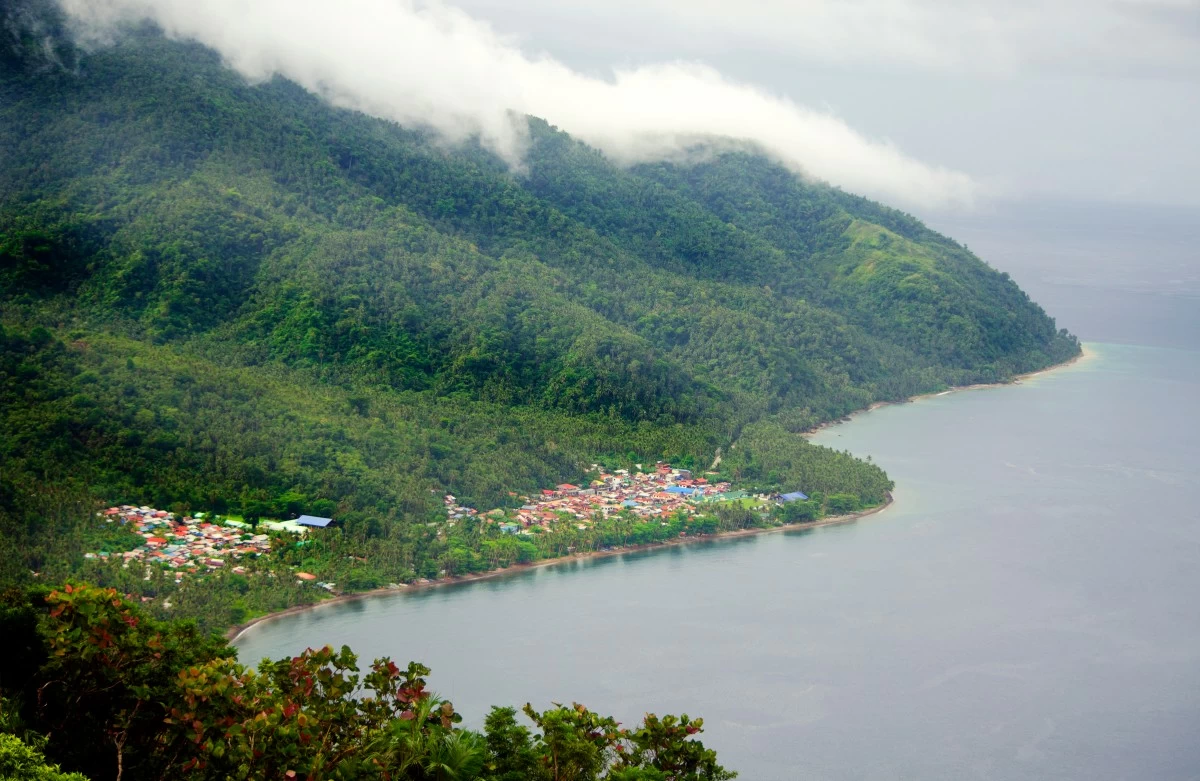
Pintuyan, Southern Leyte
Pintuyan’s whale sharks
“In the old days, our fishers drove off or even killed whale sharks or tiki-tiki because they scared away smaller fish and plowed through our nets,” recalls Pintuyan Mayor Ricarte Estrella. “In 2006, we saw how Donsol was leading the way in terms of sustainable ecotourism. We wanted to emulate their adventure-based system, which doesn’t rely on feeding. We’re still a long way from the commercial scale of Oslob or Donsol, but we’re content to take things slow and give our visitors a simpler, but more ethical experience.”
Pintuyan in Southern Leyte annually welcomes less than 5,000 visitors, mostly European divers. “But this is something we hope to build on, since we have lots of unique experiences to offer our guests,” promises Mayor Ricarte.
For one, Pintuyan sits just an hour away from Surigao, a jump-off for wayfarers headed to Siargao, one of the world’s most renowned surf spots. Travelers headed to Siargao can first fly to Tacloban, then travel three to four hours south to Pintuyan to dive with whale sharks. Visitors can stay a few days as ferries sail to Surigao daily.
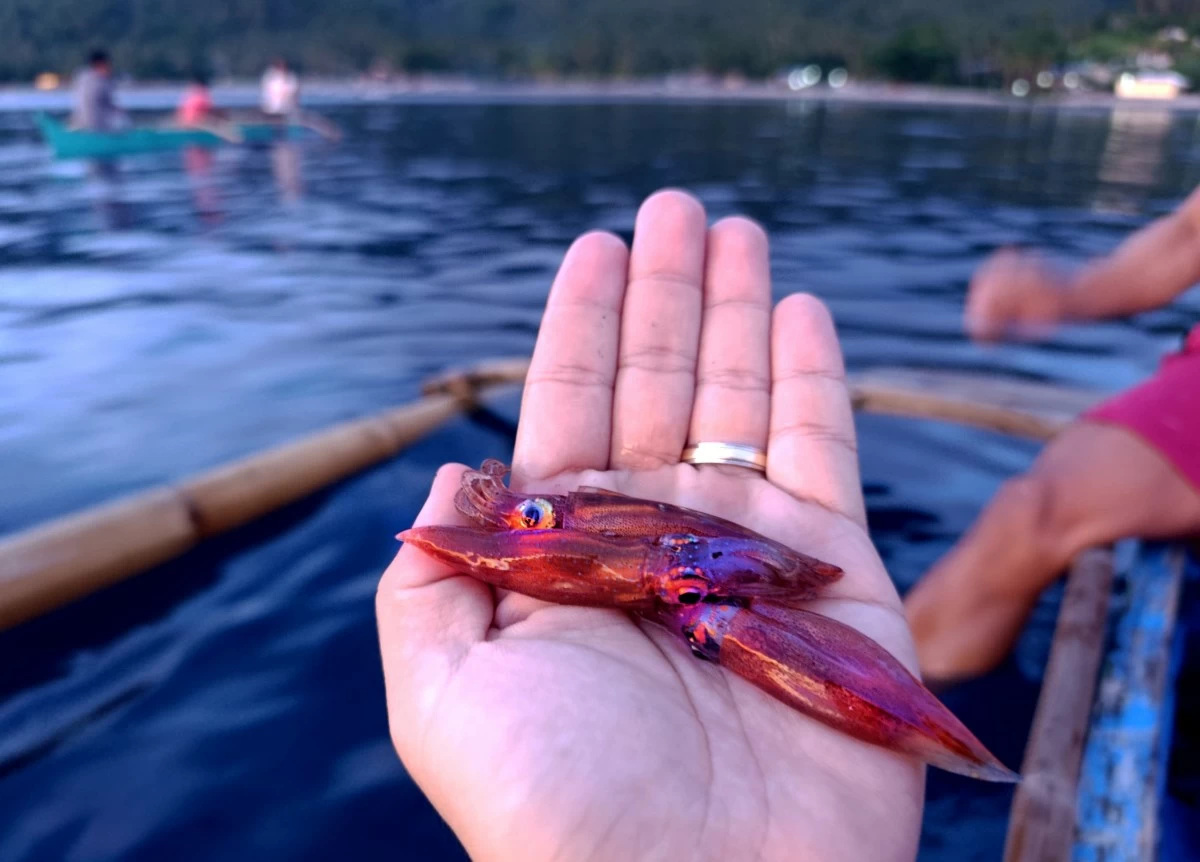
Pintuyan pygmy squid
“Aside from diving, we also offer our guests a unique experience in the form of ‘squidding’ or squid fishing,” adds Mayor Ricarte. “Guests can board a ‘bangka’ (boat) to catch and eat tiny squid at sunset.”
Locally called buko-buko, the pygmy squids grow no larger than a finger, glow in the dark, and can be eaten raw (careful though, for they can bite like a maya bird with their little beaks).
“They taste great, and we can catch as many as we like every summer,” says local fisher Mario Mateo. “Tourists love buko-buko, but our main attraction is really the whale sharks.”
Taking the plunge
“Ready to jump? Always stay three to five meters away from them,” instructs our guide Carlito Mosot, donning a mask and snorkel. “Go, go, jump in!”
We jump into the water and are immediately surrounded by the gentle giants of Pintuyan.
Unlike Oslob, where the water carries the lingering scent of dead shrimp, or Donsol, where thick plankton blooms limit visibility to a dozen feet, Pintuyan offers clear water. Morning sunrays slice the blue to illuminate the curious constellations on the backs of the sharks.
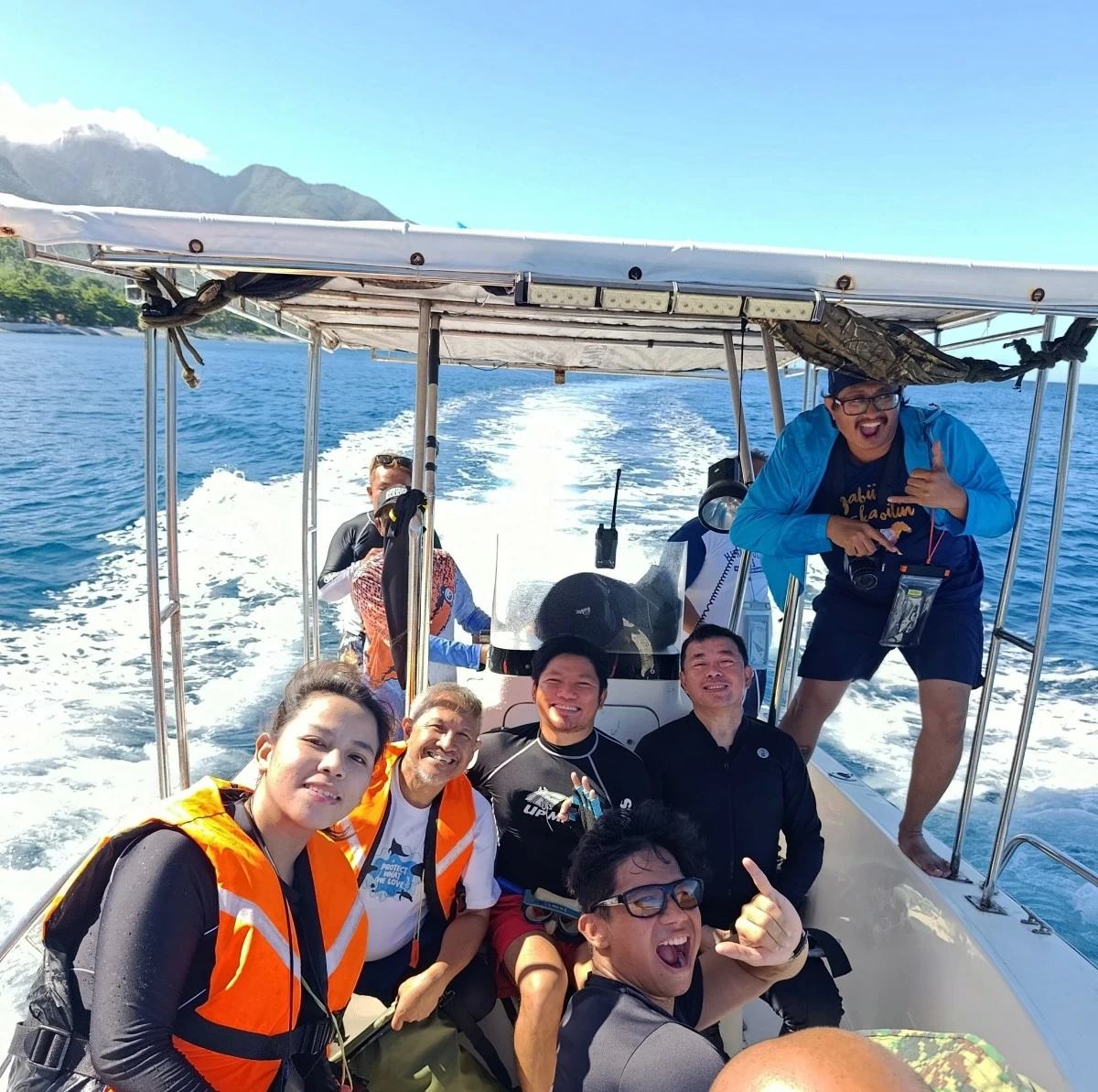
Adventurers Gregg Yan, Erwin Lim, Renzo Maano, Boboi Costas, Aldo Banaynal and Anna Barlam before diving with the gentle giants of Pintuyan. Whale shark interactions usually take place in the morning, within a few hundred meters from the shore.
At around five meters apiece, they’re smaller than the sharks of Donsol, some of which exceed 10 meters in length. Some also exhibit scars and cuts, evidence of accidental hits from boat propellers, but on the whole, they seem happy, healthy, and most of all, wild.
For 30 magical minutes, we swim alongside tiki-tiki, several rising to the surface to gorge on plankton, which also attracts smaller fish like fusiliers and mackerel. I’ve swum with whale sharks all over the country, and this is among the best experiences I’ve had.
For surfers and adventurers heading to Siargao, make Pintuyan your pitstop. Swim with friendly sharks and catch a palmful of tiny squid before battling Cloud Nine’s monster waves.
“Pintuyan has much to offer, from rugged mountains to vibrant coral reefs,” shares Boboi Costas, an ecotourism guru who has been quietly helping communities nationwide discover and market the beauty of their hometowns. “I hope to see it flourish as a premier marine destination where local communities, the government, and the private sector work hand-in-hand to benefit both the people and the environment.”
Gregg Yan is an explorer and the founder of environmental group Best Alternatives.