ADVERTISEMENT

Smoking gun or empty vault? ICC allows scrutiny of Duterte files

Published Jul 5, 2026 12:05 am  |  Updated Jul 4, 2026 04:44 pm
Every high-profile investigation has its defining moment.
Sometimes it is a witness. It may be a confession. In this age of technology, it may be a hard drive, a folder of documents, or a trail of digital footprints that quietly reshapes the narrative.
Whether the latest development at the International Criminal Court (ICC) becomes such a moment in the case involving former president Rodrigo Duterte remains anyone's guess. But it has unquestionably raised the stakes.
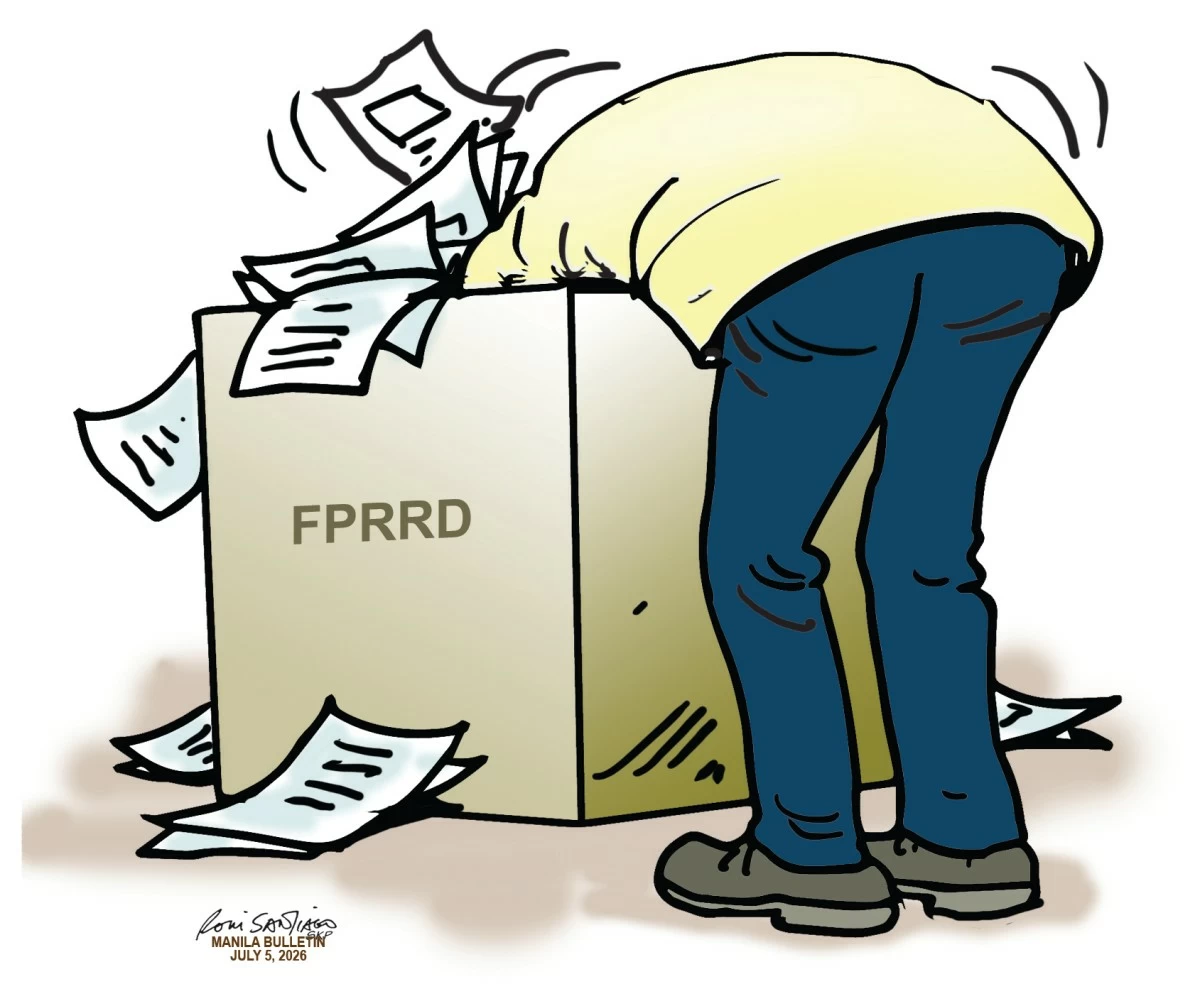
In a decision made public on July 3, ICC Trial Chamber III granted prosecutors access to certain materials obtained after Duterte's arrest and transfer to The Hague, citing reasonable grounds to believe examining those materials could produce evidence necessary for the investigation. The chamber, however, rejected the request to access all keys seized from Duterte for the prosecution’s failure to adequately justify their relevance. Those twin rulings underscore that judicial oversight remains active, and neither side gets a free pass.
That nuance deserves more attention than the predictable political spin.
Within minutes of developments like these, public opinion often splits into familiar camps. To Duterte’s critics, the approved access is viewed as another brick in a legal edifice that could eventually support the prosecution’s case. To his supporters, the denial of part of the prosecution’s request reinforces their belief that investigators are still searching for evidence.
Both interpretations may be emotionally satisfying to both camps, though neither is yet conclusive.
The truth is that no one outside the courtroom knows what these materials contain. They could reveal routine administrative records with little evidentiary value. They could contain communications that clarify decision-making. They could corroborate existing testimony, contradict previous claims, or simply raise more questions than answers. They might even prove to be legally unusable despite attracting enormous public attention.
That uncertainty is precisely why mature legal systems rely on evidence rather than expectation.
The digital age has transformed criminal investigations. Today’s archives are no longer limited to filing cabinets and signed memoranda. Mobile devices, encrypted messages, metadata, cloud storage, calendars, photographs, and electronic records often reconstruct timelines with remarkable precision. Yet technology cuts both ways. Digital evidence is only as persuasive as its authenticity, context, and admissibility. A dramatic discovery in the court of public opinion may carry little weight in an actual courtroom.
This is where the ICC's latest ruling becomes more interesting than sensational.
The chamber did not endorse the prosecution’s theory. Neither did it question Duterte’s defense. It simply concluded that prosecutors had sufficiently justified access to specific materials while failing to justify broader access to everything they requested.
For Filipinos, the broader question extends beyond one defendant.
Can documentary evidence finally settle years of competing political narratives? Can records succeed where speeches, campaign rallies, television interviews, and social media debates have largely failed? Or will this latest procedural victory ultimately produce little more than another cycle of inflated expectations followed by public disappointment?
History offers examples of both outcomes. Some investigations have unraveled crucial evidence because a single overlooked document connected every loose end. Others have collapsed under the weight of anticipation after highly publicized searches yielded nothing or little of consequence. The difference is rarely determined by narratives. It is determined by evidence that survives cross-examination and judicial scrutiny.
That’s why it's still premature to make any conclusion now.
Those hoping for earthshaking legal development should remember that access to evidence is not the same as persuasive evidence. Those convinced the prosecution has reached a dead end should remember that some of history’s most consequential cases turned on documents whose significance became apparent only after careful examination.
For now, the most compelling story is not what the files contain. It is what they represent: another test of whether facts—not politics, not personalities, and not public passions—can carry the greatest weight.

Related Tags

Editorial
ADVERTISEMENT
.most-popular .layout-ratio{ padding-bottom: 79.13%; } @media (min-width: 768px) and (max-width: 1024px) { .widget-title { font-size: 15px !important; } }

{{ articles_filter_1561_widget.title }}

.most-popular .layout-ratio{ padding-bottom: 79.13%; } @media (min-width: 768px) and (max-width: 1024px) { .widget-title { font-size: 15px !important; } }

{{ static_articles_1562_widget.title }}

.most-popular .layout-ratio{ padding-bottom: 79.13%; } @media (min-width: 768px) and (max-width: 1024px) { .widget-title { font-size: 15px !important; } }

{{ articles_filter_1563_widget.title }}

{{ articles_filter_1564_widget.title }}

.mb-article-details { position: relative; } .mb-article-details .article-body-preview, .mb-article-details .article-body-summary{ font-size: 17px; line-height: 30px; font-family: "Libre Caslon Text", serif; color: #000; } .mb-article-details .article-body-preview iframe , .mb-article-details .article-body-summary iframe{ width: 100%; margin: auto; } .read-more-background { background: linear-gradient(180deg, color(display-p3 1.000 1.000 1.000 / 0) 13.75%, color(display-p3 1.000 1.000 1.000 / 0.8) 30.79%, color(display-p3 1.000 1.000 1.000) 72.5%); position: absolute; height: 200px; width: 100%; bottom: 0; display: flex; justify-content: center; align-items: center; padding: 0; } .read-more-background a{ color: #000; } .read-more-btn { padding: 17px 45px; font-family: Inter; font-weight: 700; font-size: 18px; line-height: 16px; text-align: center; vertical-align: middle; border: 1px solid black; background-color: white; } .hidden { display: none; }
function initializeAllSwipers() { // Get all hidden inputs with cms_article_id document.querySelectorAll('[id^="cms_article_id_"]').forEach(function (input) { const cmsArticleId = input.value; const articleSelector = '#article-' + cmsArticleId + ' .body_images'; const swiperElement = document.querySelector(articleSelector); if (swiperElement && !swiperElement.classList.contains('swiper-initialized')) { new Swiper(articleSelector, { loop: true, pagination: false, navigation: { nextEl: '#article-' + cmsArticleId + ' .swiper-button-next', prevEl: '#article-' + cmsArticleId + ' .swiper-button-prev', }, }); } }); } setTimeout(initializeAllSwipers, 3000); const intersectionObserver = new IntersectionObserver( (entries) => { entries.forEach((entry) => { if (entry.isIntersecting) { const newUrl = entry.target.getAttribute("data-url"); if (newUrl) { history.pushState(null, null, newUrl); let article = entry.target; // Extract metadata const author = article.querySelector('.author-section').textContent.replace('By', '').trim(); const section = article.querySelector('.section-info ').textContent.replace(' ', ' '); const title = article.querySelector('.article-title h1').textContent; // Parse URL for Chartbeat path format const parsedUrl = new URL(newUrl, window.location.origin); const cleanUrl = parsedUrl.host + parsedUrl.pathname; // Update Chartbeat configuration if (typeof window._sf_async_config !== 'undefined') { window._sf_async_config.path = cleanUrl; window._sf_async_config.sections = section; window._sf_async_config.authors = author; } // Track virtual page view with Chartbeat if (typeof pSUPERFLY !== 'undefined' && typeof pSUPERFLY.virtualPage === 'function') { try { pSUPERFLY.virtualPage({ path: cleanUrl, title: title, sections: section, authors: author }); } catch (error) { console.error('ping error', error); } } // Optional: Update document title if (title && title !== document.title) { document.title = title; } } } }); }, { threshold: 0.1 } ); function showArticleBody(button) { const article = button.closest("article"); const summary = article.querySelector(".article-body-summary"); const body = article.querySelector(".article-body-preview"); const readMoreSection = article.querySelector(".read-more-background"); // Hide summary and read-more section summary.style.display = "none"; readMoreSection.style.display = "none"; // Show the full article body body.classList.remove("hidden"); } document.addEventListener("DOMContentLoaded", () => { let loadCount = 0; // Track how many times articles are loaded const offset = [1, 2, 3, 4, 5, 6, 7, 8, 9, 10]; // Offset values const currentUrl = window.location.pathname.substring(1); let isLoading = false; // Prevent multiple calls if (!currentUrl) { console.log("Current URL is invalid."); return; } const sentinel = document.getElementById("load-more-sentinel"); if (!sentinel) { console.log("Sentinel element not found."); return; } function isSentinelVisible() { const rect = sentinel.getBoundingClientRect(); return ( rect.top < window.innerHeight && rect.bottom >= 0 ); } function onScroll() { if (isLoading) return; if (isSentinelVisible()) { if (loadCount >= offset.length) { console.log("Maximum load attempts reached."); window.removeEventListener("scroll", onScroll); return; } isLoading = true; const currentOffset = offset[loadCount]; window.loadMoreItems().then(() => { let article = document.querySelector('#widget_1690 > div:nth-last-of-type(2) article'); intersectionObserver.observe(article) loadCount++; }).catch(error => { console.error("Error loading more items:", error); }).finally(() => { isLoading = false; }); } } window.addEventListener("scroll", onScroll); });

Sign up by email to receive news.