







Risa's rising star: Will she run for higher office?
By Sonny Coloma
Published Jul 5, 2026 12:05 am
|
Updated Jul 4, 2026 04:56 pm


ENDEAVOR
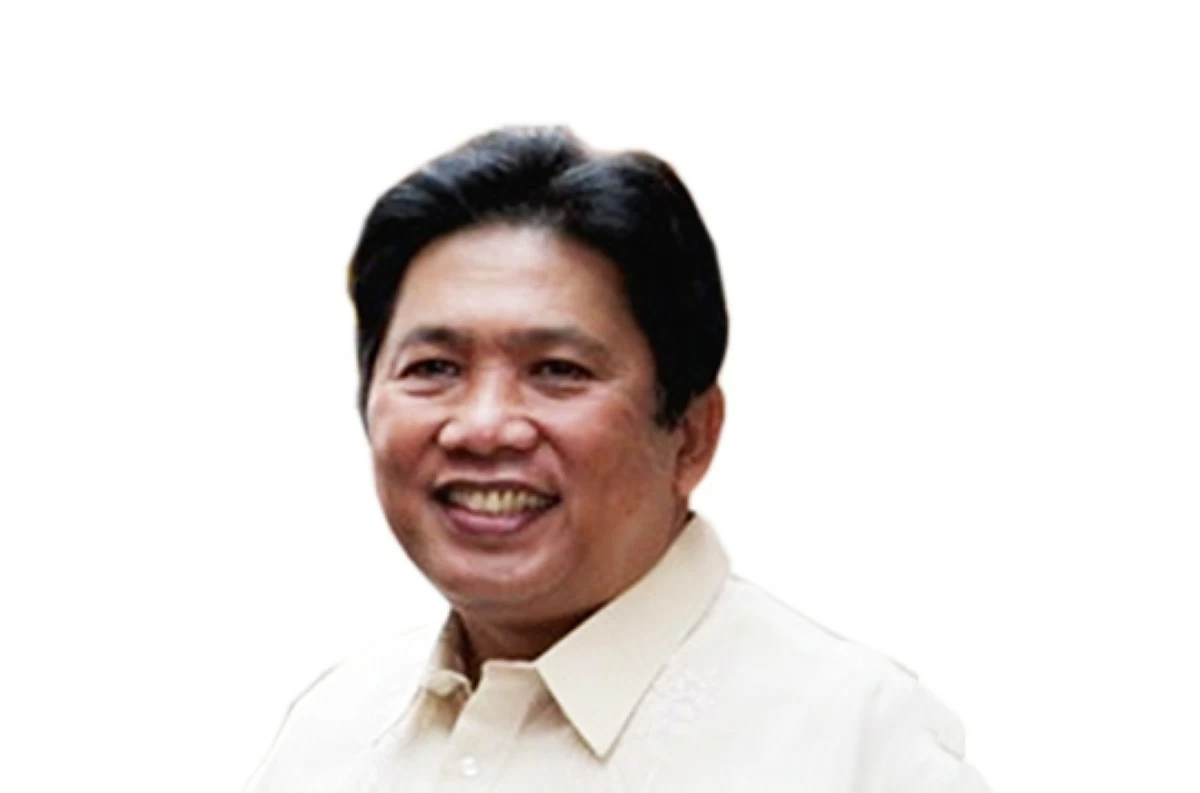
Her grand uncle, Jose Miraflores Hontiveros, served as Senator for the seventh senatorial district comprising Iloilo, Capiz and Romblon from 1922 to 1928. This makes Risa Hontiveros’ victory in the 2022 senatorial elections doubly significant, aside from her being the lone winning opposition candidate. When interviewed by former Senator Joey Lina and this writer at the Kapihan sa Manila Prince last week, she exuded the confidence of a seasoned politician who, by dint of hard work and perseverance, has become a credible national leader.
Is Risa Hontiveros ready to run for President — or Vice President — in 2028? Before we address this question, it may be well to get to know her better.
Her exemplary credentials are enriched by her family heritage. A lawyer by profession, her father Ramon hailed from Capiz and Iloilo. Her mother, the former Chit Navarro, is from Cavite and Manila and worked as an executive secretary. Her sister Pia is a well-known broadcast journalist and TV anchor. Her aunt, Daisy Hontiveros-Avellana, is a National Artist for Theater, and married to Lamberto V. Avellana, a National Artist for Theater and Film. Fr. Eduardo Hontiveros, her uncle, is a renowned Jesuit priest and pioneer of Filipino liturgical music. Her aunt, Nita Hontiveros-Lichauco is the founder of the Philippine Animal Welfare Society. Her cousin Leah Navarro is a singer and political activist.
She was widowed in 2005, as her husband, Francisco Baraquel, passed away from a heart attack. They have four children, namely Issa, Sinta, Kiko, and Ianna. She professes that being a solo parent has heavily influenced her advocacy and authorship of the Expanded Solo Parents Welfare Act.
After obtaining a degree in social sciences at the Ateneo de Manila University, she worked as a journalist for IBC-Channel 13 and GMA Network-Channel 7. She was involved in the formation of the Akbayan Party and was elected to the House of Representatives in2004, becoming an active member of the opposition during the administration of then President Gloria Macapagal Arroyo. She was an active advocate of the enactment of the Reproductive Health Law.
Following two unsuccessful attempts to win a Senate seat in 2010 and 2013, she was finally elected in 2016. She was the lone opposition candidate who won as Senator in 2022, surviving the Marcos-Duterte UniTeam juggernaut.
In 2025, she managed the successful senatorial bids of Bam Aquino and Kiko Pangilinan. She was deputy majority leader under then Senate President Vicente ‘Tito’ and head of the Senate committees on Health, Economic Affairs, and Women under incumbent Senate President Sherwin Gatchalian.
Now, let’s focus on her political future.
As she is completing her second consecutive Senate term, she is barred from seeking reelection. But she may run for a lower position, say, Representative, Governor or Mayor. Or she could run for President.
As a former business school professor, I believe it may be well to assess her preparedness by applying Howard Gardner’s framework on emotional intelligence.
Interpersonal intelligence refers to the ability to understand and work effectively with others, while intrapersonal intelligence involves self-awareness, emotional regulation, and acting consistently with one’s values.
Viewed through this prism, Senator Risa Hontiveros demonstrates strong emotional intelligence that has shaped both her civil society activism and her career in Philippine politics.
Before entering electoral politics, Hontiveros built her reputation as a public health advocate, women’s rights activist, and leader in civil society organizations. This background reflects high interpersonal intelligence, as she consistently collaborated with diverse sectors, including grassroots communities, health professionals, labor groups, and non-government organizations. As a three-term representative and later a two-term senator, she maintained a consultative leadership style, often engaging stakeholders in developing legislation on universal health care, mental health, women’s rights, and social protection. Her ability to build coalitions across sectors demonstrates empathy, active listening, and conflict management—qualities associated with emotional intelligence.
Hontiveros also exhibits strong intrapersonal intelligence. Throughout periods of intense political criticism and online disinformation, she has generally maintained a measured and disciplined public demeanor. Rather than relying on inflammatory rhetoric, she has often grounded her arguments in documented evidence, legislative records, and constitutional principles.
Applying Gardner’s framework, this consistency suggests self-awareness, emotional regulation, and commitment to long-term public service goals instead of short-term political gains. Moreover, her emotional intelligence contributes to her potential viability as a presidential or vice-presidential candidate.
However, Hontiveros also faces significant hurdles.
Philippine presidential elections often depend not only on competence but also on broad electoral machinery, regional alliances, financial resources, and widespread name recall. Compared with candidates backed by major political dynasties or large national coalitions, her organizational base has historically been more limited. Her policy positions on reproductive health, human rights, and governance reforms have likewise attracted strong opposition from some conservative and partisan groups, potentially limiting her appeal among certain voter segments.
In addition, critics argue that her consensus-oriented leadership style may sometimes be perceived as lacking the decisiveness or populist appeal that many Filipino voters associate with executive leadership. Whether this perception reflects actual leadership capacity remains open to debate, but it illustrates the difference between legislative effectiveness and electoral competitiveness.
While her experience and ethical consistency make her a credible contender for higher national office, her electoral prospects would also depend on political alliances, campaign organization, and her ability to broaden support across the diverse Philippine electorate.
According to a Manila Bulletin news report, she “expressed willingness to run for President in the 2028 elections.” During a speaking engagement at the Phinma-Southwestern University in Cebu City on Friday, June 19, she said: “I’m seriously considering it, preparing for that possibility... I think it is really necessary na magkaroon kami, from our ranks, ng strongest, best, most attractive and hopeful offer sa ating mga kababayan and mga kapwa botante.”
She expressed hope that by end-2026 or in early 2027, her group can come up with a common candidate. She said the ideal scenario would be one in which the strongest contender would be fielded. Early this year, the Risa Na! movement was launched by her group, the Akbayan party-list, with support from former Senator Sonny Trillanes.
Abangan.
Comments may be sent to [email protected]