

ADVERTISEMENT

Marcos worried future administrations may change West Philippine Sea policy after his term

Published Jul 5, 2026 07:34 am

At A Glance

  • President Marcos admitted he is concerned that future administrations could abandon or soften the Philippines' position on the West Philippine Sea after he leaves office.
  • He described the issue as an "almost existential" concern for the Philippine state.
  • The President said support from countries such as Canada reinforces the Philippines' position anchored on international law and the 2016 arbitral ruling.
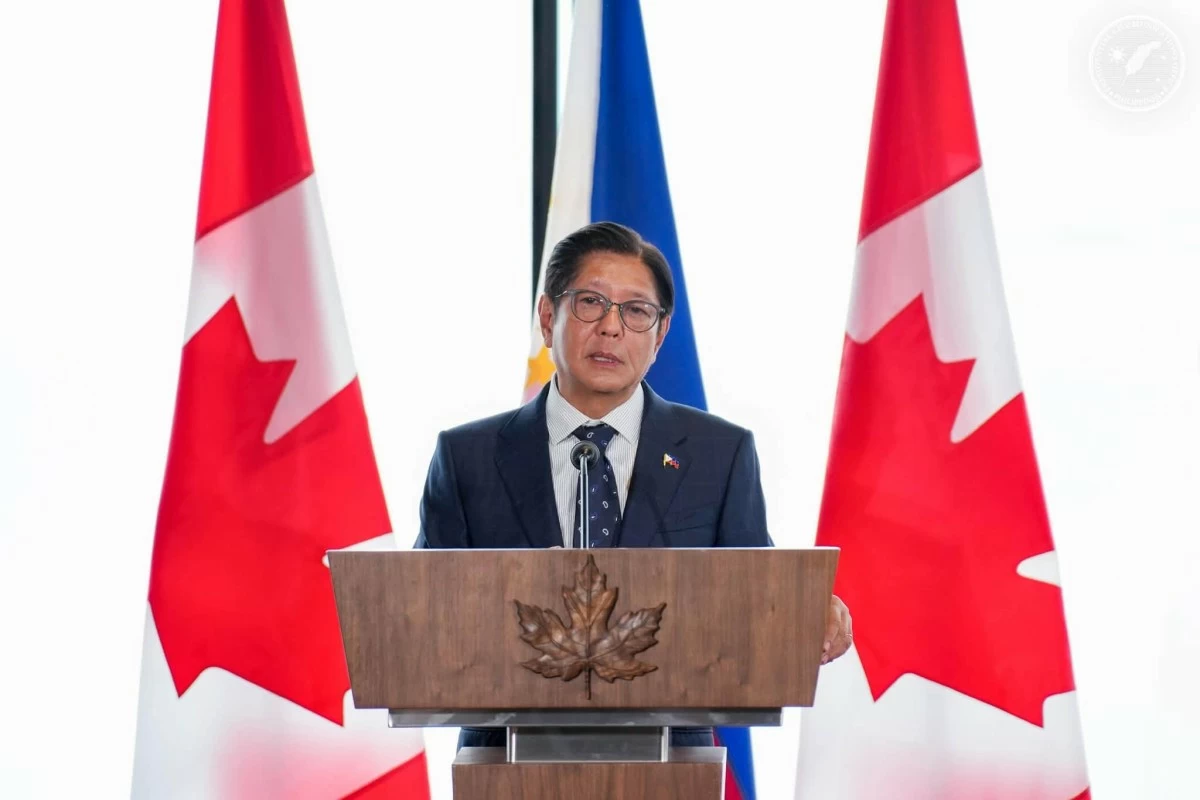
President Ferdinand 'Bongbong' Marcos Jr. (PCO)

President Marcos said he is concerned that future Philippine administrations could take a different approach to the West Philippine Sea issue after his term, warning that consistency is crucial in defending the country's sovereign rights and territorial integrity.

Speaking during a media briefing at the conclusion of his official visit to Canada, Marcos said he worries that future leaders may abandon the policies his administration has pursued in asserting the country's maritime rights in the disputed waters.

"Of course I am," Marcos said when asked whether he was concerned that Philippine policy could change after he leaves office.

"Because it's almost — not quite, but it's almost an existential issue for us," he added.

The President clarified that while ordinary Filipinos may not view the issue in such terms, it carries enormous significance for the Philippine state itself.

"Maybe not existential for ordinary Filipinos, but for the state of the Philippines, the Philippine Republic," he said.

"So we really have to be consistent in that," he added.

Marcos said no issue confronting a Philippine president is more important than protecting the country's sovereignty and sovereign rights.

"It is a very enormous — there are no issues before any president that are greater than that," he said.

"Some are equally important, but that is as important as anything else that we are having to deal with," he added.

The remarks came after Marcos and Canadian Prime Minister Mark Carney reaffirmed their support for the rule of law in the South China Sea and the continued implementation of the 2016 Arbitral Award during their bilateral meeting in Vancouver.

Canada was among the countries that openly reiterated support for the landmark ruling during the President's visit, with Marcos thanking Ottawa for being a "vocal and consistent" supporter of international law and the United Nations Convention on the Law of the Sea (UNCLOS).

Shift from previous policy

The Marcos administration has adopted a markedly different approach to the West Philippine Sea dispute compared to the previous administration, pursuing transparency initiatives, strengthening alliances with like-minded countries, and publicly exposing incidents of harassment and dangerous maneuvers by Chinese vessels against Philippine ships.

Under former president Rodrigo Duterte, Manila pursued closer ties with Beijing and largely set aside the arbitral ruling in favor of economic engagement with China.

The July 12, 2016, ruling by the Permanent Court of Arbitration invalidated China's sweeping nine-dash line claim over nearly the entire South China Sea and affirmed the Philippines' sovereign rights within its 200-nautical-mile exclusive economic zone.

Beijing, however, has consistently rejected the ruling, insisting that the award is "null and void."

This year marks the 10th anniversary of the arbitral award.

Marcos said support from countries such as Canada validates the Philippines' current foreign policy position.

"I think the rightness in our positioning, in terms of the way we position the Philippines in our foreign policy vis-à-vis the arbitral award, is validated by countries like Canada, which support it," he said.

"They see it as simply an enforcement of international law and the defense of our territorial integrity and the exercise of our sovereign rights within our sovereign territory," he added.

The Philippines has in recent years deepened security cooperation with countries that have publicly backed the arbitral ruling, including the United States, Japan, Australia, France, and Canada.

During Marcos' visit, Manila and Ottawa elevated bilateral relations to a Strategic Partnership and reaffirmed cooperation on defense, maritime security, and the maintenance of a rules-based international order in the Indo-Pacific.

Related Tags

President Marcos Bongbong Marcos PH-Canada West Philippine Sea South China Sea PH-China arbitral ruling
ADVERTISEMENT
.most-popular .layout-ratio{ padding-bottom: 79.13%; } @media (min-width: 768px) and (max-width: 1024px) { .widget-title { font-size: 15px !important; } }

{{ articles_filter_1561_widget.title }}

.most-popular .layout-ratio{ padding-bottom: 79.13%; } @media (min-width: 768px) and (max-width: 1024px) { .widget-title { font-size: 15px !important; } }

{{ static_articles_1562_widget.title }}

.most-popular .layout-ratio{ padding-bottom: 79.13%; } @media (min-width: 768px) and (max-width: 1024px) { .widget-title { font-size: 15px !important; } }

{{ articles_filter_1563_widget.title }}

{{ articles_filter_1564_widget.title }}

.mb-article-details { position: relative; } .mb-article-details .article-body-preview, .mb-article-details .article-body-summary{ font-size: 17px; line-height: 30px; font-family: "Libre Caslon Text", serif; color: #000; } .mb-article-details .article-body-preview iframe , .mb-article-details .article-body-summary iframe{ width: 100%; margin: auto; } .read-more-background { background: linear-gradient(180deg, color(display-p3 1.000 1.000 1.000 / 0) 13.75%, color(display-p3 1.000 1.000 1.000 / 0.8) 30.79%, color(display-p3 1.000 1.000 1.000) 72.5%); position: absolute; height: 200px; width: 100%; bottom: 0; display: flex; justify-content: center; align-items: center; padding: 0; } .read-more-background a{ color: #000; } .read-more-btn { padding: 17px 45px; font-family: Inter; font-weight: 700; font-size: 18px; line-height: 16px; text-align: center; vertical-align: middle; border: 1px solid black; background-color: white; } .hidden { display: none; }
function initializeAllSwipers() { // Get all hidden inputs with cms_article_id document.querySelectorAll('[id^="cms_article_id_"]').forEach(function (input) { const cmsArticleId = input.value; const articleSelector = '#article-' + cmsArticleId + ' .body_images'; const swiperElement = document.querySelector(articleSelector); if (swiperElement && !swiperElement.classList.contains('swiper-initialized')) { new Swiper(articleSelector, { loop: true, pagination: false, navigation: { nextEl: '#article-' + cmsArticleId + ' .swiper-button-next', prevEl: '#article-' + cmsArticleId + ' .swiper-button-prev', }, }); } }); } setTimeout(initializeAllSwipers, 3000); const intersectionObserver = new IntersectionObserver( (entries) => { entries.forEach((entry) => { if (entry.isIntersecting) { const newUrl = entry.target.getAttribute("data-url"); if (newUrl) { history.pushState(null, null, newUrl); let article = entry.target; // Extract metadata const author = article.querySelector('.author-section').textContent.replace('By', '').trim(); const section = article.querySelector('.section-info ').textContent.replace(' ', ' '); const title = article.querySelector('.article-title h1').textContent; // Parse URL for Chartbeat path format const parsedUrl = new URL(newUrl, window.location.origin); const cleanUrl = parsedUrl.host + parsedUrl.pathname; // Update Chartbeat configuration if (typeof window._sf_async_config !== 'undefined') { window._sf_async_config.path = cleanUrl; window._sf_async_config.sections = section; window._sf_async_config.authors = author; } // Track virtual page view with Chartbeat if (typeof pSUPERFLY !== 'undefined' && typeof pSUPERFLY.virtualPage === 'function') { try { pSUPERFLY.virtualPage({ path: cleanUrl, title: title, sections: section, authors: author }); } catch (error) { console.error('ping error', error); } } // Optional: Update document title if (title && title !== document.title) { document.title = title; } } } }); }, { threshold: 0.1 } ); function showArticleBody(button) { const article = button.closest("article"); const summary = article.querySelector(".article-body-summary"); const body = article.querySelector(".article-body-preview"); const readMoreSection = article.querySelector(".read-more-background"); // Hide summary and read-more section summary.style.display = "none"; readMoreSection.style.display = "none"; // Show the full article body body.classList.remove("hidden"); } document.addEventListener("DOMContentLoaded", () => { let loadCount = 0; // Track how many times articles are loaded const offset = [1, 2, 3, 4, 5, 6, 7, 8, 9, 10]; // Offset values const currentUrl = window.location.pathname.substring(1); let isLoading = false; // Prevent multiple calls if (!currentUrl) { console.log("Current URL is invalid."); return; } const sentinel = document.getElementById("load-more-sentinel"); if (!sentinel) { console.log("Sentinel element not found."); return; } function isSentinelVisible() { const rect = sentinel.getBoundingClientRect(); return ( rect.top < window.innerHeight && rect.bottom >= 0 ); } function onScroll() { if (isLoading) return; if (isSentinelVisible()) { if (loadCount >= offset.length) { console.log("Maximum load attempts reached."); window.removeEventListener("scroll", onScroll); return; } isLoading = true; const currentOffset = offset[loadCount]; window.loadMoreItems().then(() => { let article = document.querySelector('#widget_1690 > div:nth-last-of-type(2) article'); intersectionObserver.observe(article) loadCount++; }).catch(error => { console.error("Error loading more items:", error); }).finally(() => { isLoading = false; }); } } window.addEventListener("scroll", onScroll); });

Sign up by email to receive news.