






Manila Bulletin
 Philippines
Mindanao
Gov't readies for rehab of quake-hit communities in Davao Occidental
Philippines
Mindanao
Gov't readies for rehab of quake-hit communities in Davao Occidental
Philippines
Mindanao
Gov't readies for rehab of quake-hit communities in Davao Occidental
Gov't readies for rehab of quake-hit communities in Davao Occidental
Published Jul 4, 2026 03:32 pm


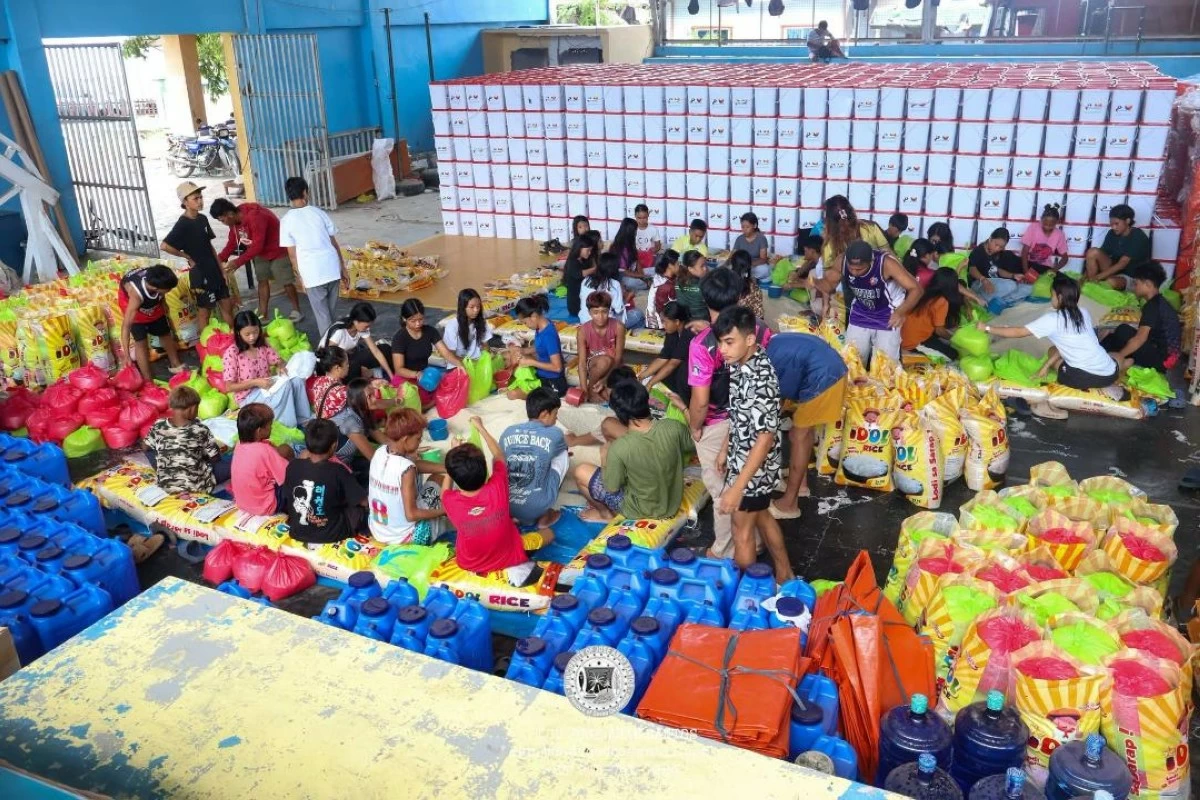
VOLUNTEERS repack relief assistance in Jose Abad Santos, Davao Occidental. (LGU JAS)
DAVAO CITY – Key government agencies in Davao region are conducting further assessment and validation in preparation for the rehabilitation and recovery phase of earthquake-hit communities in Davao Occidental.
Almost a month since the tremor struck, Office of Civil Defense-Davao Region chief Ednar Dayanghirang said different government agencies are now working with local government units in preparation for the rehabilitation and recovery phase.
Davao Occidental is the hardest-hit province in the Davao region in magnitude-7.8 earthquake with an offshore epicenter in Maasim, Sarangani on June 8.
Dayanghirang said that the assessments and validations may be completed by the end of the month.
He added that key agencies and local government units will hold planning workshops prior to the implementation of appropriate interventions.
“And it also requires a lot of funds for the rehabilitation efforts,” said Dayanghirang as OCD reports showed that initial estimated damage in the region is at least P148 million.
A report from the OCD said the towns of Jose Abad Santos (JAS) and Sarangani are the most affected municipalities.
The OCD recorded 21 fatalities, 79 injured, and 13 missing, mostly from Davao Occidental. Almost 16,000 houses were damaged, at least 5,000 of which were totally destroyed.
Nearly 160,000 individuals were affected and at least 11,000 of them are still in evacuation centers.
While Jose Abad Santos and Sarangani are still in early recovery phase, OCD said these towns require continued support through the provision of modular tents, shelter repair kits, housing repair materials such as GI sheets, lumber, nails, plywood, and other construction supplies; hygiene kits, potable water, sleeping kits, livelihood assistance, cash-for-work initiatives, and mental health and psychosocial support services.
Among agencies taking part in the ongoing assessment is the Mines and Geosciences Bureau (MGB), which is still conducting further geohazard assessment in affected communities.
MGB-Davao region chief Beverly Brebante said they have yet to determine if there are communities that will be relocated pending ongoing assessments in affected communities, where various geohazards have been recorded.
Among the geohazards recorded, Brebante added, were earthquake-induced mass wasting, sinkholes, and tension cracks in the hinterland villages in Davao Occidental.
MGB-Davao has yet to determine if there are communities that will be relocated once assessment will be completed, she said.
Brebante also disclosed that assessments are still ongoing in some schools, particularly those affected by massive landslides.
Initial results showed that two schools are set to be recommended by the agency for demolition due to threat of further landslides, the MGB-Davao region chief said.
The schools located in Jose Abad Santos were affected by the earthquake-induced landslide, Brebante said.
“Scientifically, if the damage was caused by the earthquake, it collapsed because of structural integrity, and not because of hazards like flood or landslides, it’s possible to rebuild in those areas,” she explained during the Regional Resilience Caravan on Friday, July 3.
Brebante added that MGB could issue geohazard certificates that would indicate specific geohazards in specific areas.
Face-to-face classes remain suspended in most parts of Davao Occidental as schools continue to implement Alternative Learning Modalities (ALMs) by distributing learning modules and take-home learning activities.