






Manila Bulletin
 Philippines
National
Marcos not worried about downsides of upper-middle-income status
Philippines
National
Marcos not worried about downsides of upper-middle-income status
Philippines
National
Marcos not worried about downsides of upper-middle-income status
Marcos not worried about downsides of upper-middle-income status
Published Jul 3, 2026 01:49 pm


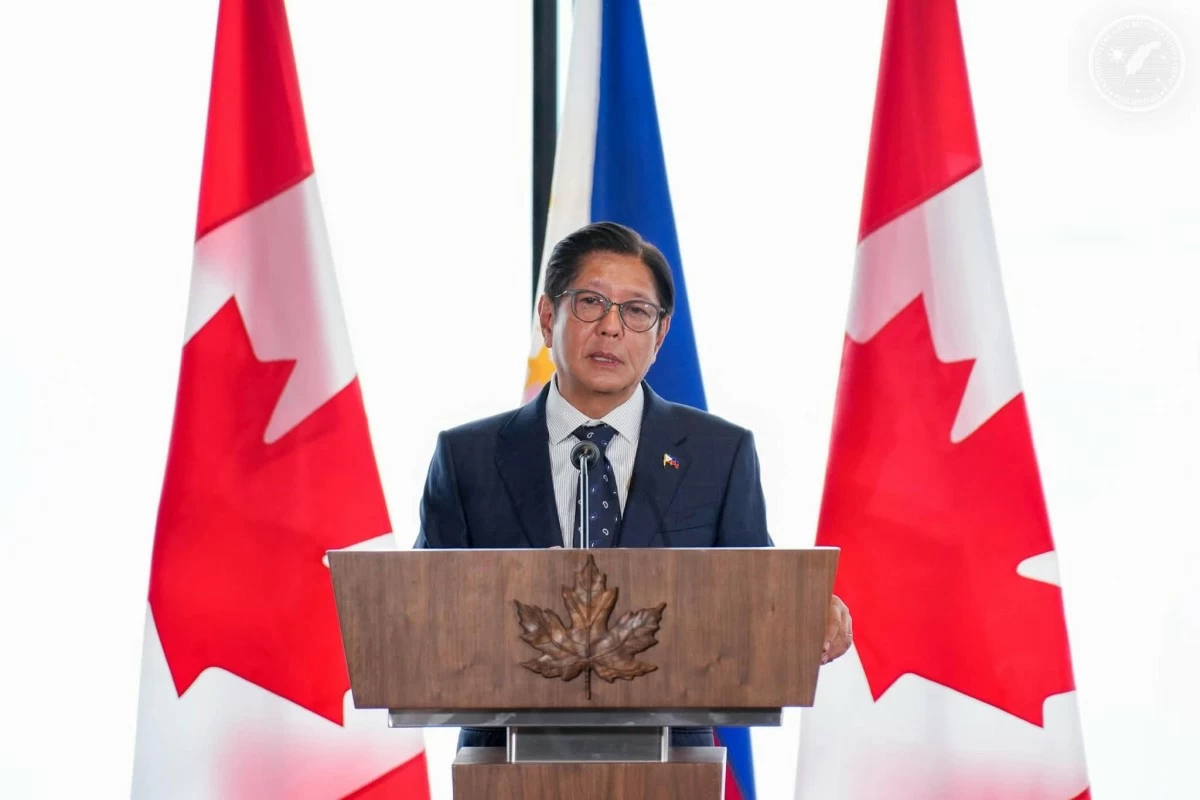
President Ferdinand R. Marcos Jr. (PCO)
President Marcos is not worried about the downsides of the Philippines' achievement of upper-middle-income status, as he is banking on increased investment.
As the country moves up the classification ladder, it may gradually lose access to foreign grants intended for poorer economies.
Marcos, however, does not see this as a cause for concern, saying the government would instead make up for it through increased investments.
"Now, that changes the rules a little bit for us, because we have to become less dependent on just straight-out foreign grants, for example," Marcos said during a joint press conference following a bilateral meeting with Prime Minister Mark Carney in Vancouver, Canada, on Friday, July 3.
"I do not worry. We were discussing this earlier today. And I don't think that it will lead to an increase in interest rates for loans, for example," he added.
"But we do believe the effect will be on the grants that are given. But nonetheless, that means, in a way, that can be interpreted as the World Bank saying, you no longer need that, and we will replace that with investment. And that, I think, is a very, very important development for the Philippines and its economy," he further said.
The President emphasized that the country "still have ways to go," but was confident that the government is able to identify the sectors of the economy and within government that need to be amended, modified, and modernized.
"And I think that is what led to the World Bank giving us that recognition," he said.
He reiterated that the economic policies his administration has undertaken led to the upgraded status, which he called "a heightening of our confidence in our economy."
"And I think that comes from the fact that the Philippines has, in the last four years, worked very, very hard to make the Philippines a more investment-friendly destination for both locals and for our friends around the world," he said.
The President also cited the decision to recognize the private sector as a "full partner in national development."
"And that has led us to the FTA now that we are talking about with Canada, and to the other 20-plus FTAs that we have been able to come to and sign again in the last four years," Marcos said.
"If you remember that we have been a low, yes, we were still in the lower strata of the middle-income economy since 1987. And it is just as well that it is about time that we moved up on that strata. We have changed that category somewhat," he added.
Carney, on the other hand, said the upgraded status is "a positive sign" for the Philippines, adding that it "reflects the latest economic statistic, a good quarter."
"Is something more broad and development that's been built over the course of the recent years. And if I may suggest as well, also the recognition of the importance of the private sector as a partner in overall development," Carney said during the press conference.
Carney echoed the President’s statement on the importance of the private sector in ushering in development.
“And if I may suggest as well, it is also the recognition of the importance of the private sector as a partner in overall development,” the Canadian leader said.
Carney also underscored the importance of the rule of law, respect for human rights, and transparency as important elements for economic development.
“That’s part of the positive aspect. Agreements such as we’re moving forward on today, including the prospect of a free trade agreement, are reinforcing all those factors,” Carney said.