






Manila Bulletin
 Philippines
National
Javi Benitez assures businessmen AI regulation bill won't stifle innovation
Philippines
National
Javi Benitez assures businessmen AI regulation bill won't stifle innovation
Philippines
National
Javi Benitez assures businessmen AI regulation bill won't stifle innovation
Javi Benitez assures businessmen AI regulation bill won't stifle innovation
Published Jul 3, 2026 08:50 am


At A Glance
- Rep. Javi Benitez pitches the consolidated Artificial Intelligence Development and Regulation Act, creating a phased Philippine AI Commission under DICT.
- The draft includes an AI Bill of Rights, regulator readiness rules, and bans on harmful uses like abuse imagery and vote manipulation.
- Benitez frames the law as credible but unfinished, inviting industry leaders to test its provisions before July 13.
Negros Occidental 3rd district Rep. Javier Miguel "Javi" Benitez (Contributed photo)
"We should not stifle innovation, but we regulate the risk."
With this simple line, Negros Occidental 3rd district Rep. Javier Miguel "Javi" Benitez became the best salesman for the proposed Artificial Intelligence Development and Regulation Act--one of the most consequential measures being considered by the House Committee on Information and Communications Technology.
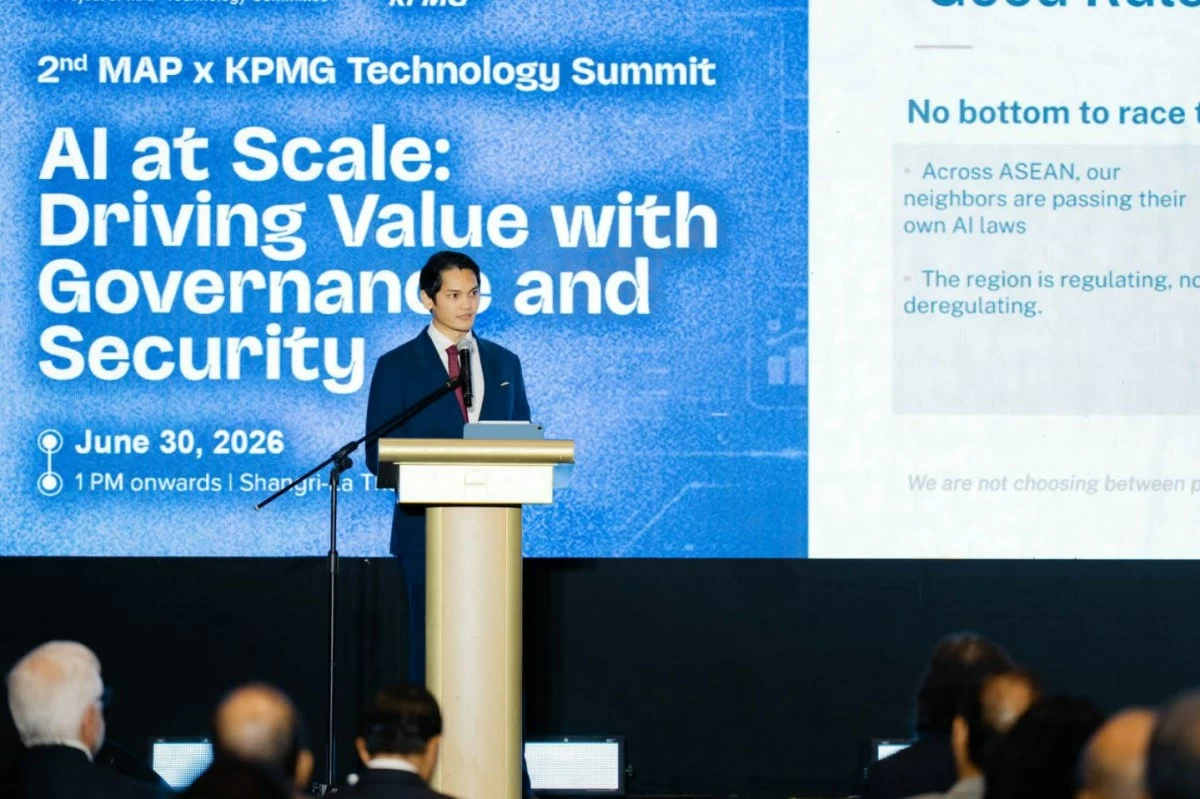
Benitez, the primary author and leading voice for AI in the House of Representatives, presented the draft measure last June 30 to some of the country's most senior business leaders, policymakers, and technology executives during the 2nd MAP x KPMG Technology Summit at Shangri-La The Fort in Bonifacio Global City.
The measure he pitched consolidates 26 bills, three resolutions, and a privilege speech into a single substitute bill, establishing a phased Philippine AI Commission under the Department of Information and Communications Technology (DICT)
Benitez headed the Technical Working Group (TWG) for Artificial Intelligence that undertook the consolidation.
He used the gathering of roughly 300 delegates to make the case that responsible regulation and economic competitiveness are not opposing goals.
Specifically, Benitez framed the measure as a credible AI law, and more importantly as an asset for Philippine business rather than a burden on it.
Its core features include a Bill of Rights for every AI user, a regulator that must meet defined readiness requirements before it can exercise its powers, and clear prohibitions on the most harmful uses of the technology, among them AI-generated abuse imagery and AI-enabled vote manipulation.
Benitez emphasized that the draft was built on existing Philippine institutions and tailored to survive constitutional challenge. He told delegates that while the TWG studied ans compared international frameworks, it did not copy them.
The Visayan further described the proposal as both a serious piece of legislation and a deliberately unfinished one, as he invited the executives, regulators, and industry leaders in the room to pressure-test its provisions before the TWG reconvenes on July 13.
The theme of the summit was "AI at Scale: Driving Value with Governance and Security."
Benitez's participation placed a sitting legislator and primary author of the country's AI framework directly before the sectors the law will govern. He positioned the Philippine approach as a model that the country can offer the region this year.