

ADVERTISEMENT

What makes a 'heat dome' and what does it mean?

Published Jul 2, 2026 03:04 pm
These unbearably hot and humid summer months that put millions of people across the globe at risk are typically made possible by phenomena known as heat domes.
Heat domes can make already-high temperatures even more extreme and prolonged, and they are worsening in severity and becoming more frequent as the planet warms.
Here's what to know.
What makes up a heat dome, and what does it do?
Heat domes are essentially high-pressure systems hovering above a region that trap heat and humidity, experts say.
They result from the northward flow of warm air. That system sends air sinking, pressure increasing, and temperatures rising.
"The concept of a heat dome really means that the air in this region is so warm, and we know that warm air expands," said Jennifer Francis, a climate scientist at the Woodwell Climate Research Center. "It basically means that the layers of the atmosphere are bulging upward as well."
Simply put, heat domes cause heat waves. They're associated with very dry, sunny conditions that last for multiple days at a time, trap heat at the surface and help to amplify it, said Zachary Labe, climate scientist at Climate Central, an independent collective of scientists.
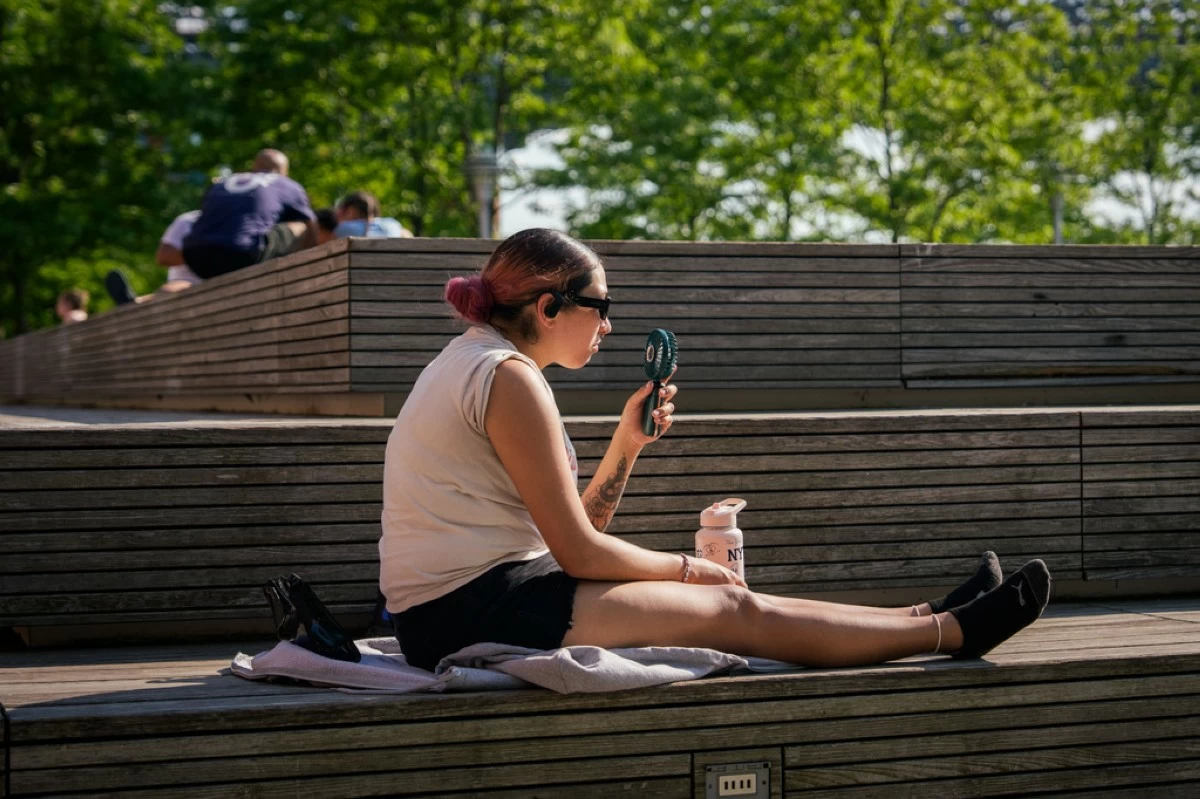
FILE - A person uses an electric fan during a heat advisory, in the Brooklyn borough of New York, May 19, 2026. (AP Photo/Adam Gray, File)
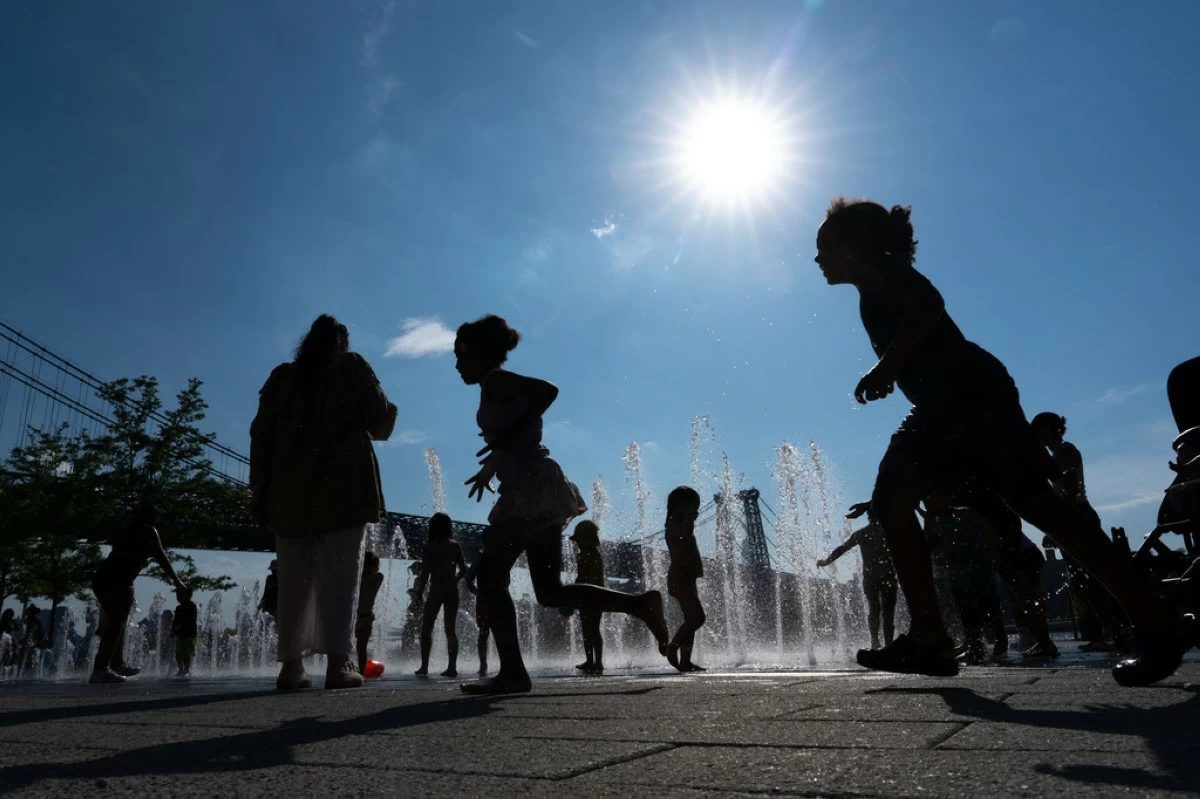
FILE - People play in the fountains by the East River during a heat advisory, in the Brooklyn Borough of New York, May 19, 2026. (AP Photo/Adam Gray, File)
How has heat affected the world this year?
Heat impacted various regions of the world early in 2026.
The continental United States registered its most abnormally hot month in 132 years of records in March, with record-shattering extremes first in the Southwest and then across the rest of the nation. Heat scorched the French Open and parts of India in May. Extreme heat has since been top of mind for the World Cup across the U.S., Canada, and Mexico.
Starting mid-June, Europe has baked under unseasonable highs of around 40 degrees Celsius (104 Fahrenheit) in many places due to a heat dome.
Now, much of the Eastern U.S. is expected to be slammed by a long heat wave in the coming days, and already, much of the Southwest is experiencing temperatures around 100 degrees Fahrenheit (38 Celsius) this week, and those temperatures could reach elsewhere by the Fourth of July holiday.
What role does climate change play?
Science shows that as the planet warms — the result of humans burning coal, oil and gas — heat waves get worse, last longer and become more frequent.
"Heat waves like this are so directly connected to the climate crisis and climate change," Francis said, "and it's because of how we've been burning fossil fuels and cutting down forests for so long and increasing the concentration of heat-trapping gases in the atmosphere.
"These kinds of heat waves and droughts and associated fires are all increasing just as we would expect them to in a warming world," she said.
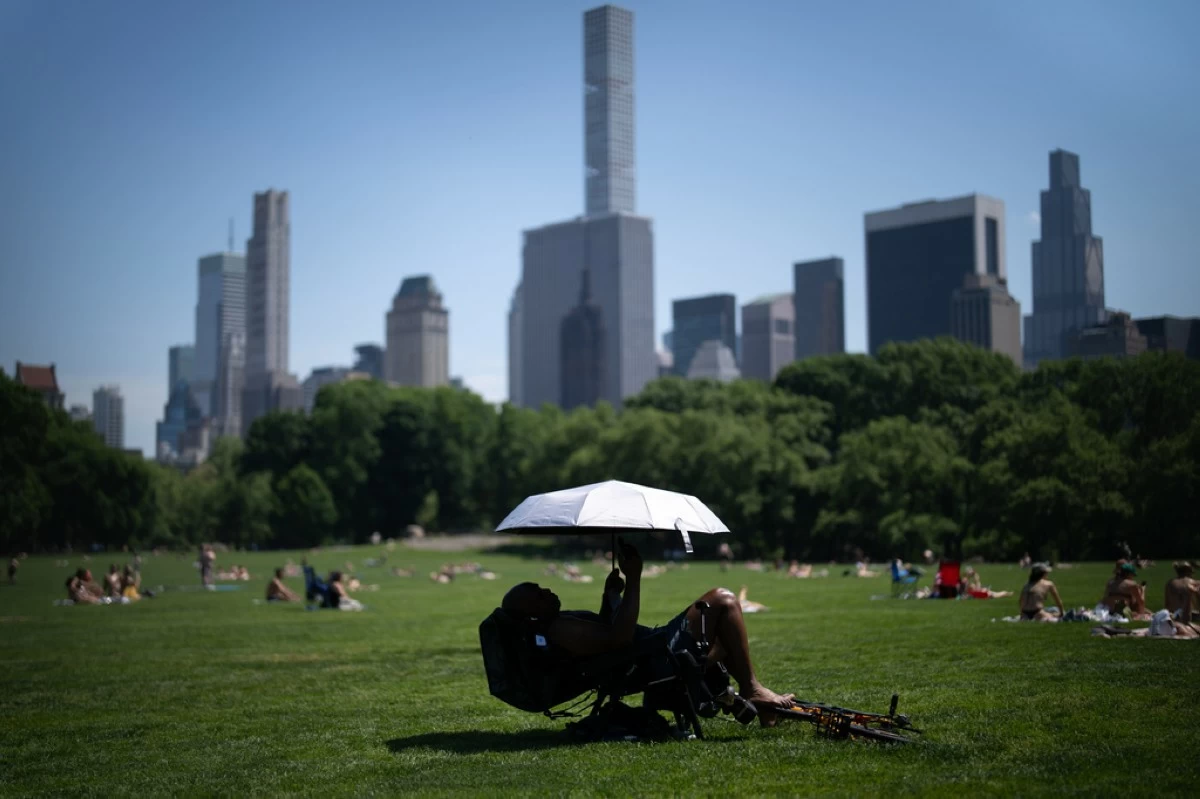
FILE - A person uses an umbrella to shield themselves from the sun during a heat advisory in Central Park, May 19, 2026, in New York. (AP Photo/Adam Gray, File)
How can I stay safe?
Experts say people need to stay hydrated when sweltering heat and humidity hit.
Be sure to avoid outdoor exercise in the heat of the day — and find shade, or if you can, access to air conditioning. Some cities offer resources and cooling centers to provide relief.
Cooling off in nearby pools or bodies of water can also help.
Heat domes can make it difficult to fully recover from high temperatures at night, so finding ways to stay cool during the day and evening hours is important.
"It's those night times — especially, locations and people, who don't have access to adequate cooling, really need to be aware of the impacts that added heat stress will have and their body's ability not to be able to cool down," Labe said, "because humidity is going to be a really key factor in boosting those heat impacts."  (ALEXA ST. JOHN Associated Press)

Related Tags

heat dome heat wave
ADVERTISEMENT
.most-popular .layout-ratio{ padding-bottom: 79.13%; } @media (min-width: 768px) and (max-width: 1024px) { .widget-title { font-size: 15px !important; } }

{{ articles_filter_1561_widget.title }}

.most-popular .layout-ratio{ padding-bottom: 79.13%; } @media (min-width: 768px) and (max-width: 1024px) { .widget-title { font-size: 15px !important; } }

{{ static_articles_1562_widget.title }}

.most-popular .layout-ratio{ padding-bottom: 79.13%; } @media (min-width: 768px) and (max-width: 1024px) { .widget-title { font-size: 15px !important; } }

{{ articles_filter_1563_widget.title }}

{{ articles_filter_1564_widget.title }}

.mb-article-details { position: relative; } .mb-article-details .article-body-preview, .mb-article-details .article-body-summary{ font-size: 17px; line-height: 30px; font-family: "Libre Caslon Text", serif; color: #000; } .mb-article-details .article-body-preview iframe , .mb-article-details .article-body-summary iframe{ width: 100%; margin: auto; } .read-more-background { background: linear-gradient(180deg, color(display-p3 1.000 1.000 1.000 / 0) 13.75%, color(display-p3 1.000 1.000 1.000 / 0.8) 30.79%, color(display-p3 1.000 1.000 1.000) 72.5%); position: absolute; height: 200px; width: 100%; bottom: 0; display: flex; justify-content: center; align-items: center; padding: 0; } .read-more-background a{ color: #000; } .read-more-btn { padding: 17px 45px; font-family: Inter; font-weight: 700; font-size: 18px; line-height: 16px; text-align: center; vertical-align: middle; border: 1px solid black; background-color: white; } .hidden { display: none; }
function initializeAllSwipers() { // Get all hidden inputs with cms_article_id document.querySelectorAll('[id^="cms_article_id_"]').forEach(function (input) { const cmsArticleId = input.value; const articleSelector = '#article-' + cmsArticleId + ' .body_images'; const swiperElement = document.querySelector(articleSelector); if (swiperElement && !swiperElement.classList.contains('swiper-initialized')) { new Swiper(articleSelector, { loop: true, pagination: false, navigation: { nextEl: '#article-' + cmsArticleId + ' .swiper-button-next', prevEl: '#article-' + cmsArticleId + ' .swiper-button-prev', }, }); } }); } setTimeout(initializeAllSwipers, 3000); const intersectionObserver = new IntersectionObserver( (entries) => { entries.forEach((entry) => { if (entry.isIntersecting) { const newUrl = entry.target.getAttribute("data-url"); if (newUrl) { history.pushState(null, null, newUrl); let article = entry.target; // Extract metadata const author = article.querySelector('.author-section').textContent.replace('By', '').trim(); const section = article.querySelector('.section-info ').textContent.replace(' ', ' '); const title = article.querySelector('.article-title h1').textContent; // Parse URL for Chartbeat path format const parsedUrl = new URL(newUrl, window.location.origin); const cleanUrl = parsedUrl.host + parsedUrl.pathname; // Update Chartbeat configuration if (typeof window._sf_async_config !== 'undefined') { window._sf_async_config.path = cleanUrl; window._sf_async_config.sections = section; window._sf_async_config.authors = author; } // Track virtual page view with Chartbeat if (typeof pSUPERFLY !== 'undefined' && typeof pSUPERFLY.virtualPage === 'function') { try { pSUPERFLY.virtualPage({ path: cleanUrl, title: title, sections: section, authors: author }); } catch (error) { console.error('ping error', error); } } // Optional: Update document title if (title && title !== document.title) { document.title = title; } } } }); }, { threshold: 0.1 } ); function showArticleBody(button) { const article = button.closest("article"); const summary = article.querySelector(".article-body-summary"); const body = article.querySelector(".article-body-preview"); const readMoreSection = article.querySelector(".read-more-background"); // Hide summary and read-more section summary.style.display = "none"; readMoreSection.style.display = "none"; // Show the full article body body.classList.remove("hidden"); } document.addEventListener("DOMContentLoaded", () => { let loadCount = 0; // Track how many times articles are loaded const offset = [1, 2, 3, 4, 5, 6, 7, 8, 9, 10]; // Offset values const currentUrl = window.location.pathname.substring(1); let isLoading = false; // Prevent multiple calls if (!currentUrl) { console.log("Current URL is invalid."); return; } const sentinel = document.getElementById("load-more-sentinel"); if (!sentinel) { console.log("Sentinel element not found."); return; } function isSentinelVisible() { const rect = sentinel.getBoundingClientRect(); return ( rect.top < window.innerHeight && rect.bottom >= 0 ); } function onScroll() { if (isLoading) return; if (isSentinelVisible()) { if (loadCount >= offset.length) { console.log("Maximum load attempts reached."); window.removeEventListener("scroll", onScroll); return; } isLoading = true; const currentOffset = offset[loadCount]; window.loadMoreItems().then(() => { let article = document.querySelector('#widget_1690 > div:nth-last-of-type(2) article'); intersectionObserver.observe(article) loadCount++; }).catch(error => { console.error("Error loading more items:", error); }).finally(() => { isLoading = false; }); } } window.addEventListener("scroll", onScroll); });

Sign up by email to receive news.