






Manila Bulletin
 Lifestyle
Schools and Universities
UST students emerge as Philippine champions for the AI Ready ASEAN Youth Challenge 2026
Lifestyle
Schools and Universities
UST students emerge as Philippine champions for the AI Ready ASEAN Youth Challenge 2026
Lifestyle
Schools and Universities
UST students emerge as Philippine champions for the AI Ready ASEAN Youth Challenge 2026
UST students emerge as Philippine champions for the AI Ready ASEAN Youth Challenge 2026
Published Jul 2, 2026 04:43 pm


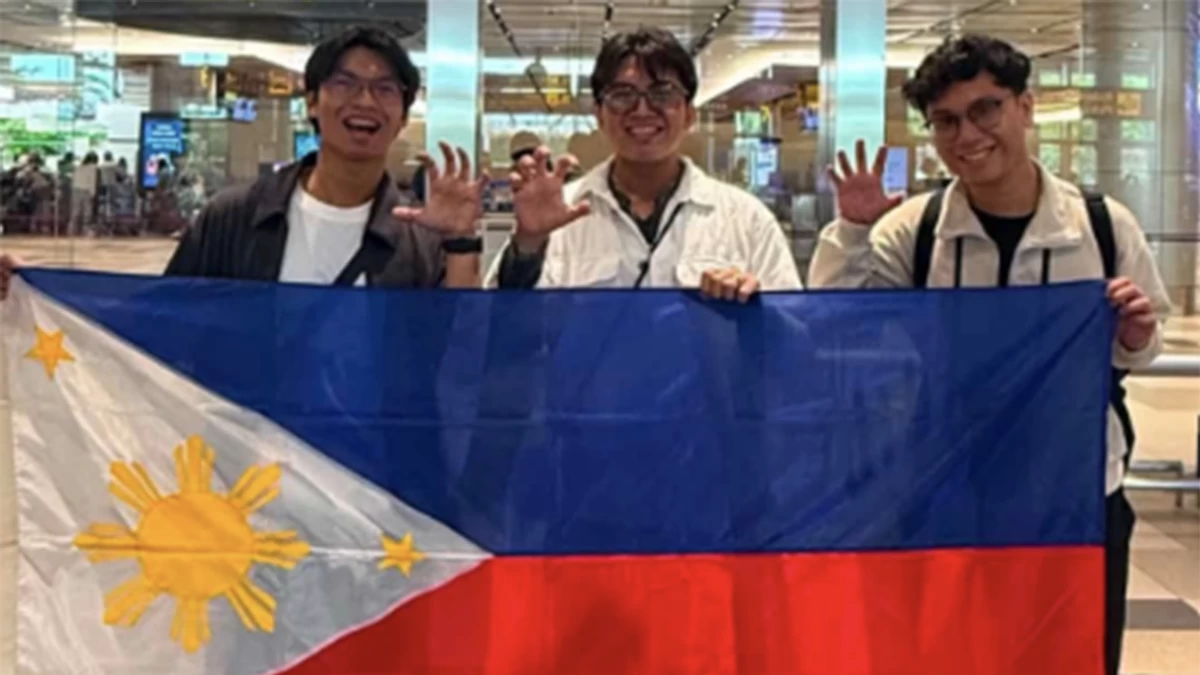
(From left) UST Team CATS Josh Kenn Viray, John Harold Peralta, and Wilmargherix M. Castaneda
A student team from the University of Santo Tomas (UST) emerged as the Philippines’ national champion in the prestigious AI Ready ASEAN Youth Challenge 2026, earning the distinction of representing the country at the Grand Finals in Singapore, held from May 18 to 24, 2026.
The AI Ready ASEAN Youth Challenge 2026 is a premier regional artificial intelligence competition involving participants from the eleven ASEAN member states. Organized by AngelHack Pte. Ltd. in direct partnership with AI Singapore (AISG)—the national AI program of the Singapore government and one of the world’s most recognized public AI institutions—the challenge gathers the region’s top student innovators to develop AI-powered solutions addressing pressing social problems across Southeast Asia. Submissions were evaluated based on technical depth, feasibility, scalability, and regional impact.
Representing the university under the team name CATS, student representatives Wilmargherix M. Castaneda (CICS-4CSC), Josh Kenn Viray (CICS-4CSC), and John Harold Peralta (FMS-2MEDC) presented NutriGuide. NutriGuide is an AI-powered pediatric nutrition platform designed to bridge the gap between clinical recommendations and actual feeding practices across Southeast Asia. With more than 33.8 million children under the age of five affected by stunting in the region, NutriGuide directly addresses one of ASEAN’s most urgent healthcare challenges.
The platform supports both caregivers and pediatricians through four integrated capabilities:
Bridging food literacy: An AI-powered tool that converts clinical prescriptions into culturally appropriate and budget-adjusted meal plans using local ASEAN food databases;
Simulating growth: A digital twin growth simulator that allows families and doctors to visualize projected child outcomes before implementing nutrition plans;
Screening pre-consultations: An AI-assisted screening system featuring real-time WHO z-score computation and urgent referral flagging; and
Securing clinical safety: A dual-architecture safety model where all clinical decision pathways remain deterministic and rule-based, while the AI operates strictly under a pediatrician-in-the-loop framework.
During the Grand Finals in Singapore, the team operated the Philippine country booth, conducted live NutriGuide demonstrations, and engaged directly with international judges and stakeholders from across the ASEAN innovation ecosystem.
Beyond the title, the competition opened opportunities for collaborative research partnerships with ASEAN health-tech institutions, provided visibility within AISG scholarship and funding networks, and brought broader recognition to Filipino student innovation on the global stage.
For UST, the oldest university in Asia, this milestone highlights its growing excellence in artificial intelligence, interdisciplinary innovation, and social impact research. The achievement firmly places UST among a select group of Philippine academic institutions recognized at the ASEAN level for AI innovation and health technology.