







Romualdez being used as a "political scapegoat', says spox
Published Jul 2, 2026 09:56 am


At A Glance
- Romualdez's camp denies any link to flood control corruption, calling him a "political scapegoat".
- Atienza stresses the Speaker has no role in planning, bidding, or releasing funds, as the budget process is led by the Executive and deliberated by Congress.
- She insists accountability must follow evidence, not target a "big name" for convenience.
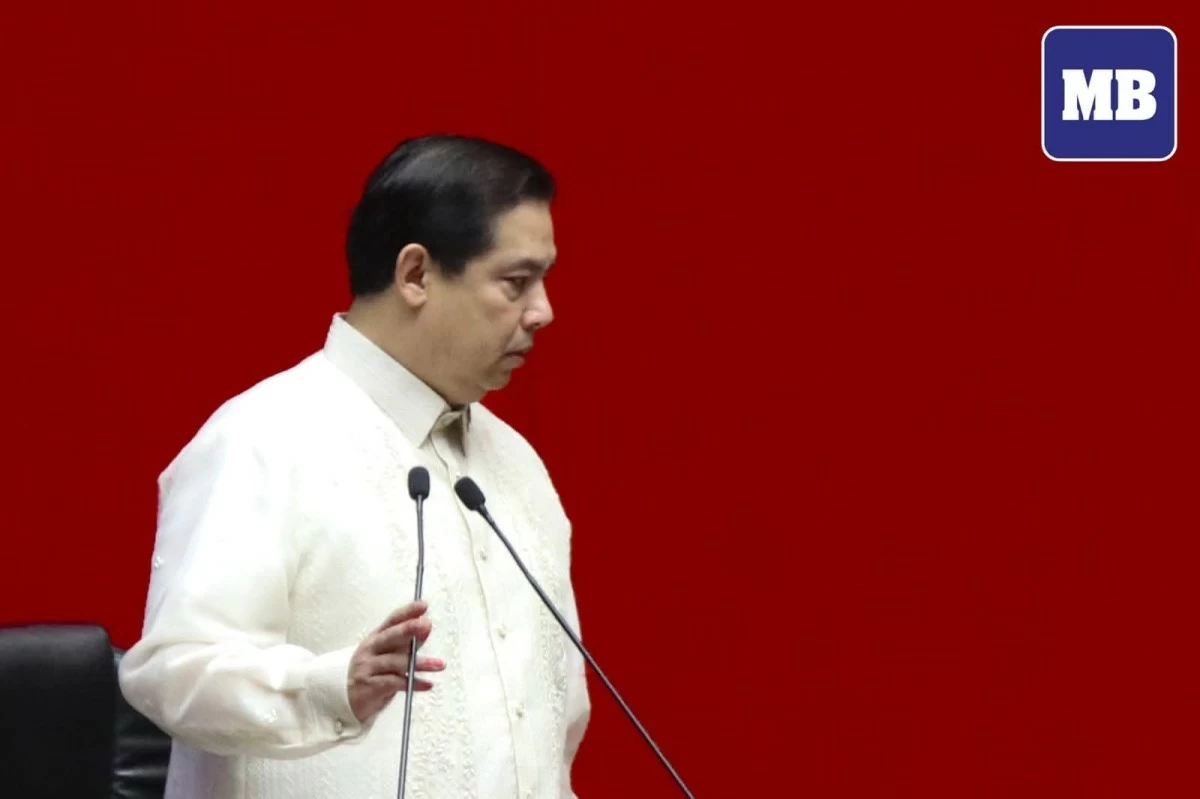
Leyte 1st district Rep. Martin Romualdez (MANILA BULLETIN)
The camp of Leyte 1st district Rep. Martin Romualdez says the former House Speaker is being used as a "convenient excuse and political scapegoat” in the flood control projects corruption scandal.
This, after spokesperson lawyer Elaine Atienza said for the umpteenth time Thursday, July 2 that there was no evidence linking the Lakas-Christian Muslim Democrats (Lakas-CMD) president to anomalous flood control projects.
“At the end of the day, justice demands only one standard,” Atienza said.
Atienza reiterated that such accusations were inconsistent with how the national budget process in Congress operates.
She says that despite Senate and House inquiries and other official investigations, no former or incumbent official of the Department of Public Works and Highways (DPWH) has identified Romualdez as having participated in the planning, procurement, implementation, inspection, payment or release of funds for any alleged ghost flood control project.
She added that even former DPWH Secretary Manuel Bonoan, who had firsthand knowledge of the department’s operations, never implicated the Leyte lawmaker.
“Simple lang kung bakit (The reason is simple) — because Rep. Romualdez was not involved,” Atienza said.
She says the allegations fail to reflect how the national budget is crafted and implemented.
“The issue traces back to the national budget process. Sa prosesong iyan — no single person—not even the Speaker of the House—can control,” said the lawyer.
Atienza says that the National Expenditure Program (NEP)--the precursor of the General Appropriations Bill (GAB) or proposed national budget--is prepared by the Executive branch through the Department of Budget and Management (DBM) and implementing agencies, including the DPWH, before it is submitted to Congress for deliberation by both the House of Representatives and the Senate.
“No Speaker can dictate upon Cabinet secretaries. Neither can he dictate upon senators, who exercise their own independent constitutional mandate. Sila po ay pantay-pantay diyan being elected officials. Primus inter pares,” she said.
She stressed that once the budget becomes law, the Speaker has “absolutely no authority” over project bidding, contract awards, implementation, inspections, payments or the release of government funds.
“Hindi niya po saklaw ang pagpapa-release ng budget (He has no say on the release of the budget). Those are functions vested by law in the executive branch,” Atienza said.
“Hindi kayang utusan ng Speaker ang DPWH Secretary. Hindi niya kayang diktahan ang DBM o ang Senado. At lalong hindi siya ang nagpa-plano ng proyekto, nagpapa-bid, nag-a-award ng kontrata, nag-iinspeksyon, o naglalabas ng pondo,” the lawyer underscored.
(The Speaker cannot order the DPWH Secretary. He cannot dictate the DBM or the Senate. And he is certainly not the one planning projects, conducting bids, awarding contracts, inspecting, or releasing funds.)
According to Atienza, insisting that Romualdez was the alleged “mastermind” would require the public to believe that one person controlled every stage of the budget and infrastructure process.
“Ang gustong palabasin ng iba, parang iisang tao ang may hawak ng buong gobyerno. Hindi po ganoon ang ating Konstitusyon,” she said.
(What others want to suggest is that a single person controls the entire government. That is not how our Constitution works.)
Atienza maintained that accountability should rest on those who exercised legal and operational authority over the projects.
“If there were irregularities in any infrastructure project, then those who actually exercised legal and operational authority should be identified and held accountable. Accountability must follow the evidence—not political convenience,” Atienza said.
“Kung may nagkasala, papanagutin natin. Pero huwag nating gawing shortcut ang paghahanap ng isang malaking pangalan para lang may maipakita sa publiko,” Atienza said.
(If someone has committed a wrongdoing, we will hold them accountable. But let us not take shortcuts by simply looking for a big name just to show something to the public.)