






Manila Bulletin
 Business
The Stock Market
Philippine M&A value climbs to ₱860 billion as retail deals lead surge
Business
The Stock Market
Philippine M&A value climbs to ₱860 billion as retail deals lead surge
Business
The Stock Market
Philippine M&A value climbs to ₱860 billion as retail deals lead surge
Philippine M&A value climbs to ₱860 billion as retail deals lead surge
Published Jul 2, 2026 10:33 pm


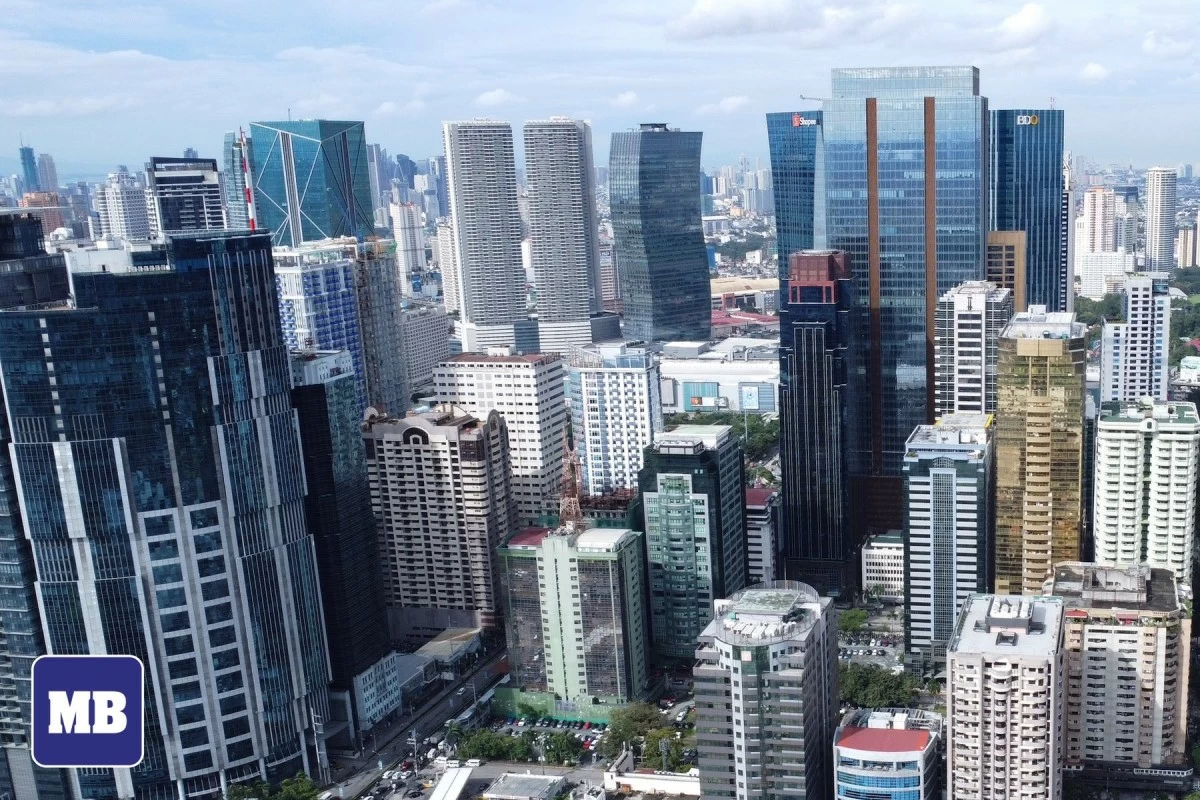
High-rise buildings in the Ortigas Business Center are seen on Wednesday, Nov. 5. In a report by Bloomberg, the Philippine Stock Exchange Index has dropped 20 percent over the past decade, ranking as the worst performer among major global benchmarks. In contrast, Asia-Pacific stocks climbed 72 percent, while Indonesia’s Jakarta Composite Index soared 82 percent. Photo by Santi San Juan | MB
The value of the country’s merger and acquisitions (M&A) notifications rose by six percent to nearly ₱860 billion in 2025, driven largely by proposed deals in wholesale and retail trade, according to the Philippine Competition Commission (PCC).
In its annual report, the PCC said it received 52 M&A notifications worth ₱859.03 billion last year, higher than the 29 notifications with a combined transaction value of ₱809 billion in 2024.
The country’s antitrust watchdog said a quarter of the notifications last year came from the wholesale and retail trade sector, which reached an aggregated value of ₱217.94 billion covering seven deals.
Financial and insurance activities ranked second, generating the highest number of notifications last year at 10 deals with a total value of ₱97.94 billion.
This was followed by the mining and quarrying sector with ₱83.85 billion in value covering only one deal, transportation and storage sector with seven deals worth ₱75.42 billion, and real estate activities with three deals worth ₱56.63 billion.
“The transactions reflect sustained investment activity across the Philippine economy, including developments in several regulated and strategically significant markets,” the PCC said.
Without disclosing the value, the PCC said it approved 35 M&A deals or 67 percent of the total notifications last year, double the 17 approved transactions in 2024.
Among the approved transactions were the joint venture between Prime Infrastructure Capital Inc. and First Gen Corp., Mynt’s takeover of ECPay, Metro Pacific Agro Ventures Inc.’s acquisition of Franklin Baker Co. of the Philippines, and Insular Life Assurance Company’s buyout of Generali Life Assurance Philippines Inc.
Pursuant to its mandate under the Philippine Competition Act, the PCC reviews M&A notifications to ensure that these deals do not result in a substantial lessening of competition.
Since the PCC was established in 2016, it has since reviewed a total of 369 transactions as of last year, representing a cumulative transaction value of around ₱7.51 trillion.
“Financial and insurance activities, manufacturing, energy, real estate, and transportation remained among the most significant sectors in terms of both transaction volume and value, underscoring the central role of merger review in safeguarding competition in strategically important industries,” it said.
Starting March 1 this year, the thresholds for M&A deals that should be notified to the PCC for review were adjusted upward to reflect inflation, economic growth, and current market conditions.
The proposed transactions that require notification have been set at ₱9.1 billion for size of party (SOP) and ₱3.8 billion for size of transaction (SOT). Prior to this, the thresholds were set at ₱8.5 billion for SOP and ₱3.5 billion for SOT.
SOP refers to the combined value of assets or revenues of the ultimate parent entity of either party involved in the deal, while SOT refers to the total value of assets or revenues of the acquired entity and its controlled entities.
For this year, the PCC said it will continue to refine its merger review process to ensure efficiency and transparency, reinforcing its commitment to safeguarding fair competition while protecting consumer welfare.
“The commission intends to draft and update key rules, including those governing the process for exemption from compulsory notification of public-private partnership (PPP) projects,” it said.
The PCC earlier issued its draft circular on the Updated Process for Exemption from Compulsory Notification of PPP Projects, which seeks to exempt certain projects based on regional and economic development benchmarks.