






Manila Bulletin
 Philippines
National
Meaningless? House members skeptical of Philippines' upper-middle-income status
Philippines
National
Meaningless? House members skeptical of Philippines' upper-middle-income status
Philippines
National
Meaningless? House members skeptical of Philippines' upper-middle-income status
Meaningless? House members skeptical of Philippines' upper-middle-income status
Published Jul 2, 2026 04:20 pm


At A Glance
- Lawmakers question the World Bank's upper-middle-income classification, saying most Filipinos still struggle and per capita income hides severe inequality.
- Rep. Edgar Erice stresses that the wealth of a few billionaires inflates averages, urging government to release detailed income data by class for clearer policymaking.
- TUCP challenges economic managers to prove the status by raising wages and improving services, warning that growth is meaningless if only the rich benefit.
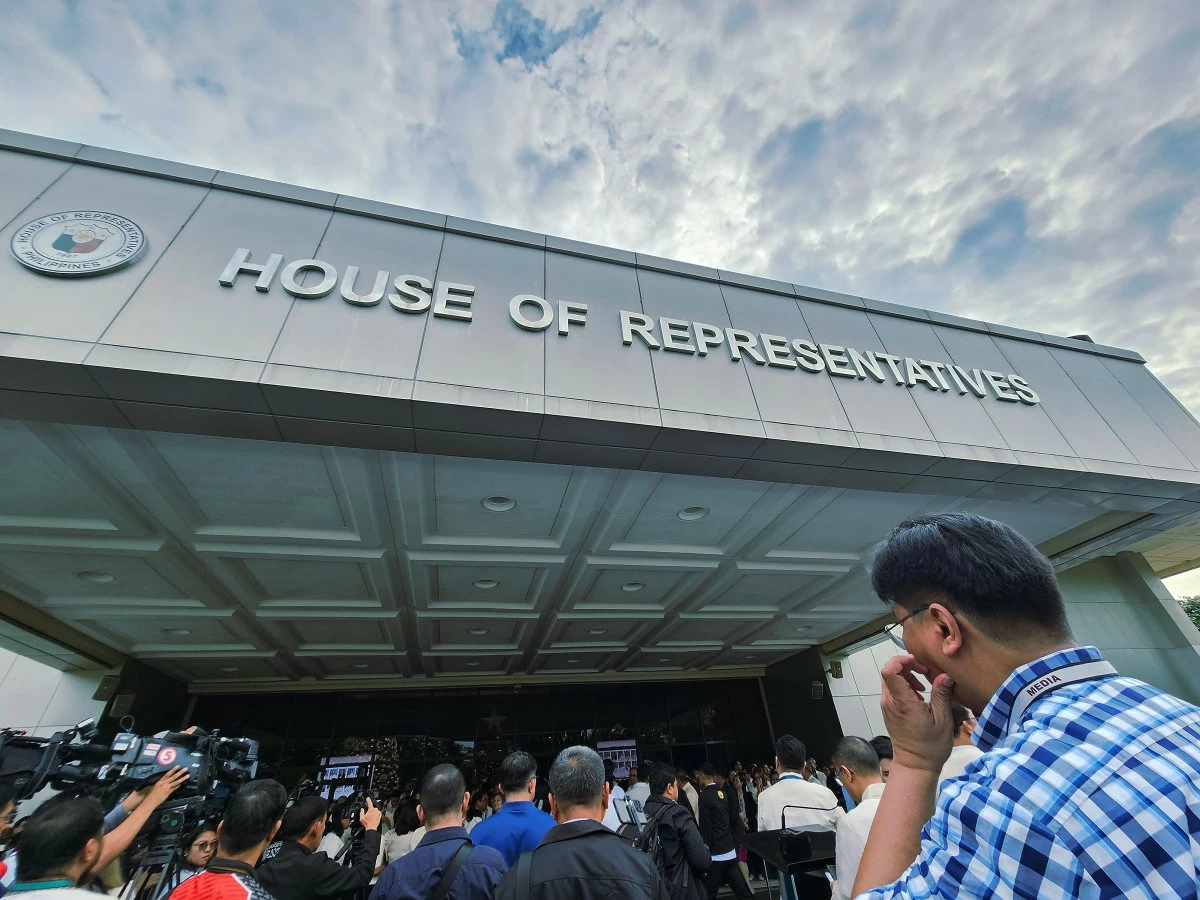
The House of Representatives (Ellson Quismorio/ MANILA BULLETIN)
House members sounded highly skeptical of the World Bank's (WB) declaration that the Philippines has attained upper-middle-income status, as they noted most Filipino families continued to struggle financially.
Caloocan City 2nd district Rep. Edgar "Egay" Erice says that the upper-middle-income tag is largely meaningless to the vast majority of Filipinos whose incomes remain far below the reported national average.
According to Erice, the WB classification was based on the country’s Gross National Income (GNI) per capita exceeding the threshold of US$4,635.
However, he stressed that per capita income figures do not accurately reflect the economic realities faced by most Filipino families and tend to obscure the country’s severe income inequality.
“The income of most Filipinos is significantly lower than the reported per capita income. The figure hides the enormous gap between the poor and middle class on one hand, and the very small number of extremely wealthy Filipinos on the other,” Erice said.
He explained that the country’s richest individuals possess such immense wealth that they artificially inflate the national average income.
“To illustrate, if a billionaire enters a room with 99 penniless people, the average wealth of everyone in that room would immediately skyrocket. Yet the reality remains that 99 of the 100 people are still poor,” Erice said.
The veteran lawmaker called on the government to release more detailed income data that reflects the actual economic condition of Filipino families across different income groups.
“The government should present the average income of Filipino households according to economic class—the poor, lower-middle class, middle class, upper-middle class, and the wealthy. This would provide a clearer picture of the real condition of Filipino families and help policymakers design programs that directly address the needs of each sector,” he said.
No reason to celebrate
Meanwhile, the Trade Union Congress of the Philippines (TUCP) party-list has challenged the Marcos administration's economic managers to prove that the Philippines is truly an upper-middle income country by raising, not blocking, higher wages of more than five million minimum wage earners and by making life more comfortable for the millions more lower-middle income workers also struggling to make ends meet.
“We cannot celebrate being an upper-middle income country while millions of Filipino workers continue to live on low wages. Even lower-middle income workers are being squeezed by heavy taxes and poor-quality public services," said the party-list, whose nominee in the 20th Congress is Deputy Speaker Raymond Democrito Mendoza.
"It does not make any sense for our economic managers to boast of this higher national status while continuing to shortchange workers by claiming, time and again, that a badly needed legislated wage hike, the first in 37 years since 1989, only spells doom for our economy and businesses," said TUCP.
It says there can't be genuine growth if only the wealthiest are getting richer as the middle class and poorest of the poor are even getting poorer.
"For workers and ordinary Filipinos, the Philippines can only be an upper-middle income country if it starts to act as one, or else, it is a mere feel-good soundbite out of desperation and detached from the daily hardships of Filipino families,” TUCP added.
TUCP said that with only two years remaining in the Marcos administration, the government "cannot afford to enter legacy mode by offering little more than passing acknowledgments of income inequality and vague promises of better jobs, without concretely acting on it, before everything is too late".
Increase wages
Kamanggagawa Party-list Rep. Eli San Fernando likewise doused cold water on the Marcos administration’s celebratory mood.
“In reality, may maniniwala ba na sa 115 milyong Pilipino, lahat tayo kumikita on average taun-taon ng nasa P150,000 hanggang P270,000? Eh yung minimum wage mo nga, short of P15,000 to P16,000 lang ang kinikita kada buwan. Misleading ang ipinipinta nito sa tunay na kalagayan ng bansa,” San Fernando said in an online interview Thursday.
(In reality, would anyone believe that out of 115 million Filipinos, all of us earn on average yearly between P150,000 to P270,000? When the minimum wage only brings in about P15,000 to P16,000 a month, this paints a misleading picture of the country’s true condition.)
“If the government is so eager to boast about a higher global classification, then it should also be equally eager to pull its workers out of the margins by raising wages that reflect an actual upper-middle-income standard,” he said.
“Tandaan natin, 52 percent of Filipino families consider themselves poor. All of our regional minimum wages are below the poverty threshold. Kalokohan ang sabihing upper-middle-income country tayo habang patuloy ang panggigipit sa sahod ng mga manggagawa,” added San Fernando.
(Let us remember, 52 percent of Filipino families consider themselves poor. All of our regional minimum wages are below the poverty threshold. It is nonsense to say we are an upper-middle-income country while workers’ wages continue to be suppressed.)