






Manila Bulletin
 Business
Trade & Industry
DA secures industry deal to curb most popular imported rice variety
Business
Trade & Industry
DA secures industry deal to curb most popular imported rice variety
Business
Trade & Industry
DA secures industry deal to curb most popular imported rice variety
DA secures industry deal to curb most popular imported rice variety
Published Jul 2, 2026 01:57 pm


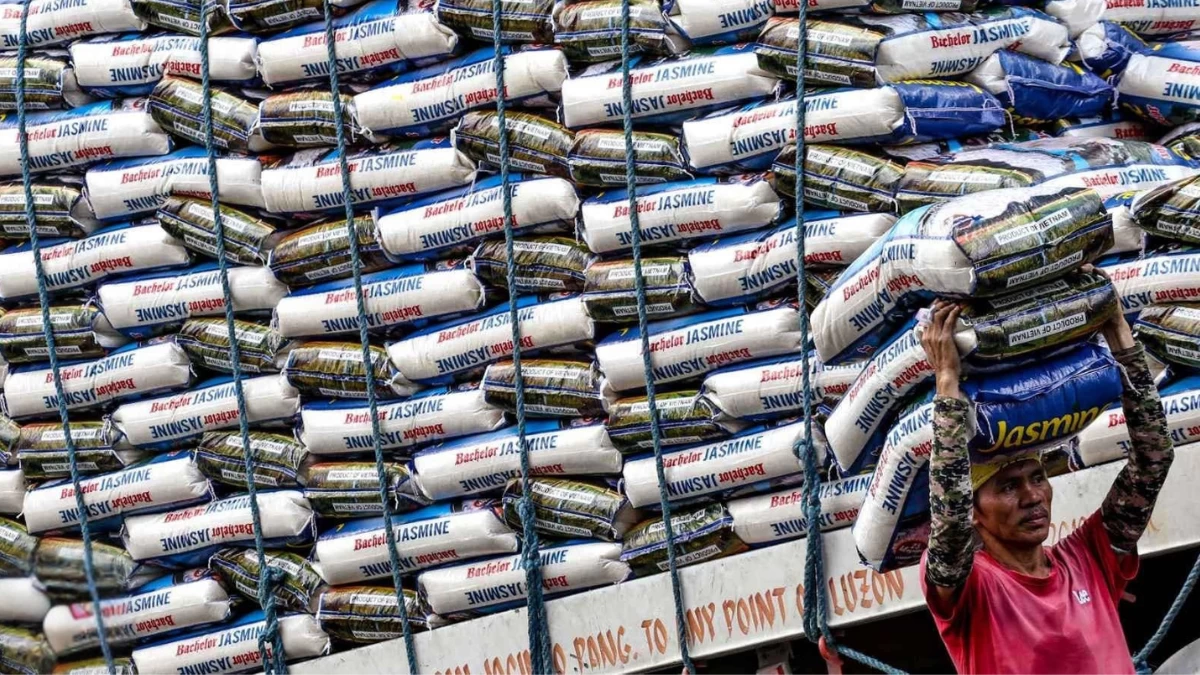
The Department of Agriculture (DA) has secured the commitment from industry players to limit the entry of five-percent broken imported rice, as the agency weighs measures to provide relief to the domestic rice sector.
Agriculture Secretary Francisco Tiu Laurel said farmers, importers, and traders have agreed in principle to refrain from bringing in five percent broken rice, the country’s most commonly consumed imported variety.
Starting this month, Tiu Laurel said industry players will only bring in shipments of lower-quality varieties. This covers 25 percent broken rice and other imported varieties with even higher broken-grain percentages, excluding premium grades.
By restricting entries to lower-grade imports, Tiu Laurel said the domestic sector can better counter the rising market preference for foreign-sourced rice.
This was among the findings of the DA’s recent investigation into the causal link between increased rice imports and serious injury to the domestic industry.
The agency found no evidence of “dumping”—the practice of exporting products at artificially low prices—since foreign rice is currently priced higher than its local counterpart, Tiu Laurel noted.
Instead, the surge in imports was driven by market demand, as Filipino consumers increasingly favor foreign rice due to its relatively higher quality.
“The market preferred to buy imported rice. It’s proven. To correct that, in case there's an injury because of that, the cure is to level the playing field,” Tiu Laurel told reporters.
Controlling the influx of imports would prevent farmgate prices from sliding further, especially as the country faces a potential decline in output, he added.
While the limitation on 5 percent broken rice is currently just a voluntary industry commitment, the DA chief plans to formalize the restriction under the proposed Rice Industry and Consumer Empowerment (RICE) Act. The measure, which remains pending in Congress, aims to amend the Rice Tariffication Law (RTL), a policy that has been blamed for opening up the domestic market to heavy imports.
Unless the RICE Act is enacted soon, Tiu Laurel said the DA will await the findings of the Tariff Commission (TC) on whether to impose a definitive safeguard measure on imported rice. Following its initial probe, the DA submitted its case records to the TC to push for a formal investigation, which began on July 1.
Under Republic Act (RA) No. 8800, or the Safeguard Measures Act, the government may impose interventions such as additional tariffs and quantitative restrictions to provide relief to the domestic rice industry.