







Your child may already be showing you how they learn best
Founder of the Reggio Emilia-inspired Mosaic Schoolhouse, Meriel Areglado explains how curiosity, play, and observation can help parents support their child's development
Published Jul 1, 2026 10:54 am


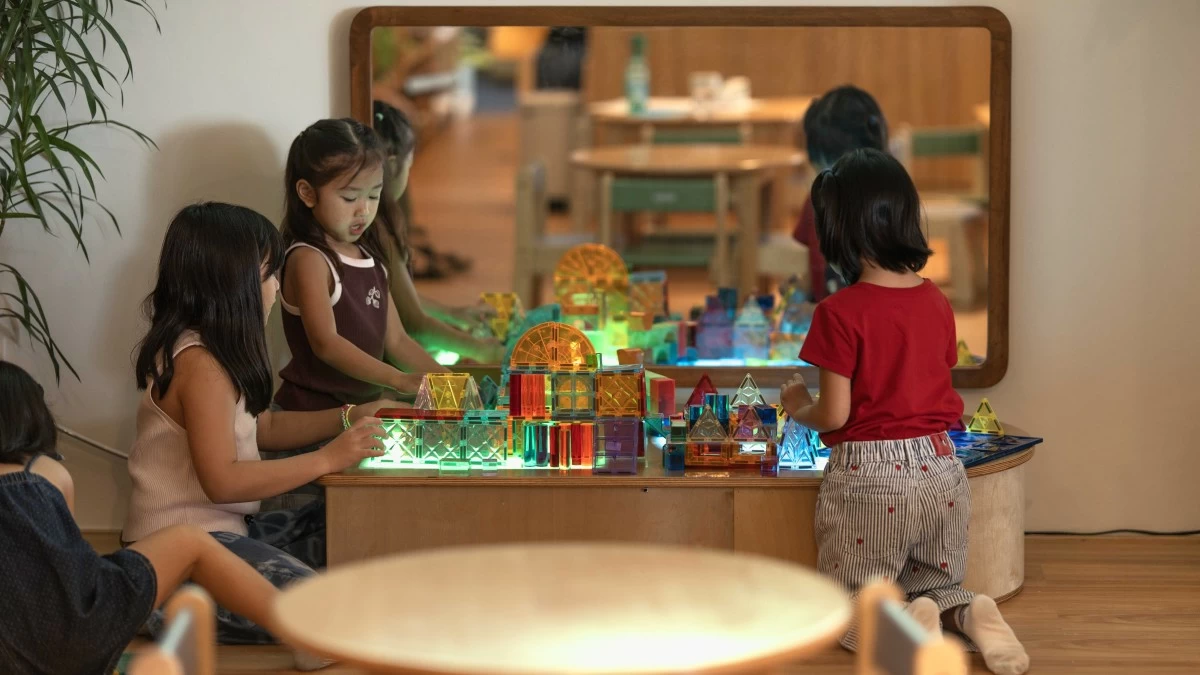
The school’s The Atelier is where ideas take shape and the beauty of the creative process is celebrated. (Photos: Mosaic Schoolhouse)
Picture this scene in a room. A child spends an hour arranging toy cars across the living room floor. Another one fills pages with dinosaur drawings. One keeps building towers out of cardboard boxes, knocking them down and beginning again.
These may simply look like ways to pass the time. But according to Meriel Areglado, an early childhood educator and founder of the Reggio Emilia-inspired Mosaic Schoolhouse, children are often doing something much more. They are showing us how they learn. The challenge is whether adults are paying attention.
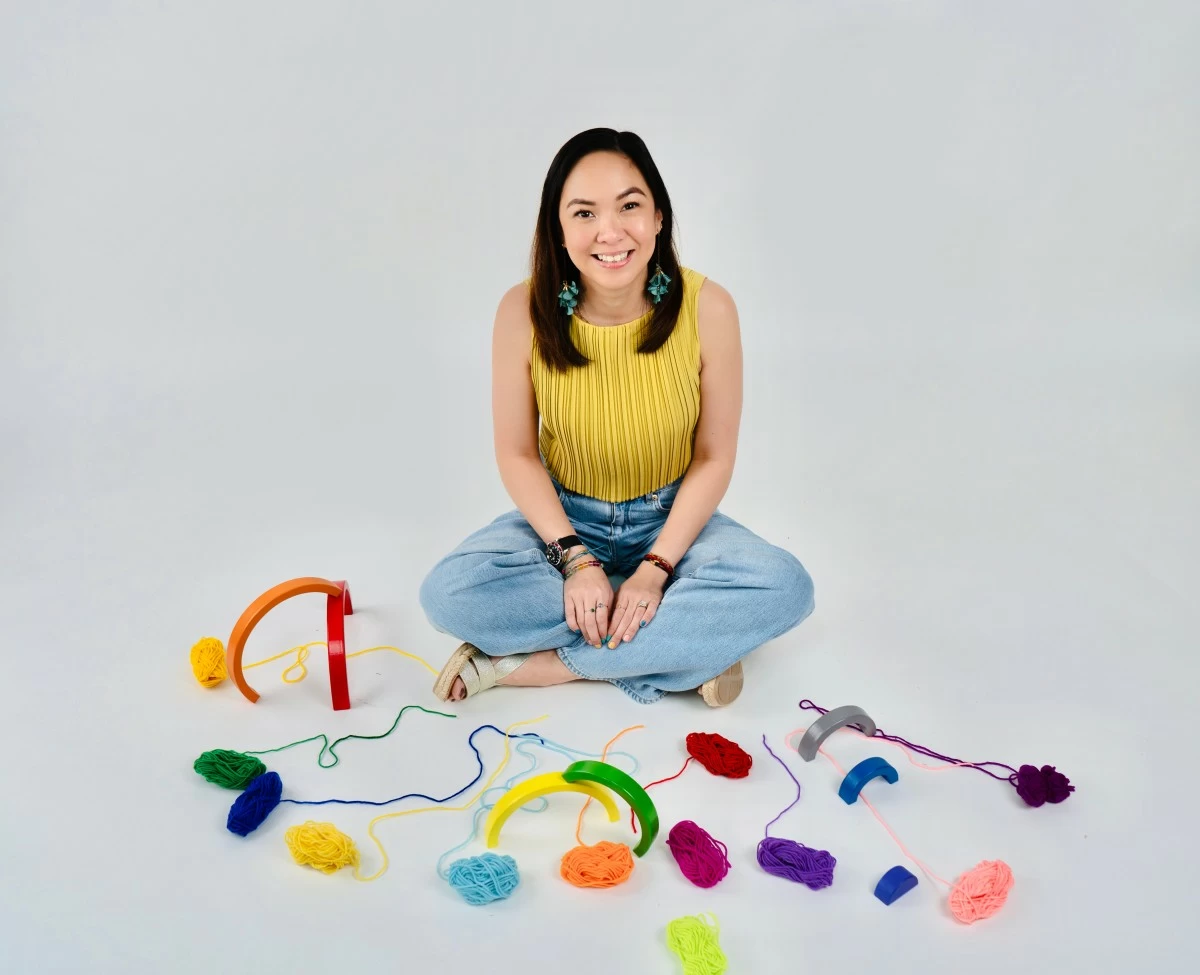
Meriel Areglado
Observe before you teach
It’s natural that parents want to help their children learn. But, more often than not, adults unintentionally interrupt the learning that is already taking place.
“I think the most common mistake adults make—driven by today's achievement-oriented culture—is that we stop listening deeply because we are anxious for tangible proof of success,” Meriel says. “For example, when a child plays with toy cars, a well-meaning adult might immediately jump in and quiz-test them: 'What color is that car? How many do you have?' When we do that, we miss the actual learning happening right in front of us. We are looking for a final product—like a standard, expected answer—instead of honoring the process."
Instead of immediately asking questions or directing play, Meriel encourages parents to first observe. What keeps the child engaged? What questions are they asking? What keeps drawing them back? Those moments offer valuable clues on how children naturally explore and understand the world.
It is a principle that guides the Reggio Emilia approach, which views children as capable learners whose interests influence their own learning experiences. At Mosaic Schoolhouse, Meriel’s team builds projects around children's growing curiosities instead of relying on worksheets or rote memorization.
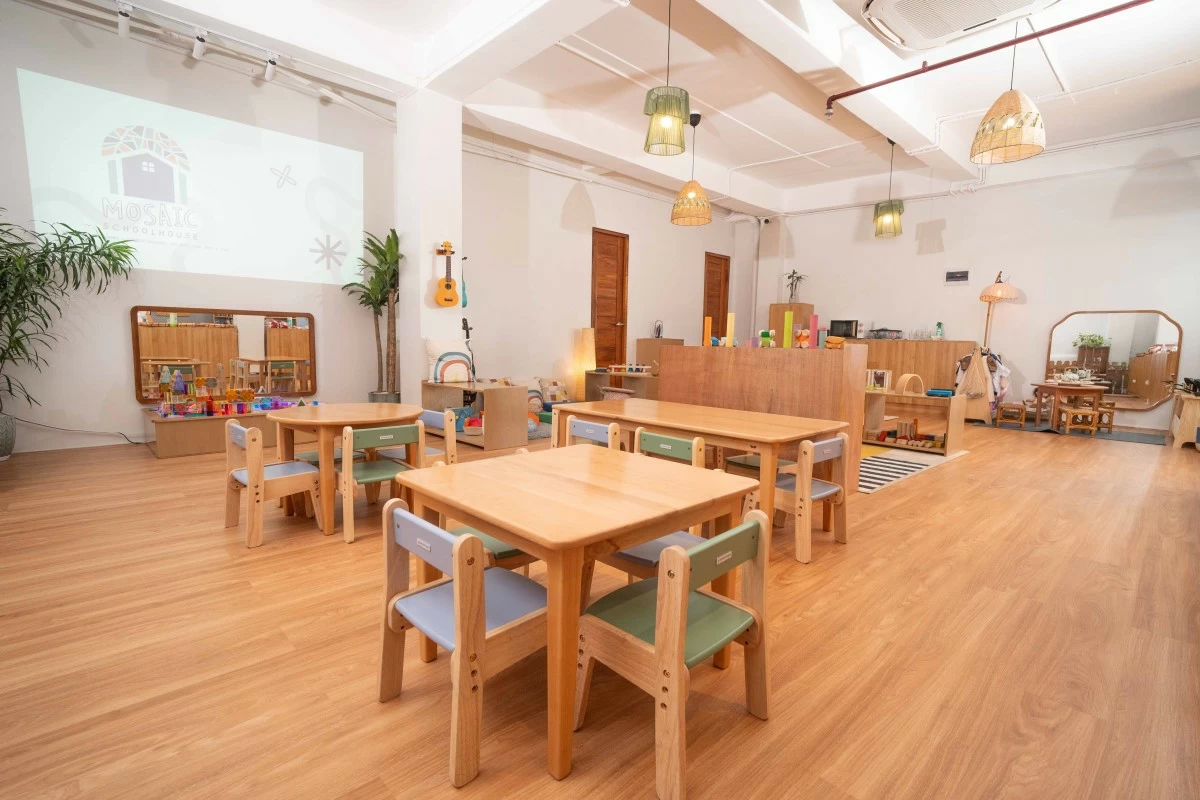
Mosaic Schoolhouse is designed to feel like a welcoming second home for every child.
Curiosity is the curriculum
Many parents worry when a child becomes fully engrossed in a single topic, whether dinosaurs, insects, construction vehicles, or outer space. It may seem like a passing phase, but Meriel sees these interests as valuable opportunities for learning.
“These deep interests show us that children don’t learn by just memorizing random pieces of information. They learn by leaning toward things they actually care about,” Meriel explains. “When a child is completely fascinated by dinosaurs or bugs, they aren’t just memorizing names. In their own way, they are practicing how to sort things into groups, compare sizes, and understand how things work (that's already math and science for you!).”
Instead of moving children on to the next lesson or activity, she encourages parents to nurture that curiosity and let it lead to broader learning. When children are given the time and space to explore what genuinely interests them, learning becomes more meaningful and lasting.
Let children be bored
Quiet, unstructured moments are becoming harder to find. Many parents instinctively hand over a gadget or schedule another activity the moment their child says, “I'm bored.”
“To be completely honest, I still worry about this, too. Even with 19 years in early childhood education, the culture around us pressures us to keep children constantly ‘busy,’” Meriel says. “But we have to ask ourselves: What are we truly worried about? Boredom is actually a gift that teaches children to be independent, imaginative, and resourceful. When we immediately step in to rescue them, we take away their opportunity to create and explore.”
She recalls waiting with her daughter at a doctor's clinic without reaching for a screen. Instead, her daughter began observing people, asking questions, making up songs, and creating stories on her own. Those moments often become the richest learning experiences.
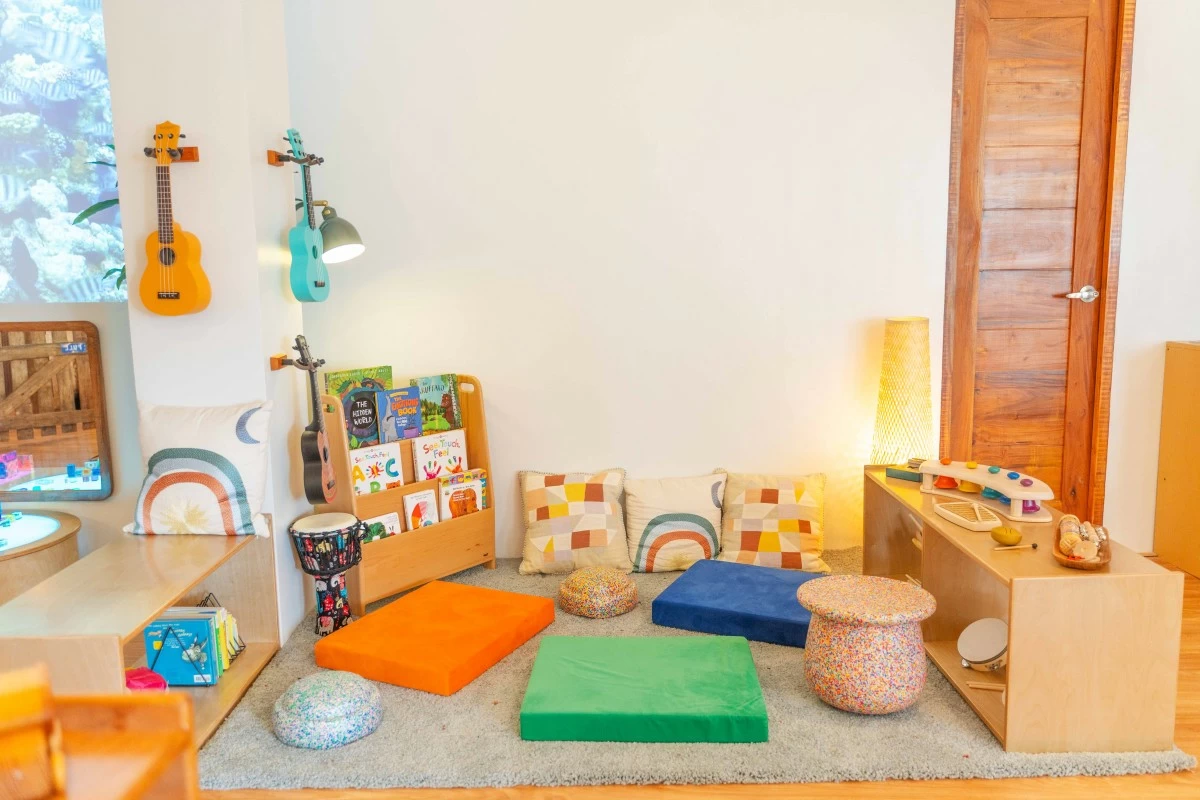
The Piazza serves as a communal gathering space for imaginative play, storytelling, and shared discovery.
Home is a learning space
Parents don't need expensive educational toys or elaborate playrooms to encourage meaningful learning. Paper, recycled materials, loose parts from around the house, and even a quiet reading corner can become invitations for children to explore, imagine, and create.
The goal is not to fill every minute with instruction but to create an environment where children can make choices, investigate their interests, and return to ideas that continue to fascinate them. This idea is central to Reggio Emilia, where the environment is often described as the “third teacher.” From open-ended materials to thoughtfully arranged spaces, every element is designed to encourage children to explore, ask questions, and learn through discovery.
Slow down enough to notice
With increasing pressure to prepare children for the future, many parents worry about reading milestones, enrichment classes, and academic readiness. Meriel hopes families remember that childhood is not a race.
“For us as parents, I think the most beautiful gift we can give our children is simply our presence and the gift of time,” she notes. “Even just for a few minutes each day, step into their world. Sit on the floor with them, observe them, and play with them—even if you don't fully understand the flow of their play. Do it anyway. Because when we choose to show up and slow down, that is when we truly see them. That is how we get to know who they are becoming.”
Learning doesn’t always begin with another lesson. Sometimes, it begins with paying closer attention to the child in front of us. It is the same approach that guides Meriel’s work at Mosaic Schoolhouse and one she believes every parent can practice at home.