ADVERTISEMENT

What homeowners' association, homeowners can and cannot do

Published Jul 1, 2026 12:05 am
Neighborhoods are meant to foster security, cooperation, and a sense of belonging. Yet many subdivisions around the country have become battlegrounds where homeowners’ associations (HOAs) and homeowners wage prolonged disputes over unpaid dues, access to village common areas and amenities, and the limits of association power.. The law already provides the rules. What is often missing is respect for them.
Republic Act No. 9904, the Magna Carta for Homeowners and Homeowners’ Associations, recognizes that an HOA is indispensable to every residential community. It maintains roads, parks, drainage systems, security, and other common facilities funded primarily through association dues. Without prompt payment by homeowners, these services inevitably deteriorate. Paying duly authorized association dues is both a contractual obligation and a civic responsibility that sustains the entire community.
But the same law also draws a clear line against abuse. An HOA is not above the law, nor is it a private government with unlimited authority. It cannot deny homeowners access to their own residences, impose fines or penalties that have no basis in its duly approved bylaws or governing documents, arbitrarily suspend membership, refuse qualified members the right to vote or seek elective office, selectively enforce subdivision rules, or conceal financial records that members are legally entitled to inspect. Neither may an association disregard due process by imposing sanctions without notice and an opportunity to be heard. Even in collecting delinquent assessments, the rule of law—not intimidation or coercion—must prevail.
The Supreme Court has consistently reinforced these limits. In La Costa Brava Homeowners' Association, Inc. v. Spouses Retirado (G.R. No. 278137), the Court emphasized that homeowners' associations must exercise only those powers granted by law and their governing documents. Likewise, in North Greenhills Association, Inc. v. Morales (G.R. No. 222821), the Court affirmed that while associations may lawfully collect unpaid dues and enforce valid restrictions, they cannot resort to arbitrary measures that violate homeowners' rights or disregard procedural due process.
In G.R. No. 278137, the SC ruled that HOAs cannot bar the entry into a subdivision of taxicabs and other ride-hailing vehicles to fetch a homeowner, ban the delivery of food, packages, appliances and other goods, and limit the collection of garbage from the house of a delinquent owner.
These rulings make one principle unmistakable: authority must always be exercised with fairness, transparency, and accountability.
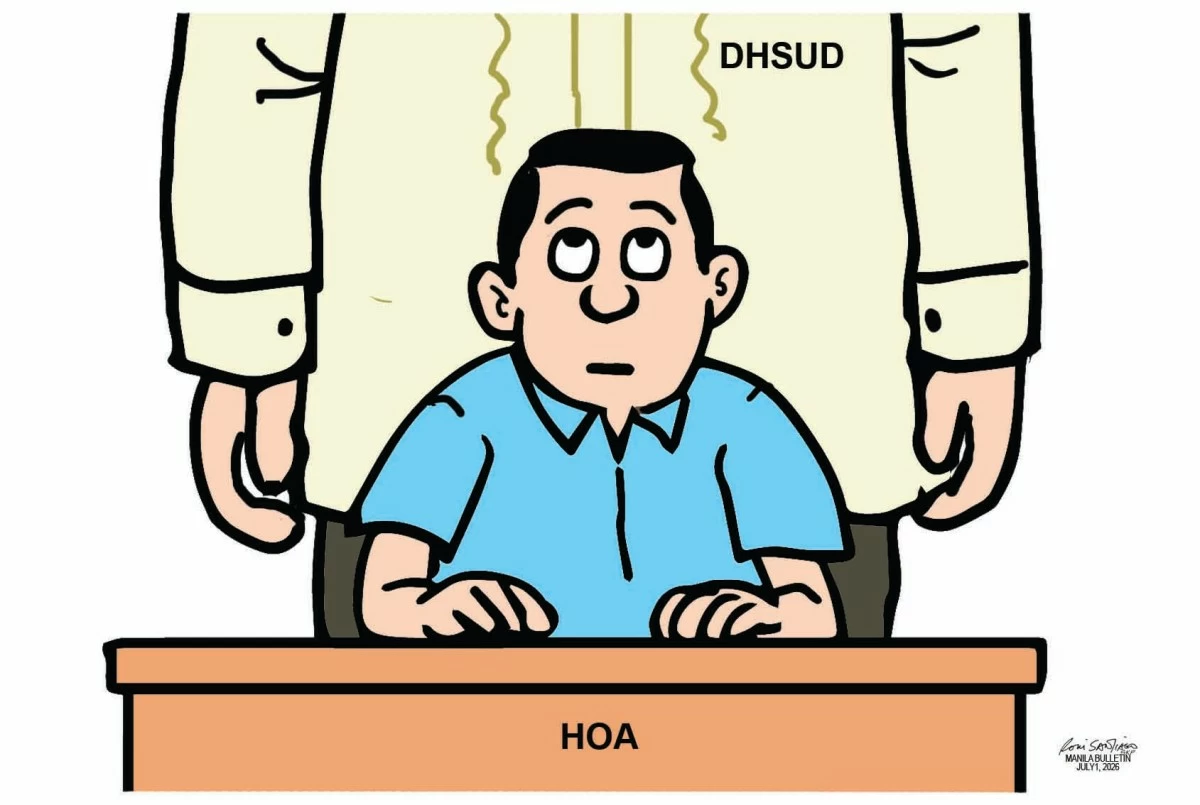
The same restraint applies to homeowners. Delinquency cannot be justified simply because one disagrees with the board or questions its decisions. Homeowners cannot refuse to pay valid association dues while continuing to enjoy security, maintenance, and other common services financed by their neighbors. If they believe assessments are unlawful, funds have been misused, or officers have exceeded their authority, the proper remedies are participation in association meetings, inspection of records, mediation, administrative complaints before the Department of Human Settlements and Urban Development (DHSUD), or judicial action—not unilateral refusal to comply with lawful obligations.
DHSUD, as the regulator under Republic Act No. 9904, must continue strengthening homeowner education, promoting alternative dispute resolution, and ensuring the swift enforcement of the Magna Carta. Prompt action against abusive HOA officers and irresponsible homeowners alike reinforces public confidence that the law protects everyone equally.
A peaceful subdivision is not built by an HOA instilling fear and threatening with litigation or the most defiant homeowner. It is built when both recognize that the rule of law, not the rule of force or convenience, is the strongest foundation of every community. The law and jurisprudence have already defined these boundaries. The challenge is for every HOA and every homeowner to observe them faithfully. Only then can communities replace conflict with cooperation and transform neighborhoods into places where accountability, fairness, and harmony truly thrive.

Related Tags

Editorial
ADVERTISEMENT
.most-popular .layout-ratio{ padding-bottom: 79.13%; } @media (min-width: 768px) and (max-width: 1024px) { .widget-title { font-size: 15px !important; } }

{{ articles_filter_1561_widget.title }}

.most-popular .layout-ratio{ padding-bottom: 79.13%; } @media (min-width: 768px) and (max-width: 1024px) { .widget-title { font-size: 15px !important; } }

{{ static_articles_1562_widget.title }}

.most-popular .layout-ratio{ padding-bottom: 79.13%; } @media (min-width: 768px) and (max-width: 1024px) { .widget-title { font-size: 15px !important; } }

{{ articles_filter_1563_widget.title }}

{{ articles_filter_1564_widget.title }}

.mb-article-details { position: relative; } .mb-article-details .article-body-preview, .mb-article-details .article-body-summary{ font-size: 17px; line-height: 30px; font-family: "Libre Caslon Text", serif; color: #000; } .mb-article-details .article-body-preview iframe , .mb-article-details .article-body-summary iframe{ width: 100%; margin: auto; } .read-more-background { background: linear-gradient(180deg, color(display-p3 1.000 1.000 1.000 / 0) 13.75%, color(display-p3 1.000 1.000 1.000 / 0.8) 30.79%, color(display-p3 1.000 1.000 1.000) 72.5%); position: absolute; height: 200px; width: 100%; bottom: 0; display: flex; justify-content: center; align-items: center; padding: 0; } .read-more-background a{ color: #000; } .read-more-btn { padding: 17px 45px; font-family: Inter; font-weight: 700; font-size: 18px; line-height: 16px; text-align: center; vertical-align: middle; border: 1px solid black; background-color: white; } .hidden { display: none; }
function initializeAllSwipers() { // Get all hidden inputs with cms_article_id document.querySelectorAll('[id^="cms_article_id_"]').forEach(function (input) { const cmsArticleId = input.value; const articleSelector = '#article-' + cmsArticleId + ' .body_images'; const swiperElement = document.querySelector(articleSelector); if (swiperElement && !swiperElement.classList.contains('swiper-initialized')) { new Swiper(articleSelector, { loop: true, pagination: false, navigation: { nextEl: '#article-' + cmsArticleId + ' .swiper-button-next', prevEl: '#article-' + cmsArticleId + ' .swiper-button-prev', }, }); } }); } setTimeout(initializeAllSwipers, 3000); const intersectionObserver = new IntersectionObserver( (entries) => { entries.forEach((entry) => { if (entry.isIntersecting) { const newUrl = entry.target.getAttribute("data-url"); if (newUrl) { history.pushState(null, null, newUrl); let article = entry.target; // Extract metadata const author = article.querySelector('.author-section').textContent.replace('By', '').trim(); const section = article.querySelector('.section-info ').textContent.replace(' ', ' '); const title = article.querySelector('.article-title h1').textContent; // Parse URL for Chartbeat path format const parsedUrl = new URL(newUrl, window.location.origin); const cleanUrl = parsedUrl.host + parsedUrl.pathname; // Update Chartbeat configuration if (typeof window._sf_async_config !== 'undefined') { window._sf_async_config.path = cleanUrl; window._sf_async_config.sections = section; window._sf_async_config.authors = author; } // Track virtual page view with Chartbeat if (typeof pSUPERFLY !== 'undefined' && typeof pSUPERFLY.virtualPage === 'function') { try { pSUPERFLY.virtualPage({ path: cleanUrl, title: title, sections: section, authors: author }); } catch (error) { console.error('ping error', error); } } // Optional: Update document title if (title && title !== document.title) { document.title = title; } } } }); }, { threshold: 0.1 } ); function showArticleBody(button) { const article = button.closest("article"); const summary = article.querySelector(".article-body-summary"); const body = article.querySelector(".article-body-preview"); const readMoreSection = article.querySelector(".read-more-background"); // Hide summary and read-more section summary.style.display = "none"; readMoreSection.style.display = "none"; // Show the full article body body.classList.remove("hidden"); } document.addEventListener("DOMContentLoaded", () => { let loadCount = 0; // Track how many times articles are loaded const offset = [1, 2, 3, 4, 5, 6, 7, 8, 9, 10]; // Offset values const currentUrl = window.location.pathname.substring(1); let isLoading = false; // Prevent multiple calls if (!currentUrl) { console.log("Current URL is invalid."); return; } const sentinel = document.getElementById("load-more-sentinel"); if (!sentinel) { console.log("Sentinel element not found."); return; } function isSentinelVisible() { const rect = sentinel.getBoundingClientRect(); return ( rect.top < window.innerHeight && rect.bottom >= 0 ); } function onScroll() { if (isLoading) return; if (isSentinelVisible()) { if (loadCount >= offset.length) { console.log("Maximum load attempts reached."); window.removeEventListener("scroll", onScroll); return; } isLoading = true; const currentOffset = offset[loadCount]; window.loadMoreItems().then(() => { let article = document.querySelector('#widget_1690 > div:nth-last-of-type(2) article'); intersectionObserver.observe(article) loadCount++; }).catch(error => { console.error("Error loading more items:", error); }).finally(() => { isLoading = false; }); } } window.addEventListener("scroll", onScroll); });

Sign up by email to receive news.