ADVERTISEMENT

Philippine manufacturing improves again in June, but business confidence slips to five-month low

Published Jul 1, 2026 11:09 am
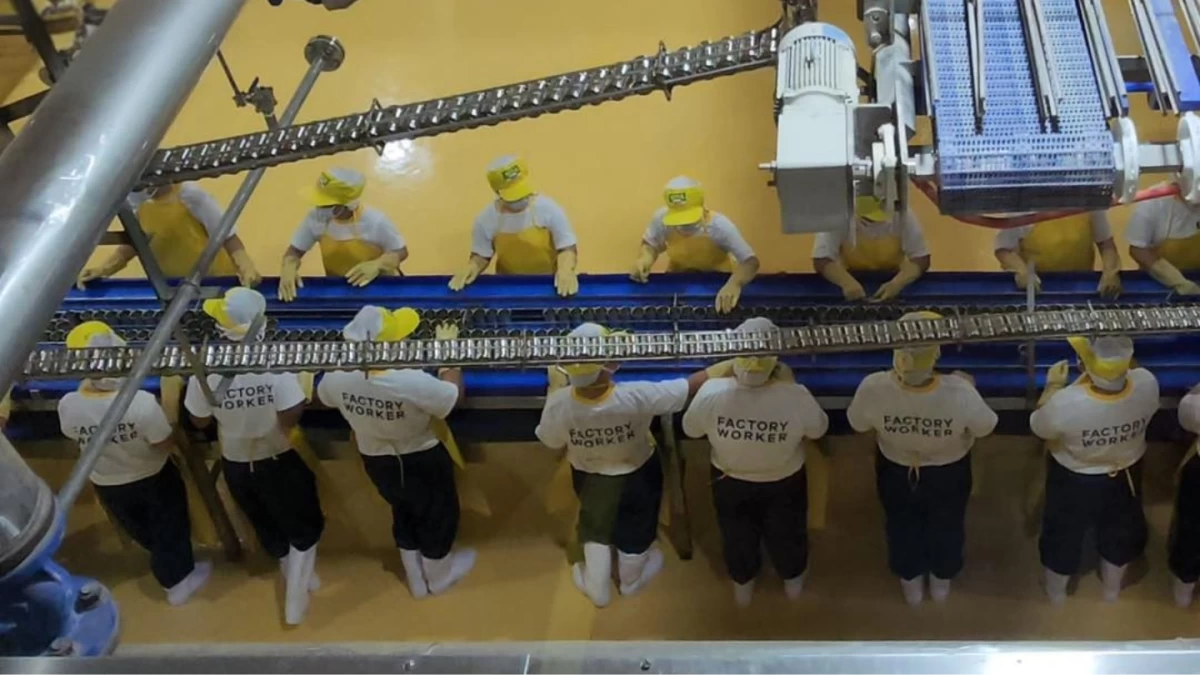
While 1.3 billion robots are expected to enter the global workforce by 2035, the “human architecture” remains the most vital part of a disciplined, data-driven factory culture.

Philippine manufacturing activity improved for a second straight month in June as stronger domestic demand supported new orders and production, although business confidence fell to its lowest level in five months as firms remained wary after recent cost pressures.

In a report on Wednesday, July 1, S&P Global said the Philippines manufacturing purchasing managers’ index (PMI) inched up to 50.9 in June from 50.8 last May, signaling another modest improvement in operating conditions across the sector. A PMI reading above 50 indicates an expansion in activity, while a reading below 50 points to contraction.

The June reading marked the second consecutive month of expansion reversing April’s contraction, with manufacturers benefiting from sustained growth in new business, easing supply chain disruptions, renewed purchasing activity, stabilizing employment, and moderating inflationary pressures.

The report showed that new orders and output both expanded for a second month, although production growth eased to only a marginal pace even as new order growth strengthened slightly.

According to S&P Global, manufacturers attributed higher production to improved underlying demand conditions and new client wins. Meanwhile, the decline in export orders moderated significantly, reducing the drag on overall new business inflows.

Encouraged by the sustained increase in new orders, manufacturers raised purchases of raw materials and semi-finished goods for the first time in four months, although the pace of buying remained modest. The additional purchases helped keep input inventories broadly stable.

Supply chain conditions also improved, with vendor delays easing to their least severe level since December last year.

“Manufacturing conditions in the Philippines continued to improve in June, building on the tentative recovery observed in May as the sector regained footing following disruptions linked to the war in the Middle East,” S&P Global Market Intelligence economist Maryam Baluch said.

Baluch noted that broader PMI indicators pointed to renewed purchasing activity as well as a stabilized labor market after job losses in April and May. She added that the renewed increase in backlogs suggested firms could hire more workers in the months ahead.

Manufacturers kept employment unchanged in June, ending two consecutive months of workforce reductions. Outstanding business also increased for the first time in three months as stronger order inflows led firms to accumulate modest backlogs.

Inflationary pressures likewise eased during the month. Input costs rose at the slowest pace in the current four-month stretch of rising expenses, while output price inflation also moderated. Manufacturers that reported higher input costs mainly cited more expensive raw materials.

Despite the improvement in operating conditions, manufacturers turned more cautious about the outlook.

S&P Global said business confidence fell to its lowest level since January, with firms indicating that the sharp increases in costs over the previous two months had squeezed margins and weighed on their expectations for output growth over the coming year. Still, companies remained optimistic overall, supported by expectations of stronger demand, new product launches, expanded marketing efforts, and entry into new markets.

“Inflationary pressures eased during June, providing some relief to manufacturers. However, sharp increases in the two preceding survey periods weighed on sentiment at goods producers. Business confidence fell markedly in June, indicating that while the sector gained traction, firms are cautious regarding the outlook,” Baluch said.

Related Tags

purchasing managers\' index (PMI) manufacturing S&P Global
ADVERTISEMENT
.most-popular .layout-ratio{ padding-bottom: 79.13%; } @media (min-width: 768px) and (max-width: 1024px) { .widget-title { font-size: 15px !important; } }

{{ articles_filter_1561_widget.title }}

.most-popular .layout-ratio{ padding-bottom: 79.13%; } @media (min-width: 768px) and (max-width: 1024px) { .widget-title { font-size: 15px !important; } }

{{ static_articles_1562_widget.title }}

.most-popular .layout-ratio{ padding-bottom: 79.13%; } @media (min-width: 768px) and (max-width: 1024px) { .widget-title { font-size: 15px !important; } }

{{ articles_filter_1563_widget.title }}

{{ articles_filter_1564_widget.title }}

.mb-article-details { position: relative; } .mb-article-details .article-body-preview, .mb-article-details .article-body-summary{ font-size: 17px; line-height: 30px; font-family: "Libre Caslon Text", serif; color: #000; } .mb-article-details .article-body-preview iframe , .mb-article-details .article-body-summary iframe{ width: 100%; margin: auto; } .read-more-background { background: linear-gradient(180deg, color(display-p3 1.000 1.000 1.000 / 0) 13.75%, color(display-p3 1.000 1.000 1.000 / 0.8) 30.79%, color(display-p3 1.000 1.000 1.000) 72.5%); position: absolute; height: 200px; width: 100%; bottom: 0; display: flex; justify-content: center; align-items: center; padding: 0; } .read-more-background a{ color: #000; } .read-more-btn { padding: 17px 45px; font-family: Inter; font-weight: 700; font-size: 18px; line-height: 16px; text-align: center; vertical-align: middle; border: 1px solid black; background-color: white; } .hidden { display: none; }
function initializeAllSwipers() { // Get all hidden inputs with cms_article_id document.querySelectorAll('[id^="cms_article_id_"]').forEach(function (input) { const cmsArticleId = input.value; const articleSelector = '#article-' + cmsArticleId + ' .body_images'; const swiperElement = document.querySelector(articleSelector); if (swiperElement && !swiperElement.classList.contains('swiper-initialized')) { new Swiper(articleSelector, { loop: true, pagination: false, navigation: { nextEl: '#article-' + cmsArticleId + ' .swiper-button-next', prevEl: '#article-' + cmsArticleId + ' .swiper-button-prev', }, }); } }); } setTimeout(initializeAllSwipers, 3000); const intersectionObserver = new IntersectionObserver( (entries) => { entries.forEach((entry) => { if (entry.isIntersecting) { const newUrl = entry.target.getAttribute("data-url"); if (newUrl) { history.pushState(null, null, newUrl); let article = entry.target; // Extract metadata const author = article.querySelector('.author-section').textContent.replace('By', '').trim(); const section = article.querySelector('.section-info ').textContent.replace(' ', ' '); const title = article.querySelector('.article-title h1').textContent; // Parse URL for Chartbeat path format const parsedUrl = new URL(newUrl, window.location.origin); const cleanUrl = parsedUrl.host + parsedUrl.pathname; // Update Chartbeat configuration if (typeof window._sf_async_config !== 'undefined') { window._sf_async_config.path = cleanUrl; window._sf_async_config.sections = section; window._sf_async_config.authors = author; } // Track virtual page view with Chartbeat if (typeof pSUPERFLY !== 'undefined' && typeof pSUPERFLY.virtualPage === 'function') { try { pSUPERFLY.virtualPage({ path: cleanUrl, title: title, sections: section, authors: author }); } catch (error) { console.error('ping error', error); } } // Optional: Update document title if (title && title !== document.title) { document.title = title; } } } }); }, { threshold: 0.1 } ); function showArticleBody(button) { const article = button.closest("article"); const summary = article.querySelector(".article-body-summary"); const body = article.querySelector(".article-body-preview"); const readMoreSection = article.querySelector(".read-more-background"); // Hide summary and read-more section summary.style.display = "none"; readMoreSection.style.display = "none"; // Show the full article body body.classList.remove("hidden"); } document.addEventListener("DOMContentLoaded", () => { let loadCount = 0; // Track how many times articles are loaded const offset = [1, 2, 3, 4, 5, 6, 7, 8, 9, 10]; // Offset values const currentUrl = window.location.pathname.substring(1); let isLoading = false; // Prevent multiple calls if (!currentUrl) { console.log("Current URL is invalid."); return; } const sentinel = document.getElementById("load-more-sentinel"); if (!sentinel) { console.log("Sentinel element not found."); return; } function isSentinelVisible() { const rect = sentinel.getBoundingClientRect(); return ( rect.top < window.innerHeight && rect.bottom >= 0 ); } function onScroll() { if (isLoading) return; if (isSentinelVisible()) { if (loadCount >= offset.length) { console.log("Maximum load attempts reached."); window.removeEventListener("scroll", onScroll); return; } isLoading = true; const currentOffset = offset[loadCount]; window.loadMoreItems().then(() => { let article = document.querySelector('#widget_1690 > div:nth-last-of-type(2) article'); intersectionObserver.observe(article) loadCount++; }).catch(error => { console.error("Error loading more items:", error); }).finally(() => { isLoading = false; }); } } window.addEventListener("scroll", onScroll); });

Sign up by email to receive news.