






Manila Bulletin
 Business
Trade & Industry
How independent oil players fight global market shocks with ₱1.26B
Business
Trade & Industry
How independent oil players fight global market shocks with ₱1.26B
Business
Trade & Industry
How independent oil players fight global market shocks with ₱1.26B
How independent oil players fight global market shocks with ₱1.26B
Published Jul 1, 2026 12:01 am


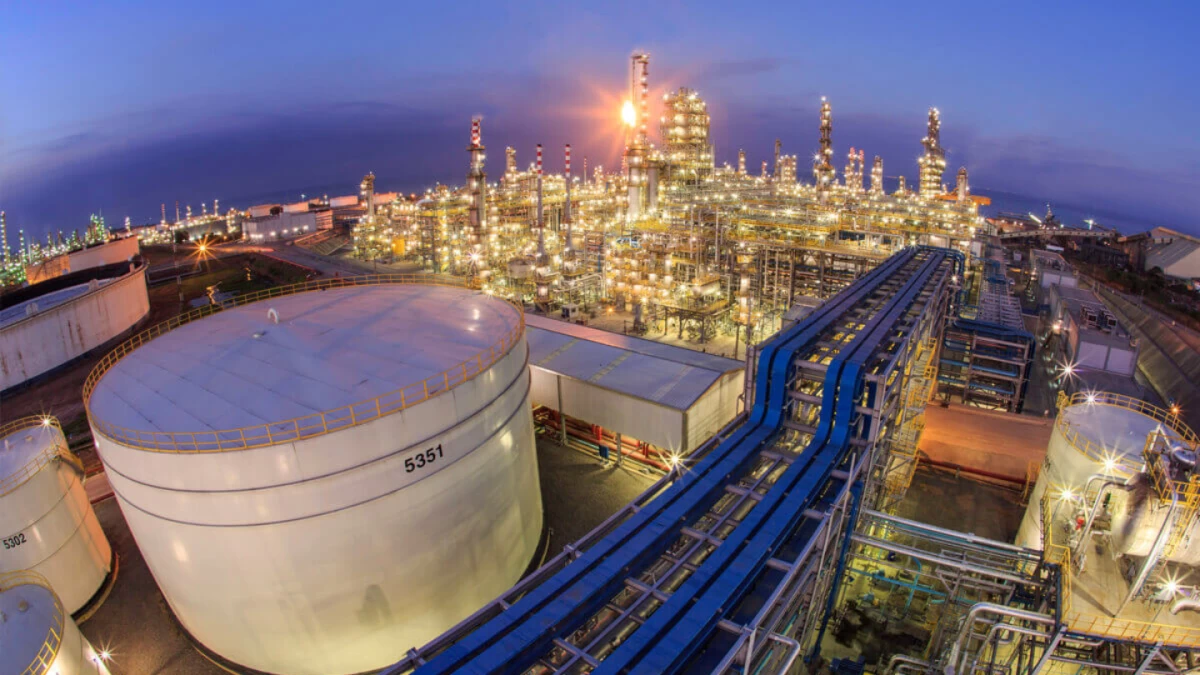
In a volatile net-importing market, local independent fuel players like Topline are focusing on long-term survival over rapid expansion. By channeling a ₱1.26 billion capital boost into bulk importation and robust depot infrastructure, executives aim to secure the supply chain and protect operations from unpredictable global economic shocks.
The local oil industry has been unpredictable lately. Persistent tension in the Middle East continues to complicate global supply chains, leaving local fuel companies racing to secure enough product to meet shifting consumer demand.
As a net-importing country, the Philippines faces a clear reality: upgrading logistics and expanding storage are essential for survival. While a ₱1.26 billion budget might seem small to global oil giants, this amount is a substantial war chest for some of the country’s independent players. But the challenge for executives remains: how do you spend this exact amount to build a business that can withstand major economic shocks?
Shifting demand, temporary relief
The need for careful spending follows a period of intense market volatility. Leo Bellas, President of Jetti Petroleum, points out that local drivers have changed their habits quickly as prices fluctuated.
“The industry as a whole experienced a significant drop in demand during March and April because of high fuel prices,” Bellas said. “When regional pricing benchmarks like the Mean of Platts Singapore finally eased, pump prices stabilized. That brought a steady recovery in sales volume, though demand is still lower than it was during the same period last year.”
This temporary breather gives independent companies a brief window of opportunity. Instead of relaxing, executives are using this time to strengthen their infrastructure before the next price spike hits.
For Cebu-based fuel logistics and retail company Top Line Business Development Corp. (Topline), a ₱1.26 billion capital boost is a tool to secure regional market share and protect daily operations from supply chain disruptions.
“More than the amount itself, what matters is how fast and where that capital is used,” says Constance Marie Lim, Topline First Vice President and Chief Financial Officer.
Lim explains that Topline’s strategy focuses heavily on securing its own supply chain rather than aggressively opening new gas stations. The company divides the budget into three clear operational areas.
First, 60 percent goes directly toward bulk fuel importation. Buying petroleum straight from the source allows the company to bypass local middleman costs and keep profit margins steady. Second, 25 percent is set aside for depot infrastructure, which means building and renovating storage facilities so the company can hold more fuel inventory on hand. The remaining 15 percent serves as a financial buffer to keep distribution trucks moving smoothly across regional hubs.
“Importation capabilities and dedicated storage facilities protect our supply,” Lim said. “They give us flexibility and let us respond better to changing demand. The goal is to ensure this money creates lasting capacity and supports steady growth over the long run.”
Different approaches to risk
To see how ₱1.26 billion can change a company's market position, it helps to look at how different business models in the energy sector choose to allocate their capital.
A company focused entirely on rapid retail growth usually pours half of its budget straight into buying land and building new gas stations. This leaves only 30 percent for buying fuel and a minimal 10 percent for renting storage space. While this strategy helps a brand grow fast, it leaves the company highly vulnerable to sudden wholesale price spikes.
Topline takes a more conservative approach by focusing on infrastructure. By putting 60 percent into bulk buying and 25 percent into owning its storage assets, it spends just five percent on expanding its retail network. This model reduces risk because owning storage keeps profit margins safe.
Meanwhile, a tech-focused trading firm takes a completely different path. It might channel 55 percent of its funds into software and logistics algorithms to optimize delivery routes, while keeping just 20 percent for tight inventory and five percent for shared storage hubs.
From financial planning to the streets of Manila
When fuel supply chains fall short, the consequences bypass corporate spreadsheets and hit the pavement immediately. In corporate headquarters, a shipping delay is recorded as a small dip in monthly volume. On the streets of Manila, it means immediate financial stress for everyday workers.
For Loloy, a tricycle driver who has worked for over 10 years, the price of fuel directly impacts what his family eats.
“Before this latest round of price changes, I spent about ₱200 a day on gas, which left enough money for our household budget,” Loloy said. “Now, I am paying between ₱350 and ₱400 a day for the exact same routes. To make up for it, our weekly ten-kilo grocery rice supply has been cut to eight kilos. We buy less meat now, and we choose cheaper food alternatives just to make sure my kids have something to eat when they get home from school.”

Rising fuel costs in Metro Manila are changing how residents spend their leisure time, forcing avid motorcyclists like Bryan and his riding group to cancel weekend road trips and trade long-distance rides for more economical alternatives.
The economic domino effect also changes how people spend their free time. Bryan, an avid motorcyclist from Metro Manila, noted that rising fuel costs have put an end to weekend road trips. Several members of his riding group have stopped long-distance riding completely, and one friend even sold his large motorcycle to switch to a small, fuel-efficient scooter just for his daily commute.
Realities of gov’t help
To ease these financial pressures, the government has stepped in with financial aid. The Department of Transportation launched a ₱2.5 billion fuel subsidy program designed to protect public transport drivers from volatile pump prices.
Independent oil companies have welcomed this government assistance. “The livelihood of transport drivers depends entirely on their daily margins,” said Jetti Petroleum’s Bellas. “Access to subsidized fuel is a critical help.”
However, public safety nets like the strategic emergency fuel reserves held by the Philippine National Oil Co. (PNOC) only serve as a high-level shield. They do not change daily market realities or lower real operating costs for businesses.
Ultimately, the job of keeping fuel accessible falls back on how efficiently independent operators run their businesses. Dealing with an energy crisis does not require endless amounts of money. Instead, it requires smart, practical asset management. Inside independent boardrooms, a ₱1.26 billion plan focused on securing supply, expanding storage, and direct importing is proving to be the best defense against an unpredictable global market.