






Manila Bulletin
 Business
Trade & Industry
DA seeks new 60-day price price cap to curb profiteering before harvest peaks
Business
Trade & Industry
DA seeks new 60-day price price cap to curb profiteering before harvest peaks
Business
Trade & Industry
DA seeks new 60-day price price cap to curb profiteering before harvest peaks
DA seeks new 60-day price price cap to curb profiteering before harvest peaks
Published Jul 1, 2026 02:04 pm


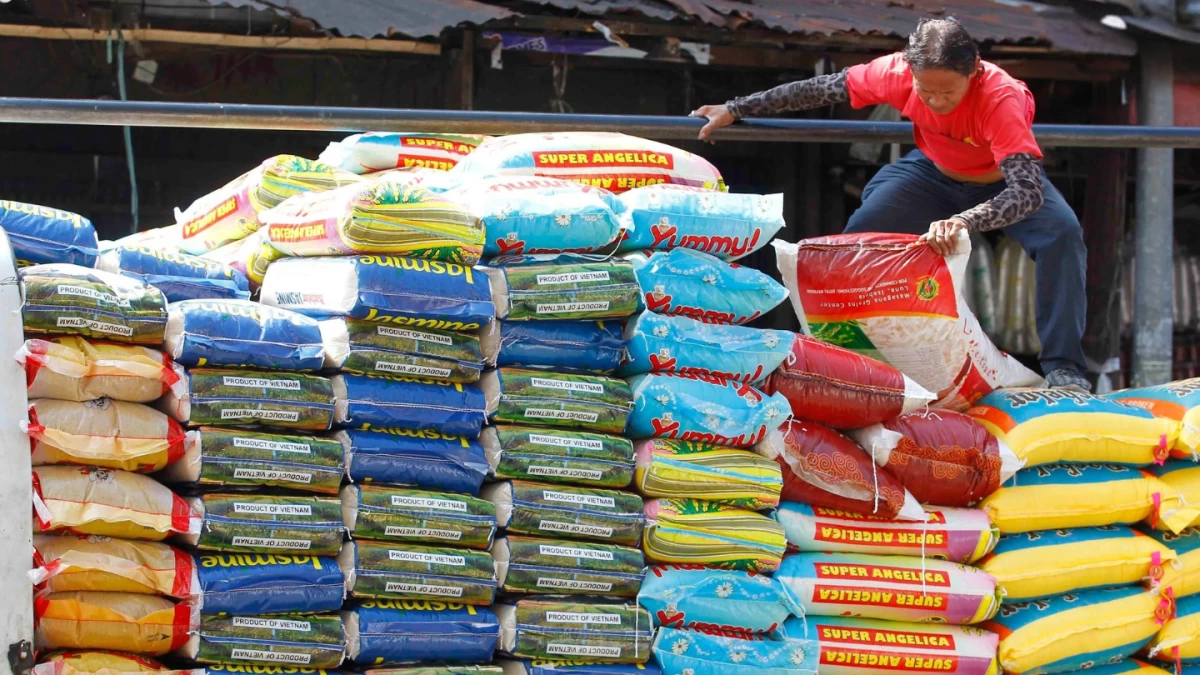
(Photo by Mark Balmores I Manila Bulletin)
The Department of Agriculture (DA) has recommended implementing a 60-day, ₱50-per-kilo price ceiling on imported rice to temper retail prices, pending the influx of additional supply from the upcoming harvest season.
Agriculture Secretary Francisco Tiu Laurel told reporters on Wednesday, July 1, that he wants to maintain the price cap for another two months since the supply of the commodity remains tight.
“We need two more months because there's no harvest right now,” he said.
The implementation of the new ceiling would reinstate the policy that expired last month under Executive Order (EO) No. 118.
On May 13, President Ferdinand “Bongbong” Marcos Jr. ordered a ₱50-per-kilo price ceiling on five-percent broken imported rice to curb unnecessary price hikes and prevent market abuse.
The policy was in place for 30 days and expired on June 13 after the government failed to issue an extension.
Since the price cap lapsed, Tiu Laurel said market monitoring has shown that some retailers are already adjusting prices upward—a move he described as profiteering.
“When the price cap was implemented, the price of goods in the market was lower. The previous ₱50 to ₱51 per kilo went down to ₱47 to ₱48 per kilo,” the DA chief said. “That’s why we requested that the new policy be released immediately to control inflation, especially at this time.”
In its forecast, the Bangko Sentral ng Pilipinas (BSP) said the price decline of major food items like rice may temper inflation for June, which is expected to settle between six and seven percent. The country’s inflation rate clocked in at 6.8 percent in May.
Tiu Laurel noted that the 60-day extension will likely be the final enforcement of the price ceiling this year, as the wet-season harvest peaks from September to November. The majority of the country’s rice output is harvested during this period, reducing the heavy reliance on imported rice.
Even without a price ceiling later this year, Tiu Laurel said retail prices for the household staple will likely be lower than in previous months due to the recent easing of fertilizer costs. He added that upcoming shipments of urea fertilizer will be priced at around ₱1,600 to ₱1,700 per bag—down by nearly half from the peak of ₱2,900 per bag during the Middle East conflict.
“It should lower the cost of production and, hopefully, stabilize rice prices in the second half of the year,” Tiu Laurel said.