






Manila Bulletin
 Business
Trade & Industry
Cost of carbon inaction is already too high for Philippine business
Business
Trade & Industry
Cost of carbon inaction is already too high for Philippine business
Business
Trade & Industry
Cost of carbon inaction is already too high for Philippine business
Cost of carbon inaction is already too high for Philippine business
Published Jul 1, 2026 12:01 am


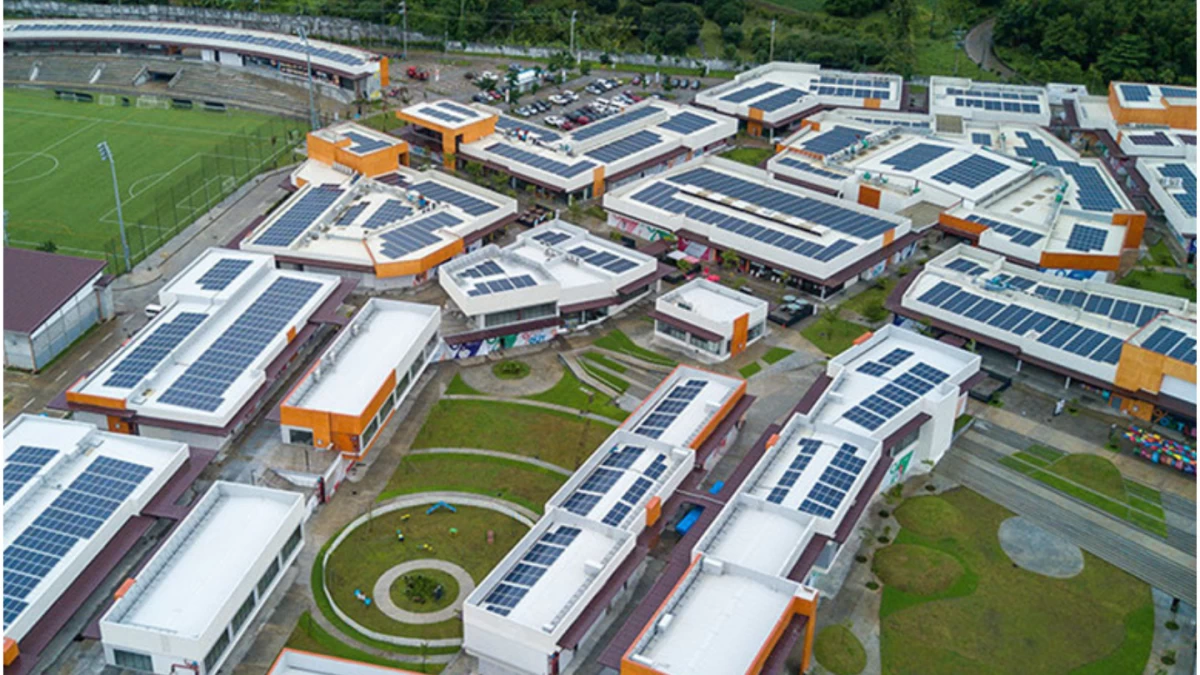
Rooftop solar panels are integrated directly into the infrastructure of a local industrial facility. Philippine firms are aggressively adopting renewable self-generation to dodge volatile grid electricity prices and lock in predictable operational costs, transforming environmental initiatives into a vital shield for their bottom lines.
For years, corporate boardrooms treated Environmental, Social, and Governance (ESG) metrics as a tedious exercise in public relations—a glossed-over chapter in the annual report designed to appease regulators and activists. Sustainability was viewed strictly as an expense center and relegated to the background.
That era is over. Today, a volatile global economy, fluctuating fuel costs, and tightening international capital markets have transformed these metrics into a vital shield for the profit and loss statement. Domestically, the companies winning the market are no longer tracking carbon just to be good corporate citizens, but to actively protect their bottom lines.
The most definitive sign of this shift is where sustainability has finally landed: the executive pay structure. Forward-thinking conglomerates are directly linking executive bonuses to sustainability targets. When a chief executive’s payout is tied to megawatt-hours of renewable energy transitioned or tons of waste diverted, environmental initiatives move at lightning speed.
Consider the operational insulation this strategy provides. For decades, local manufacturers have been at the mercy of the country’s high and volatile grid electricity prices. By aggressively shifting to renewable self-generation—such as installing rooftop solar arrays on factories—firms are effectively dodging grid volatility.
SM Investments Corp. is a prime example of this transition. The group increased its renewable energy sourcing to 31 percent of its total electricity consumption, utilizing geothermal steam and more than 200,000 solar panels installed across its real estate portfolio.
As its leadership points out, investing in renewable energy is no longer driven mainly by sustainability, but by smart business logic; it directly protects long-term operational costs against unpredictable fuel spikes.
This is also highly effective hedging. By generating or directly sourcing their own clean power, these companies lock in predictable operational costs, safeguarding their margins against global fossil fuel shocks.
Beyond operational savings, robust metrics have become the golden ticket to cheaper foreign capital. The global financial landscape has shifted, and international institutional investors are increasingly mandated to deploy funds exclusively into verified green assets.
Philippine firms that can rigorously prove their data are finding themselves at a distinct competitive advantage. Ayala Corp. recently leveraged this advantage by securing a $100 million sustainability-linked loan facility from Singapore-based DBS Bank. Because the debt structure connects financing terms directly to Ayala's environmental milestones, the company expands its regional capital access on highly attractive terms.
For a local developer looking to fund an infrastructure project or a new energy-efficient commercial tower in Bonifacio Global City, this advantage translates directly into millions of pesos saved in borrowing costs. If you cannot measure your carbon footprint, you are increasingly locked out of the cheapest capital pools.
For hesitant finance chiefs still viewing sustainability as a capital drain, the path forward requires shifting from a cost mindset to an investment horizon framework.
First, look at the total cost of ownership. Do not stop at the upfront capital expenditure of a sustainability initiative. Factor in long-term operational reductions, such as lowered energy consumption and reduced waste disposal fees.
Second, price in risk mitigation. Calculate the financial cost of inaction. Consider what potential regulatory penalties, supply chain disruptions from extreme weather, or escalating carbon taxes will look like over a 10-year horizon.
Finally, quantify the capital discount. Contrast the interest rates of standard financing against available green bonds or sustainability-linked loans. The basis-point spread achieved by companies like Ayala is a direct contribution to your return on investment.
As climate risks intensify and consumer behavior permanently tilts toward ethical brands, treating sustainability as a marginal compliance issue is no longer just bad optics. It is bad business. In the modern Philippine market, green is no longer a trend—it is the new black.