






Manila Bulletin
 Philippines
National
Up to P50-M fine sought vs social media platforms that can't protect children
Philippines
National
Up to P50-M fine sought vs social media platforms that can't protect children
Philippines
National
Up to P50-M fine sought vs social media platforms that can't protect children
Up to P50-M fine sought vs social media platforms that can't protect children
Published Jun 30, 2026 12:53 pm
|
Updated Jun 30, 2026 03:23 pm


At A Glance
- House leaders file HB No. 9965, the Children's Social Media Safety Act, imposing fines up to P50 million on platforms violating child safety standards.
- The bill bans socmed accounts for children under 13, requires parental consent for ages 13–17, and mandates stricter privacy, supervision tools, and algorithm regulation.
- Platforms face penalties and possible suspension or prohibition in the Philippines for repeated or serious violations.
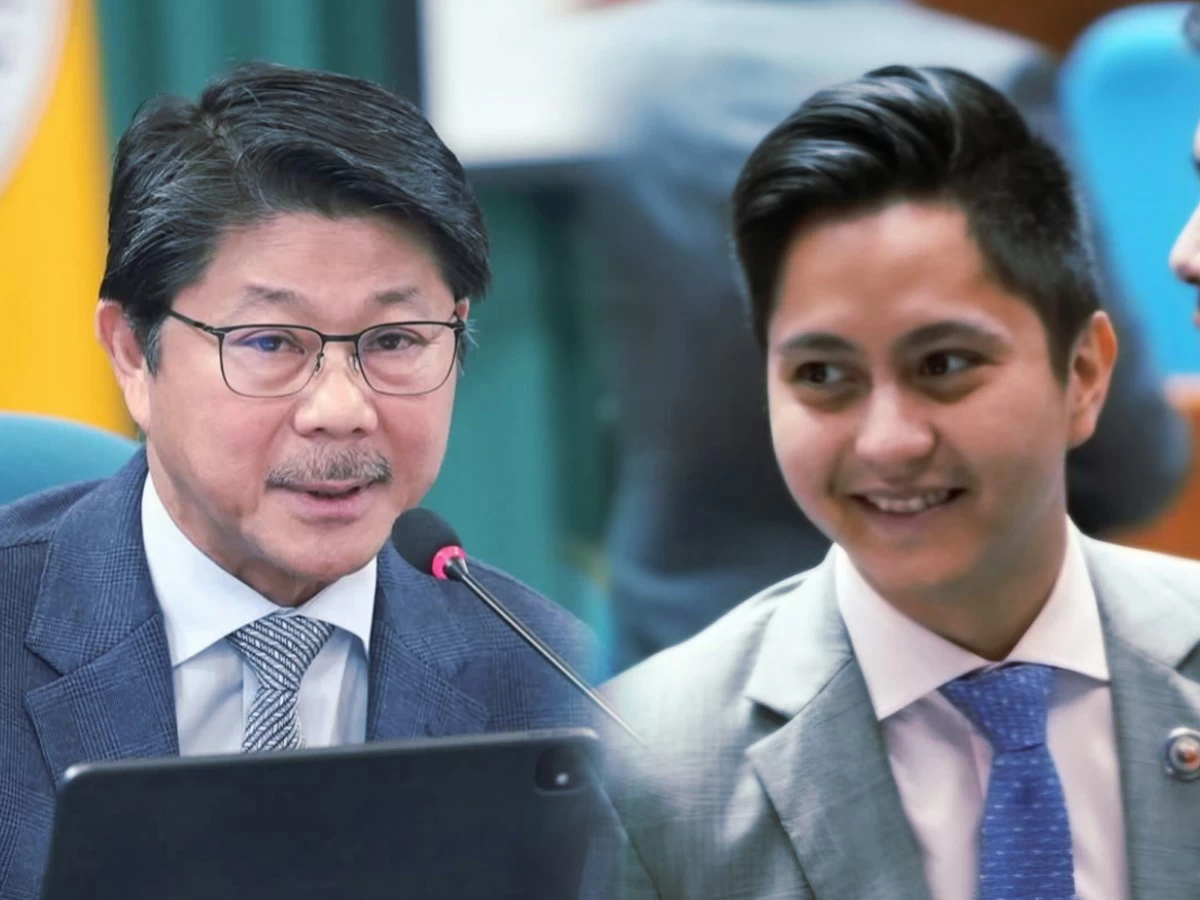
Speaker Isabela 6th district Rep. Faustino "Bojie" Dy III (left) Majority Leader Ilocos Norte 1st district Rep. Sandro Marcos (Facebook)
The leadership of the House of Representatives is pursuing a measure that would impose fines of up to P50 million on social media platforms that fail to comply with mandatory child online safety standards, including age verification, parental controls, and safeguards against harmful content.
Embodied in House Bill (HB) No. 9965, or the proposed Children’s Social Media Safety Act, the measure was filed by Speaker Isabela 6th district Rep. Faustino "Bojie" Dy III and Majority Leader Ilocos Norte 1st district Rep. Sandro Marcos.
The bill seeks to establish the country’s first comprehensive regulatory framework governing children’s access to and use of social media platforms while promoting responsible, age-appropriate digital engagement through stronger safeguards, greater platform accountability, enhanced parental supervision, and digital literacy.
It also authorizes the temporary restriction of access to social media platforms in the Philippines—or even their prohibition from operating in the country in cases of repeated and serious violations, subject to due process.
Dy says HB No. 9965 recognizes that while digital platforms offer opportunities for learning and communication, they also expose children to cyberbullying, harmful content, online exploitation, addiction, anxiety, sleep disruption, and other risks that existing laws do not adequately address.
Hefty fines
To ensure compliance, the bill imposes administrative fines on social media platforms that fail to comply with their obligations under the Act.
Platforms that fail to act on requests involving prohibited accounts may be fined between P5 million and P10 million, while violations of the law’s platform obligations and enforcement requirements carry stiffer penalties of P20 million to P50 million.
In cases of repeated and serious violations, platforms may face temporary restriction of access within the Philippines or be prohibited from operating in the country, subject to due process.
“In the digital age, this duty extends to ensuring that children are protected from risks arising from the use of social media and other digital platforms. At its core, this bill recognizes that every child deserves a safe environment to grow, learn, and develop free from harm both in the physical and digital world,” the explanatory note of HB No. 9965 read.
Speaker Dy and Rep. Marcos filed the proposal in the aftermath of the Tacloban City school shooting, which claimed the lives of three minors. The two shooters were Grade 9 students aged 15 and 14.
The proprietary of Filipino youths exposure to violence on video games and social media has become a major talking point following the incident.
"If we will allow Filipino children to explore the online world, they should be given sufficient protections," Dy said in a statement.
The explanatory note also cited studies linking excessive social media use among children to increased anxiety and depression, low self-esteem, sleep disruption, cyberbullying, exposure to harmful content, and compulsive use driven by platform design. It also warned that children are increasingly exposed to misleading and artificially generated content that can distort reality and adversely affect their development.
No social media accounts for minors 13 and below
It further pointed out that existing laws do not provide a comprehensive framework governing the responsibilities of social media platforms in protecting children online despite the growing influence of algorithms and digital systems on what young users see and consume.
“This bill seeks to address these gaps by establishing safety standards and regulatory measures governing children’s access to and use of social media. It adopts a clear age-based regulatory framework by imposing an absolute prohibition on the use of social media by children below thirteen (13) years of age, recognizing their heightened vulnerability and limited capacity to navigate digital risks,” it added.
Consistent with this framework, children below 13 years old would be prohibited from creating, maintaining, or using social media accounts under the proposed law. Social media platforms would be required to implement reliable age verification systems, immediately disable prohibited accounts upon discovery, and adopt safeguards to prevent children from repeatedly creating new accounts to evade the prohibition.
For children aged 13 to below 18, access would only be allowed with verifiable parental or guardian consent and active, continuous supervision. Platforms would also be required to periodically re-verify users’ age and parental consent, while automatically restricting or suspending access once such consent is withdrawn.
The measure also requires social media companies to provide parents and guardians with tools to supervise their children’s accounts, monitor online activity and interactions, access privacy settings, set screen time limits and breaks, and withdraw consent whenever necessary.
To strengthen online safety, the bill mandates platforms to apply the highest privacy and safety settings by default for child users, restrict geolocation sharing and financial transactions by minors, prevent automatic redirection to potentially harmful external websites, and prohibit the unnecessary collection or use of children’s biometric and sensitive personal data, in accordance with the Data Privacy Act of 2012.
HB 9965 likewise seeks to regulate the algorithms and digital systems used by social media platforms to recommend and distribute content. It would prohibit algorithms from promoting harmful content, require platforms to detect and limit children’s exposure to such material, prevent manipulative platform designs that may harm children’s development, and require the removal of artificially generated or altered content that falsely depicts real events, persons or statements or is reasonably likely to mislead or deceive users.
To improve accountability, the proposal requires platforms to disclose how their algorithms determine or influence the content shown to users, subject algorithmic decisions affecting children to meaningful human oversight, and regularly submit transparency reports to the Department of Information and Communications Technology (DICT).
“Kung may batas tayong nagpoprotekta sa mga bata sa paaralan, sa lansangan, at sa ating mga komunidad, dapat mayroon din tayong malinaw na proteksiyon habang sila ay gumagamit ng social media," Dy said.
(Just as we have laws protecting children in schools, on the streets, and in our communities, we should also have clear safeguards while they use social media.)
"Responsibilidad nating siguraduhin na ang teknolohiya ay para sa kabutihan ng bata, hindi nagiging sanhi ng panganib sa kanilang paglaki," the House Speaker added.
(It is our responsibility to ensure that technology serves the welfare of the child, not becoming a source of danger in their growth.)