






Manila Bulletin
 Philippines
National
Taal Volcano produces minor phreatomagmatic eruptions on June 30
Philippines
National
Taal Volcano produces minor phreatomagmatic eruptions on June 30
Philippines
National
Taal Volcano produces minor phreatomagmatic eruptions on June 30
Taal Volcano produces minor phreatomagmatic eruptions on June 30
Published Jun 30, 2026 03:18 pm


At A Glance
- Phivolcs said the latest eruption occurred at 2:34 p.m. and lasted four and a half minutes based on seismic, infrasound, and visual observations.
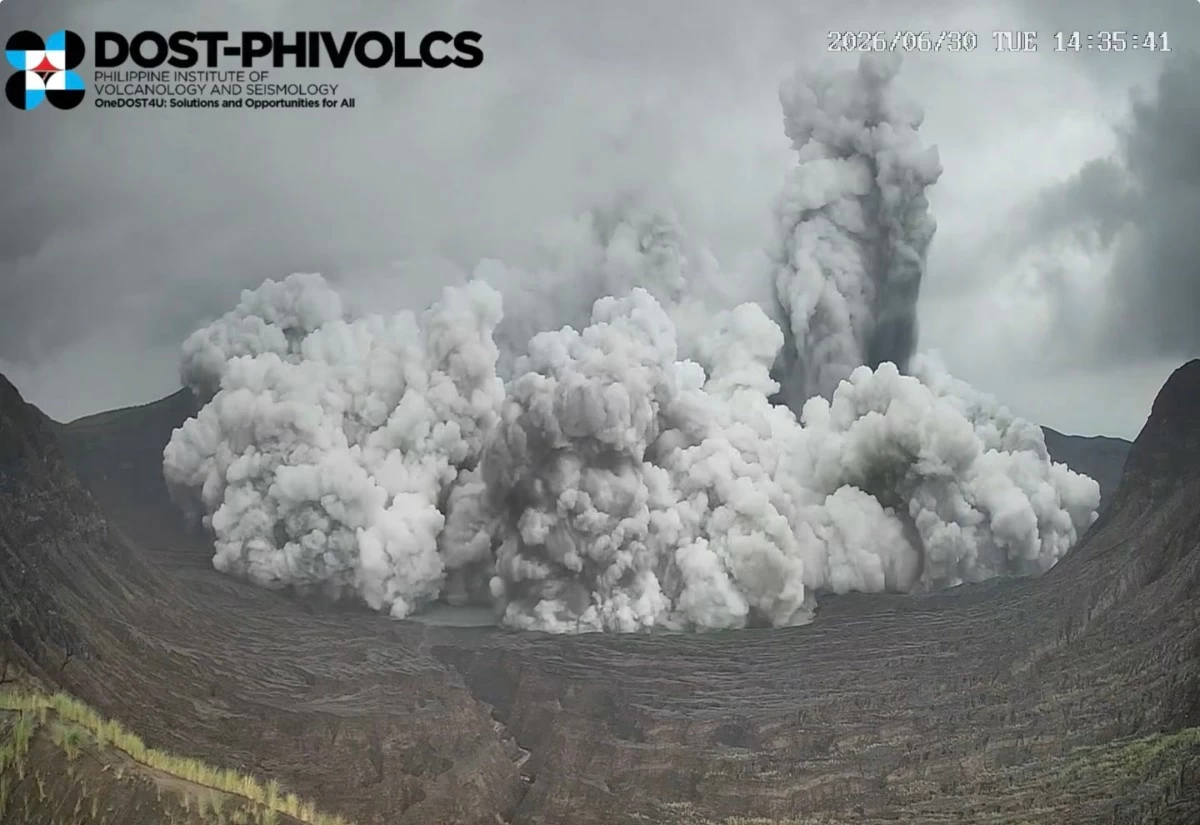
Photo caption: Dark gray ash and steam rise from the Main Crater of Taal Volcano during a minor phreatomagmatic eruption on Tuesday afternoon, June 30. The plume reached about 1,200 meters above the crater before drifting southwest. (Screenshot/Philippine Institute of Volcanology and Seismology post on X)
Hours after a series of smaller phreatomagmatic eruptions, Taal Volcano produced another minor eruption on Tuesday afternoon, June 30, according to the Philippine Institute of Volcanology and Seismology (Phivolcs).
Phivolcs said the latest eruption occurred at 2:34 p.m. and lasted four and a half minutes based on seismic, infrasound, and visual observations.
It added that the event consisted of three pulses that produced jets of dark gray ash and steam plumes that rose about 1,200 meters above the Main Crater before drifting southwest.
A phreatomagmatic eruption happens when magma interacts with water, generating steam, ash, and occasionally fragmented volcanic materials.
Earlier on Tuesday, between 7:13 a.m. and 7:17 a.m., Phivolcs observed minor phreatomagmatic eruptions at the Main Crater through its Main Crater Observation Station IP and thermal cameras.
The morning events generated plumes that rose about 450 meters above the crater.
Alert Level 1, or low-level unrest, remains in effect over Taal Volcano.
Phivolcs reiterated that entry into Taal Volcano Island, designated as the permanent danger zone, remains strictly prohibited, particularly around the Main Crater and the Daang Kastila fissures.
Occupancy on the island and boating on Taal Lake are also prohibited.
Phivolcs also advised against flying aircraft close to the volcano because of the risk posed by sudden volcanic activity.
The agency reminded the public that possible hazards under Alert Level 1 include steam-driven or phreatic and gas-driven explosions, volcanic earthquakes, minor ashfall, and lethal accumulations or expulsions of volcanic gases.