ADVERTISEMENT

People aren't the only ones hit by heat. What to do if you see wildlife affected by hot temperatures

Published Jun 30, 2026 12:14 pm  |  Updated Jul 2, 2026 02:25 pm
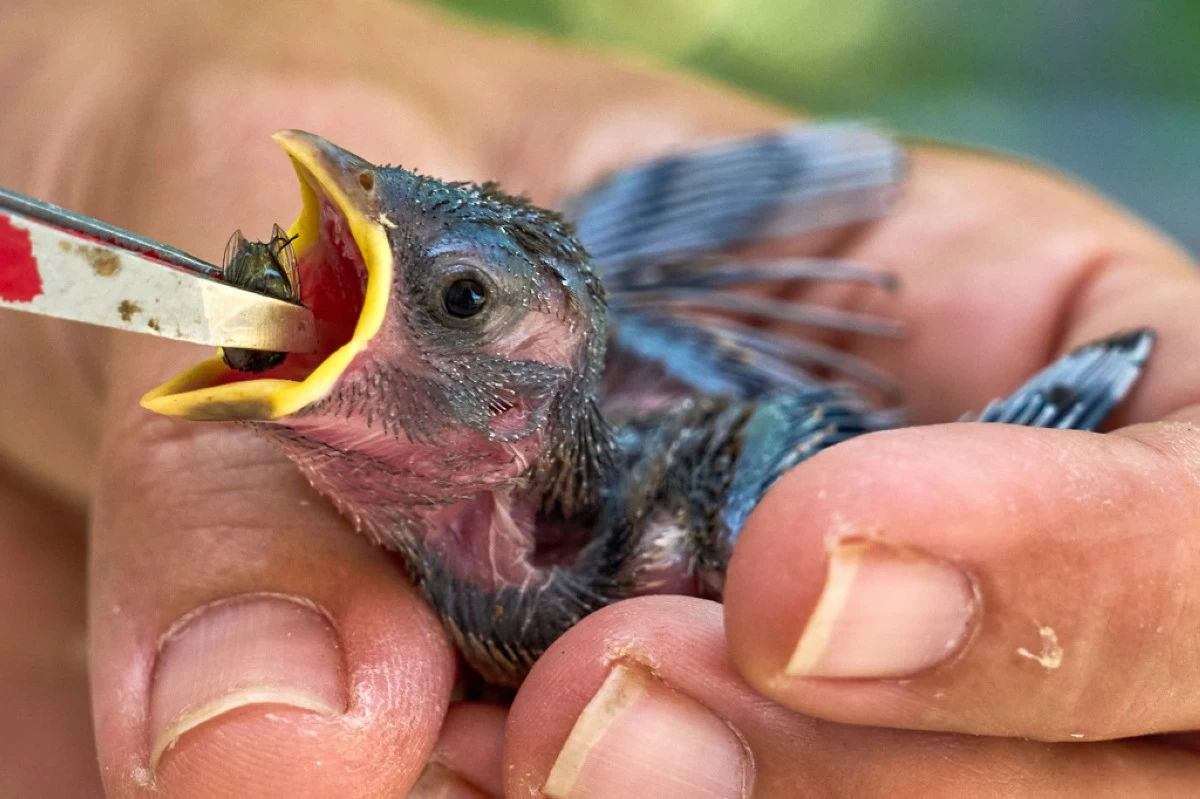
A one-week-old sparrow kitten that fled out of its nest due to the hot temperatures is fed with flies by a veterinarian in Wehrheim near Frankfurt, Germany, Friday, June 26, 2026. (AP Photo/Michael Probst)
As Europe scorches under extreme heat, people aren’t the only ones impacted by the high temperatures and humidity. Birds and other wildlife are at risk without respite, too.
Birds, especially, are crucial to ecosystems across the globe, providing services like pollinating flowers, controlling pests naturally, dispersing seeds, and even serving as early warning systems.
Experts said there are ways to respond if people see a bird in need in the heat, and how to react to other wildlife. Here's what to know.
What happens to birds in high heat?
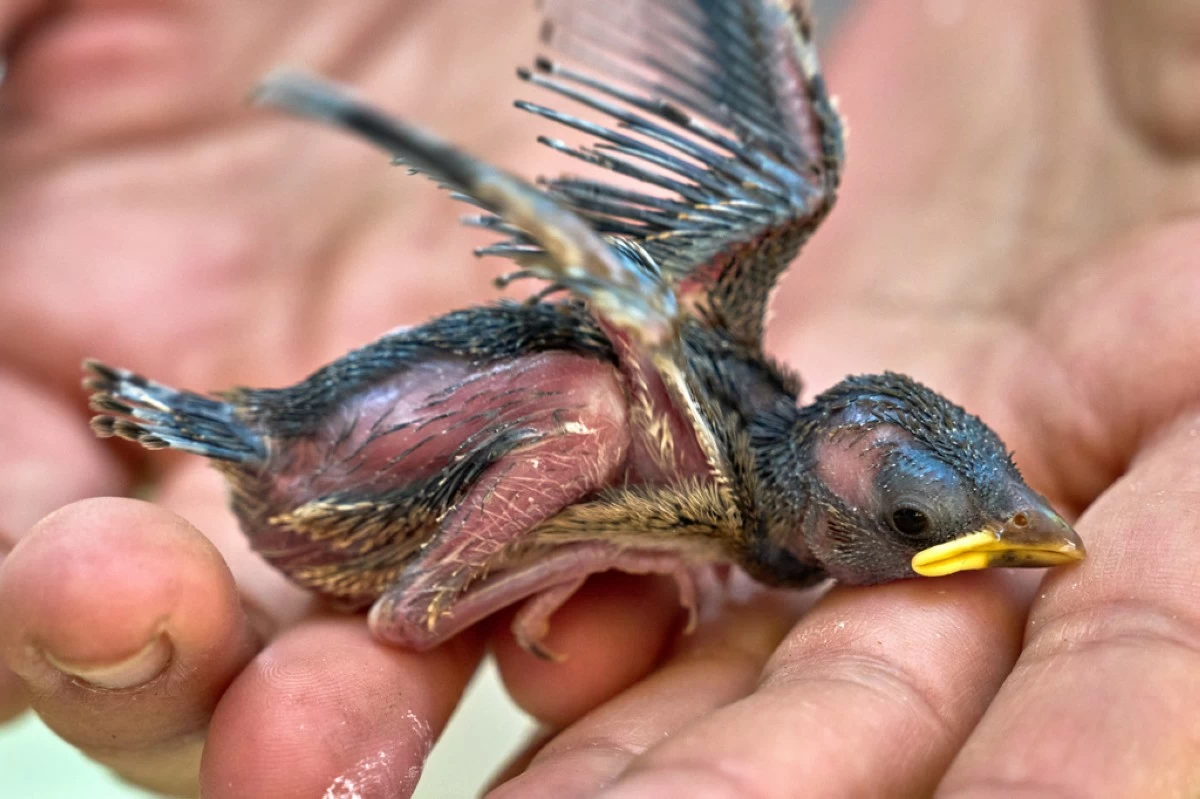
A one-week-old sparrow kitten that fled out of its nest due to the hot temperatures sits on the hand of a veterinarian in Wehrheim near Frankfurt, Germany, Friday, June 26, 2026. (AP Photo/Michael Probst)
Birds are very diverse, and often well adapted to dealing with prolonged periods of heat, said David Bird, McGill University emeritus professor of wildlife biology.
They also have a higher body temperature than mammals, with some birds around 38 degrees Celsius (100 degrees Fahrenheit) or even slightly higher.
They may adjust their feathers in certain ways, or increase airflow across a complex series of air sacs, to help keep cool. They also adapt to heat behaviorally.
But birds have a maximum level of heat they can withstand, just like humans, said Aimee Van Tatenhove, a postdoctoral fellow at the Cornell Lab of Ornithology.
“This level differs by species, and as you can imagine, species that live closer to the poles are often much more susceptible to heat than species that live closer to the equator,” Van Tatenhove said. “Prolonged intense heat like Europe is experiencing right now is likely pushing many species toward their maximum heat tolerances, putting them at risk of heat illness or death.”
Birds don’t sweat like humans and some other mammals do, but they have other ways to naturally beat the heat, experts say.
Some species, including backyard birds, will “gape,” opening their beaks and panting, not unlike a dog. Others will also flutter the pouch skin on their necks to cool off. This behavior is known as “gular fluttering."
Birds also often seek out shade, and dip in birdbaths, fountains and shallow ponds to lower their body temperatures.
What should people do if they see birds out in the heat?
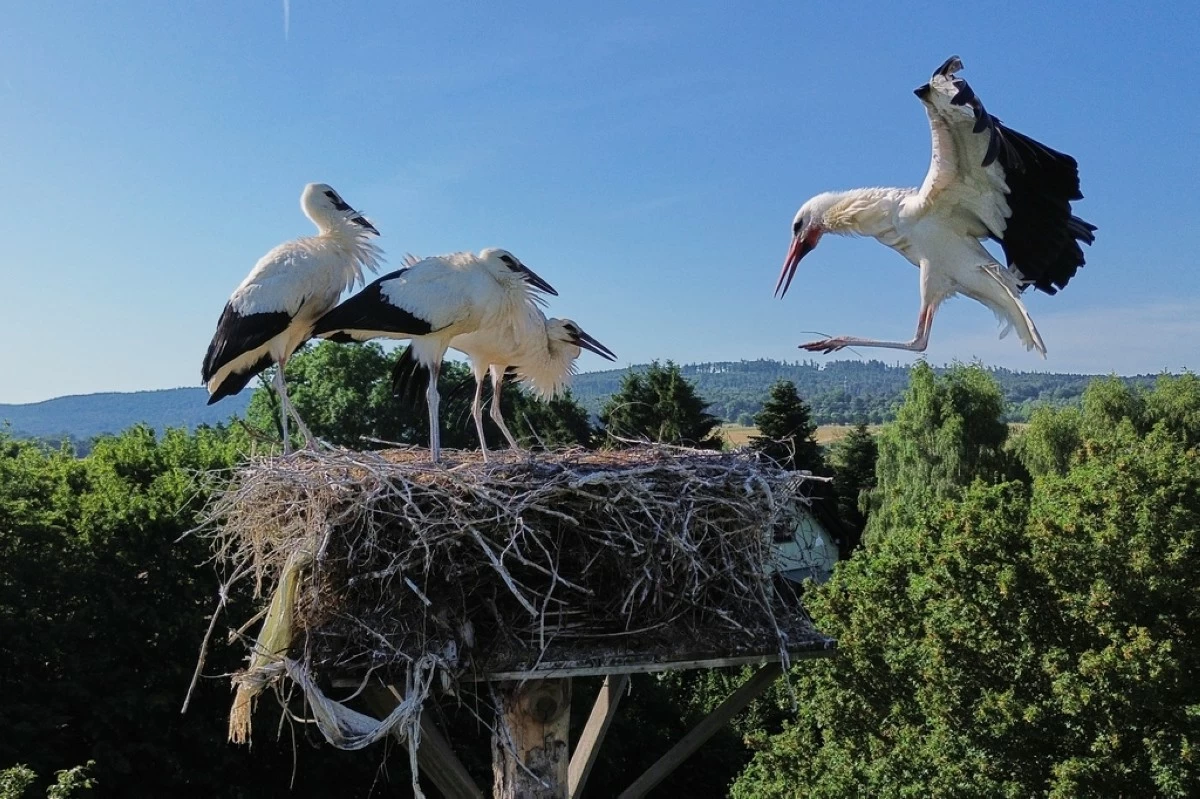
A stork approaches its nest in Wehrheim near Frankfurt, Germany, Friday, June 26, 2026. (AP Photo/Michael Probst)
It's difficult to fully protect birds that are also experiencing the ongoing heat wave, but experts offered a few tips.
In the short term, people could set up shallow water sources — in spots that are safe from harm, like predators — though experts caution it's important to keep these baths clean.
People can also fill bird feeders, providing an easy food source for birds that might be avoiding foraging for their next meal in the hot sun. Insect populations are also dramatically down, in part due to climate change and pollution, impacting a major natural food source for birds.
Over the long term, people who are able to can provide shaded areas around their yard, including layered vegetation such as small shrubs and taller trees, Bird noted.
If passive approaches aren't possible, it might be best to leave them be, said Jack Kottwitz, assistant professor at Michigan State University’s College of Veterinary Medicine. “These birds know better than what we do about what is comfortable for them.”
Birds often seek out cooling temperatures, by finding lower places to perch or even fans.
What about other wildlife that might be seen and found?
As far as other wildlife, it might also not be the best choice to try to intervene by giving an animal foreign food or water or attempting to bring it indoors, experts say.
Local wildlife rehabilitators are the best resource to contact if a sick or injured animal is found, as signs of extreme heat stress can also be similar to those of diseases that wild animals may carry. Experts know best how to help wildlife and provide needed care.
“The best thing for wildlife is to let them be wild," said Lisa Duke, sanctuary grounds manager at the W.K. Kellogg Bird Sanctuary, also affiliated with Michigan State. "They know what to do with their bodies.”

Related Tags

Extreme heat Wildlife rescue Climate Change
ADVERTISEMENT
.most-popular .layout-ratio{ padding-bottom: 79.13%; } @media (min-width: 768px) and (max-width: 1024px) { .widget-title { font-size: 15px !important; } }

{{ articles_filter_1561_widget.title }}

.most-popular .layout-ratio{ padding-bottom: 79.13%; } @media (min-width: 768px) and (max-width: 1024px) { .widget-title { font-size: 15px !important; } }

{{ static_articles_1562_widget.title }}

.most-popular .layout-ratio{ padding-bottom: 79.13%; } @media (min-width: 768px) and (max-width: 1024px) { .widget-title { font-size: 15px !important; } }

{{ articles_filter_1563_widget.title }}

{{ articles_filter_1564_widget.title }}

.mb-article-details { position: relative; } .mb-article-details .article-body-preview, .mb-article-details .article-body-summary{ font-size: 17px; line-height: 30px; font-family: "Libre Caslon Text", serif; color: #000; } .mb-article-details .article-body-preview iframe , .mb-article-details .article-body-summary iframe{ width: 100%; margin: auto; } .read-more-background { background: linear-gradient(180deg, color(display-p3 1.000 1.000 1.000 / 0) 13.75%, color(display-p3 1.000 1.000 1.000 / 0.8) 30.79%, color(display-p3 1.000 1.000 1.000) 72.5%); position: absolute; height: 200px; width: 100%; bottom: 0; display: flex; justify-content: center; align-items: center; padding: 0; } .read-more-background a{ color: #000; } .read-more-btn { padding: 17px 45px; font-family: Inter; font-weight: 700; font-size: 18px; line-height: 16px; text-align: center; vertical-align: middle; border: 1px solid black; background-color: white; } .hidden { display: none; }
function initializeAllSwipers() { // Get all hidden inputs with cms_article_id document.querySelectorAll('[id^="cms_article_id_"]').forEach(function (input) { const cmsArticleId = input.value; const articleSelector = '#article-' + cmsArticleId + ' .body_images'; const swiperElement = document.querySelector(articleSelector); if (swiperElement && !swiperElement.classList.contains('swiper-initialized')) { new Swiper(articleSelector, { loop: true, pagination: false, navigation: { nextEl: '#article-' + cmsArticleId + ' .swiper-button-next', prevEl: '#article-' + cmsArticleId + ' .swiper-button-prev', }, }); } }); } setTimeout(initializeAllSwipers, 3000); const intersectionObserver = new IntersectionObserver( (entries) => { entries.forEach((entry) => { if (entry.isIntersecting) { const newUrl = entry.target.getAttribute("data-url"); if (newUrl) { history.pushState(null, null, newUrl); let article = entry.target; // Extract metadata const author = article.querySelector('.author-section').textContent.replace('By', '').trim(); const section = article.querySelector('.section-info ').textContent.replace(' ', ' '); const title = article.querySelector('.article-title h1').textContent; // Parse URL for Chartbeat path format const parsedUrl = new URL(newUrl, window.location.origin); const cleanUrl = parsedUrl.host + parsedUrl.pathname; // Update Chartbeat configuration if (typeof window._sf_async_config !== 'undefined') { window._sf_async_config.path = cleanUrl; window._sf_async_config.sections = section; window._sf_async_config.authors = author; } // Track virtual page view with Chartbeat if (typeof pSUPERFLY !== 'undefined' && typeof pSUPERFLY.virtualPage === 'function') { try { pSUPERFLY.virtualPage({ path: cleanUrl, title: title, sections: section, authors: author }); } catch (error) { console.error('ping error', error); } } // Optional: Update document title if (title && title !== document.title) { document.title = title; } } } }); }, { threshold: 0.1 } ); function showArticleBody(button) { const article = button.closest("article"); const summary = article.querySelector(".article-body-summary"); const body = article.querySelector(".article-body-preview"); const readMoreSection = article.querySelector(".read-more-background"); // Hide summary and read-more section summary.style.display = "none"; readMoreSection.style.display = "none"; // Show the full article body body.classList.remove("hidden"); } document.addEventListener("DOMContentLoaded", () => { let loadCount = 0; // Track how many times articles are loaded const offset = [1, 2, 3, 4, 5, 6, 7, 8, 9, 10]; // Offset values const currentUrl = window.location.pathname.substring(1); let isLoading = false; // Prevent multiple calls if (!currentUrl) { console.log("Current URL is invalid."); return; } const sentinel = document.getElementById("load-more-sentinel"); if (!sentinel) { console.log("Sentinel element not found."); return; } function isSentinelVisible() { const rect = sentinel.getBoundingClientRect(); return ( rect.top < window.innerHeight && rect.bottom >= 0 ); } function onScroll() { if (isLoading) return; if (isSentinelVisible()) { if (loadCount >= offset.length) { console.log("Maximum load attempts reached."); window.removeEventListener("scroll", onScroll); return; } isLoading = true; const currentOffset = offset[loadCount]; window.loadMoreItems().then(() => { let article = document.querySelector('#widget_1690 > div:nth-last-of-type(2) article'); intersectionObserver.observe(article) loadCount++; }).catch(error => { console.error("Error loading more items:", error); }).finally(() => { isLoading = false; }); } } window.addEventListener("scroll", onScroll); });

Sign up by email to receive news.