ADVERTISEMENT

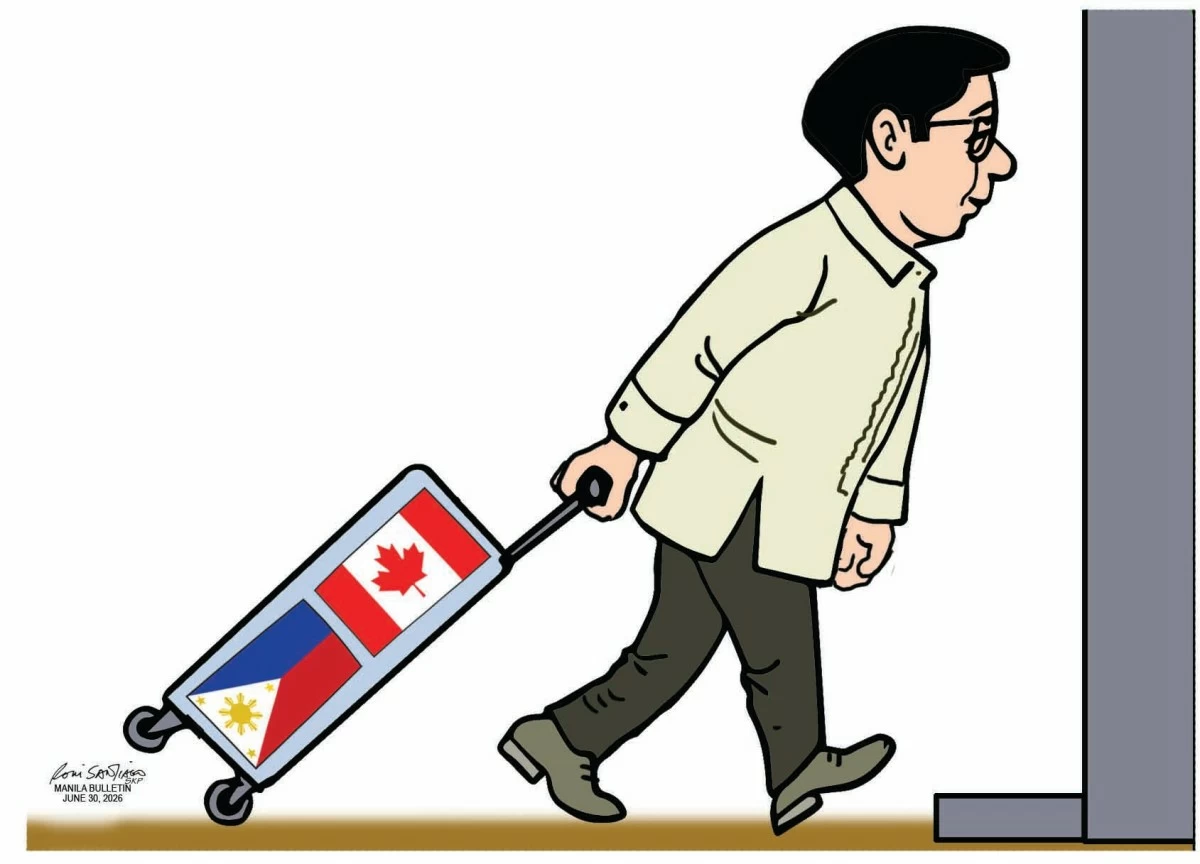
PBBM's Canada state visit: Strategic partnership renewal

Published Jun 30, 2026 12:05 am  |  Updated Jun 29, 2026 05:11 pm
As President Ferdinand R. Marcos Jr. begins his state visit to Canada tomorrow, Filipinos have an opportunity to reflect not only on the friendship between two Pacific nations but also on how dramatically the strategic landscape has evolved since President Benigno S. Aquino III’s state visit eleven years ago.
The relationship today extends far beyond the traditional pillars of migration and development assistance. Canada has emerged as one of the Indo-Pacific’s most engaged middle powers, while the Philippines has become an increasingly consequential voice in regional security, economic resilience, and maritime governance. Their renewed engagement is therefore not merely bilateral; it carries significance for ASEAN and the broader Indo-Pacific.
For Canada, the Philippines is a natural partner in implementing its Indo-Pacific Strategy. As a country committed to a rules-based international order, Canada recognizes that Southeast Asia’s stability is inseparable from global prosperity. The Philippines, situated at the crossroads of major sea lanes and international commerce, occupies a strategic position that makes cooperation in maritime security, disaster resilience, clean energy, critical minerals, and digital innovation mutually beneficial.
For the Philippines, Canada offers more than expanded trade and investment. It provides a trusted democratic partner with expertise in education, sustainable resource management, artificial intelligence, renewable energy, and inclusive economic development. Diversifying strategic partnerships has become an imperative in an era of geopolitical uncertainty, and Canada represents a valuable complement to the Philippines’ long-standing alliances and regional partnerships.
This visit also enhances the Philippines’ stature within ASEAN. As regional competition intensifies, ASEAN members increasingly value countries capable of building bridges among like-minded partners while preserving ASEAN centrality. By strengthening ties with Canada—an active dialogue partner of ASEAN—the Philippines demonstrates that constructive diplomacy can reinforce both national interests and regional cohesion.
Leadership within ASEAN is measured not by rhetoric but by the ability to generate partnerships that benefit the entire region. Expanded cooperation between Canada and the Philippines in maritime capacity-building, climate adaptation, food security, and disaster preparedness can produce models that extend well beyond bilateral relations. Such initiatives contribute to a more resilient Southeast Asia while reinforcing ASEAN’s collective voice in shaping an open, inclusive, and rules-based Indo-Pacific.
Perhaps the most enduring outcomes, however, will be found not in government communiqués but in people-to-people connections. Nearly one million Canadians claim Filipino ancestry, making the Filipino community among Canada’s largest immigrant populations. This vibrant diaspora has long served as a bridge linking the two countries through family, culture, business, and public service.
The visit presents opportunities to deepen educational exchanges, expand mutual recognition of professional qualifications, strengthen labor mobility pathways, promote tourism, encourage youth and academic exchanges, and foster greater collaboration in research, healthcare, innovation, and entrepreneurship. These initiatives create lasting relationships that outlive political administrations.
Diplomacy ultimately succeeds when ordinary citizens experience its benefits. Stronger educational partnerships equip future generations with global opportunities. Easier professional mobility rewards talent and skills. Increased business cooperation generates jobs and innovation. Cultural exchanges cultivate mutual understanding in increasingly diverse societies.
Eleven years after the last Philippine state visit to Canada, the relationship has matured into one defined by shared values, converging strategic interests, and deep human connections. The challenge now is to translate goodwill into enduring institutions and practical cooperation.
If this visit achieves that objective, it will stand not only as a milestone in Philippine-Canadian relations but also as an affirmation of the Philippines’ growing role as a confident, constructive, and forward-looking leader within ASEAN and the wider Indo-Pacific.
ADVERTISEMENT
.most-popular .layout-ratio{ padding-bottom: 79.13%; } @media (min-width: 768px) and (max-width: 1024px) { .widget-title { font-size: 15px !important; } }

{{ articles_filter_1561_widget.title }}

.most-popular .layout-ratio{ padding-bottom: 79.13%; } @media (min-width: 768px) and (max-width: 1024px) { .widget-title { font-size: 15px !important; } }

{{ static_articles_1562_widget.title }}

.most-popular .layout-ratio{ padding-bottom: 79.13%; } @media (min-width: 768px) and (max-width: 1024px) { .widget-title { font-size: 15px !important; } }

{{ articles_filter_1563_widget.title }}

{{ articles_filter_1564_widget.title }}

.mb-article-details { position: relative; } .mb-article-details .article-body-preview, .mb-article-details .article-body-summary{ font-size: 17px; line-height: 30px; font-family: "Libre Caslon Text", serif; color: #000; } .mb-article-details .article-body-preview iframe , .mb-article-details .article-body-summary iframe{ width: 100%; margin: auto; } .read-more-background { background: linear-gradient(180deg, color(display-p3 1.000 1.000 1.000 / 0) 13.75%, color(display-p3 1.000 1.000 1.000 / 0.8) 30.79%, color(display-p3 1.000 1.000 1.000) 72.5%); position: absolute; height: 200px; width: 100%; bottom: 0; display: flex; justify-content: center; align-items: center; padding: 0; } .read-more-background a{ color: #000; } .read-more-btn { padding: 17px 45px; font-family: Inter; font-weight: 700; font-size: 18px; line-height: 16px; text-align: center; vertical-align: middle; border: 1px solid black; background-color: white; } .hidden { display: none; }
function initializeAllSwipers() { // Get all hidden inputs with cms_article_id document.querySelectorAll('[id^="cms_article_id_"]').forEach(function (input) { const cmsArticleId = input.value; const articleSelector = '#article-' + cmsArticleId + ' .body_images'; const swiperElement = document.querySelector(articleSelector); if (swiperElement && !swiperElement.classList.contains('swiper-initialized')) { new Swiper(articleSelector, { loop: true, pagination: false, navigation: { nextEl: '#article-' + cmsArticleId + ' .swiper-button-next', prevEl: '#article-' + cmsArticleId + ' .swiper-button-prev', }, }); } }); } setTimeout(initializeAllSwipers, 3000); const intersectionObserver = new IntersectionObserver( (entries) => { entries.forEach((entry) => { if (entry.isIntersecting) { const newUrl = entry.target.getAttribute("data-url"); if (newUrl) { history.pushState(null, null, newUrl); let article = entry.target; // Extract metadata const author = article.querySelector('.author-section').textContent.replace('By', '').trim(); const section = article.querySelector('.section-info ').textContent.replace(' ', ' '); const title = article.querySelector('.article-title h1').textContent; // Parse URL for Chartbeat path format const parsedUrl = new URL(newUrl, window.location.origin); const cleanUrl = parsedUrl.host + parsedUrl.pathname; // Update Chartbeat configuration if (typeof window._sf_async_config !== 'undefined') { window._sf_async_config.path = cleanUrl; window._sf_async_config.sections = section; window._sf_async_config.authors = author; } // Track virtual page view with Chartbeat if (typeof pSUPERFLY !== 'undefined' && typeof pSUPERFLY.virtualPage === 'function') { try { pSUPERFLY.virtualPage({ path: cleanUrl, title: title, sections: section, authors: author }); } catch (error) { console.error('ping error', error); } } // Optional: Update document title if (title && title !== document.title) { document.title = title; } } } }); }, { threshold: 0.1 } ); function showArticleBody(button) { const article = button.closest("article"); const summary = article.querySelector(".article-body-summary"); const body = article.querySelector(".article-body-preview"); const readMoreSection = article.querySelector(".read-more-background"); // Hide summary and read-more section summary.style.display = "none"; readMoreSection.style.display = "none"; // Show the full article body body.classList.remove("hidden"); } document.addEventListener("DOMContentLoaded", () => { let loadCount = 0; // Track how many times articles are loaded const offset = [1, 2, 3, 4, 5, 6, 7, 8, 9, 10]; // Offset values const currentUrl = window.location.pathname.substring(1); let isLoading = false; // Prevent multiple calls if (!currentUrl) { console.log("Current URL is invalid."); return; } const sentinel = document.getElementById("load-more-sentinel"); if (!sentinel) { console.log("Sentinel element not found."); return; } function isSentinelVisible() { const rect = sentinel.getBoundingClientRect(); return ( rect.top < window.innerHeight && rect.bottom >= 0 ); } function onScroll() { if (isLoading) return; if (isSentinelVisible()) { if (loadCount >= offset.length) { console.log("Maximum load attempts reached."); window.removeEventListener("scroll", onScroll); return; } isLoading = true; const currentOffset = offset[loadCount]; window.loadMoreItems().then(() => { let article = document.querySelector('#widget_1690 > div:nth-last-of-type(2) article'); intersectionObserver.observe(article) loadCount++; }).catch(error => { console.error("Error loading more items:", error); }).finally(() => { isLoading = false; }); } } window.addEventListener("scroll", onScroll); });

Sign up by email to receive news.