






 Business
Trade & Industry
FAO, OECD see Philippines staying as world's No. 2 pineapple exporter
Business
Trade & Industry
FAO, OECD see Philippines staying as world's No. 2 pineapple exporter
FAO, OECD see Philippines staying as world's No. 2 pineapple exporter


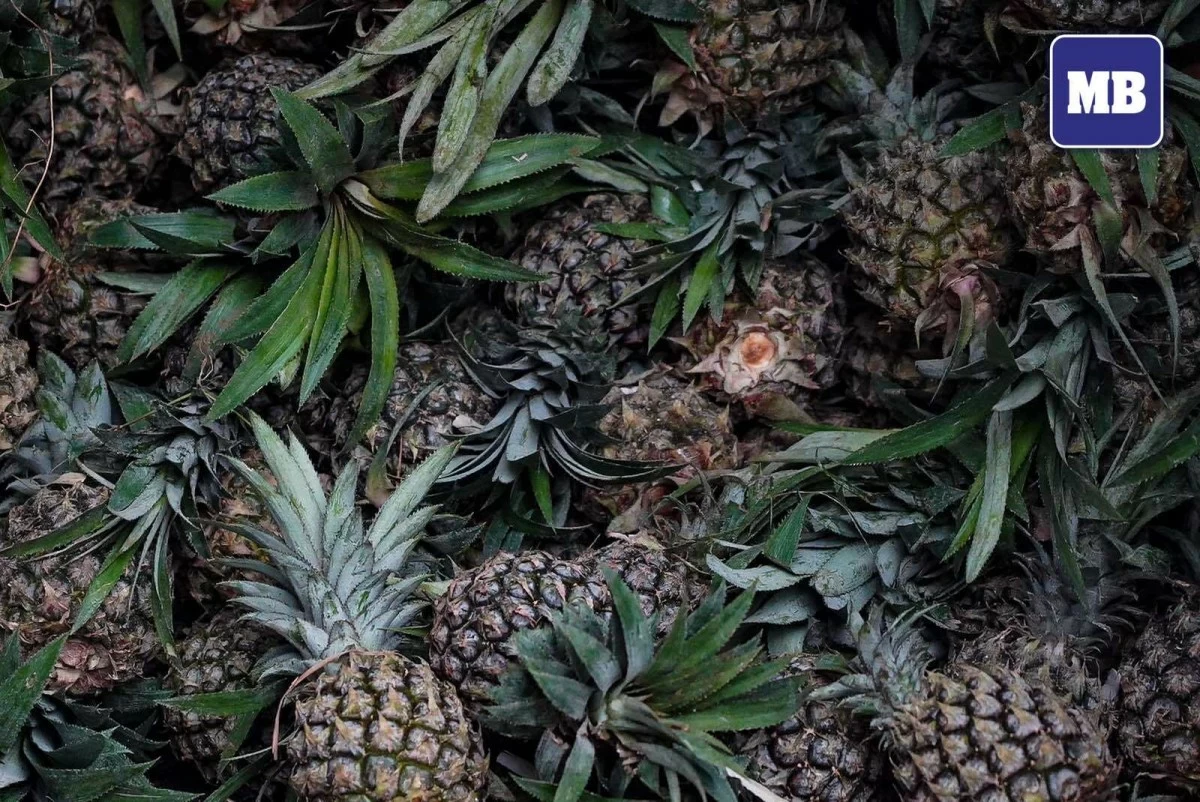
The Philippines is expected to maintain its position as the world’s second-largest exporter of pineapples over the next decade on the back of rising demand from China, according to two international organizations.
In a joint report published on Monday afternoon, June 29, the Organization for Economic Cooperation and Development (OECD) and the United Nations’ (UN) Food and Agriculture Organization (FAO) estimated that the Philippines’ pineapple exports would account for around 23 percent of domestic production by 2035.
This is second only to Costa Rica, the world’s largest pineapple exporter, whose exports are projected to comprise 77 percent of its total production by then.
“Only Costa Rica and the Philippines, two important global producers and exporters, are anticipated to see additional stimulation from rising import demand,” the OECD-FAO Agricultural Outlook 2026-2035 report said.
The report said global pineapple exports are expected to grow at an annual rate of 1.4 percent over the next decade, reaching 3.8 million metric tons (MT) in 2035 from 3.38 million MT last year.
The United States (US), the European Union (EU), and China are expected to remain the three leading importers of pineapples by 2035. China, in particular, is expected to remain the largest export market for Philippine pineapples.
The report projected that China would expand its import demand by 5.9 percent annually over the next 10 years, with imports reaching around 300,000 MT, primarily sourced from the Philippines.
“Rising import demand from China, where consumption growth has been outpacing production expansion in recent years, is expected to additionally drive expansion in global exports,” the report said.
While China is a major producer of pineapples, its import demand remains on an upward trajectory amid strong consumer demand for premium varieties, such as MD2, which is commonly grown in the highland areas of Mindanao.
Earlier, FAO estimated that the Philippines’ pineapple exports rose by 14 percent to 775,028 MT in 2025 from 682,383 MT in 2024, mainly due to sustained demand from China.
Japan and South Korea are also major export markets, accounting for around 36 percent and 13 percent of the Philippines’ pineapple shipments, respectively.
This year, the Philippines is aiming to unlock the US as its next major export market for pineapples as it awaits approval of its request to allow imports of the commodity through all US ports.
At present, fresh pineapple exports from the Philippines are restricted to ports in the north Atlantic region, Guam, and Northern Mariana Islands.
In a June 10 notice seen by Manila Bulletin, the US Animal and Plant Health Inspection Service (APHIS) said it is seeking stakeholder feedback on the proposal to grant expanded market access for the country’s fresh pineapple exports.
Once approved, the Bureau of Plant Industry (BPI) expects the Philippines to ship approximately 19,200 MT of fresh pineapples to the US annually. The US currently imports an average of just around 600 MT from the Philippines.