







Building ecosystems for jobs, opportunities, and progress
For Aboitiz Economic Estates, the future of real estate lies in building integrated ecosystems prioritizing job creation
Published Jun 30, 2026 07:21 pm
|
Updated Jul 1, 2026 02:16 pm


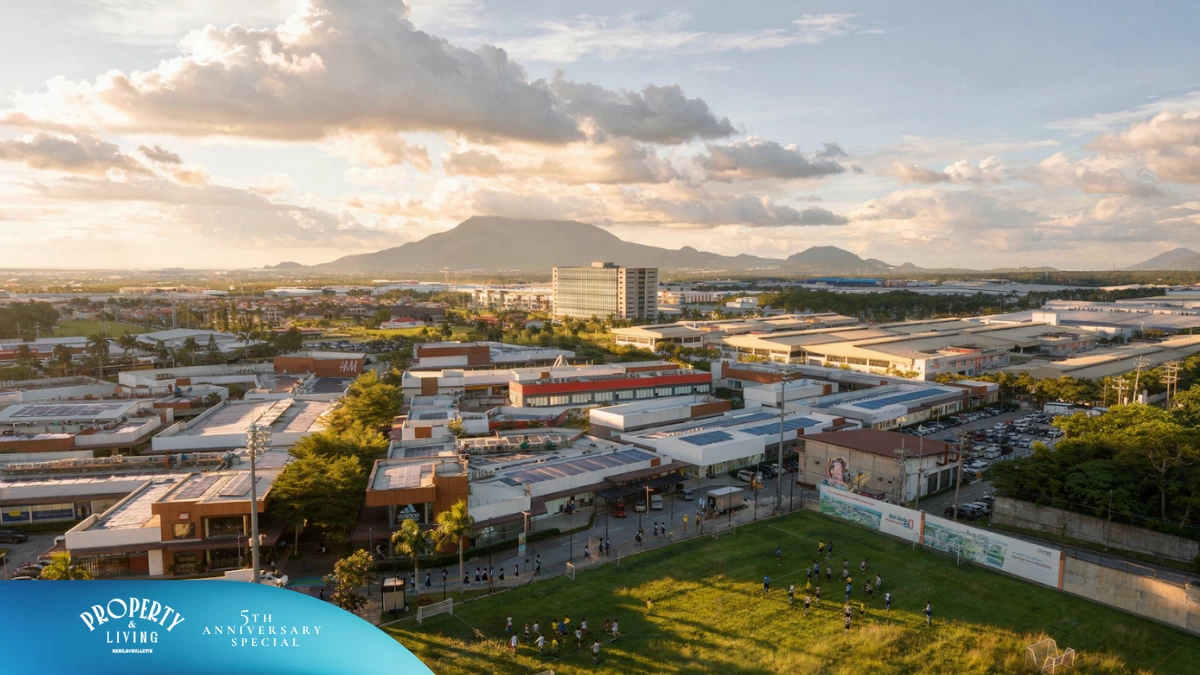
LIMA Estate aligns local skills to locator demand. (Photo: Aboitiz Economic Estates)
For decades, conventional urban planning in the Philippines operated under a simple, speculative assumption: build the houses, and the people will discover a way to live there. This "housing-first" model treats residential spaces as standalone products. However, the structural realities of the Philippine economy reveal that sustainable real estate does not create economic demand; it is economic opportunity that creates real estate value.
When communities are planned around housing alone, a disconnect emerges. Families face the "hidden cost of distance"—spending hours commuting, burning through disposable income, and leaving developments underutilized. For a community to truly take root, the economic engine must be built first.
LIMA Estate, the flagship development of Aboitiz Economic Estates, is setting a new standard for business and lifestyle integration by developing with a “jobs-first” approach.
At Aboitiz Economic Estates, development is anchored on sustained job creation, where communities are planned on real, measurable demand. For the developer, housing is not a speculative venture but becomes responsive. As a result, housing developments deliver lasting value based on an economic foundation.
This shift is increasingly visible across integrated industrial townships such as LIMA Estate, a smart, sustainable, industrial-anchored development spanning 1,100 hectares, hosting nearly 187 to 197 local and global brands and employing over 71,000 to 75,000 people.

At LIMA Estate, learners are part of the workforce cycle. (Photo: Aboitiz Economic Estates)
Located in Lipa and Malvar, Batangas, LIMA provides businesses with proximity to key infrastructure projects and potential access to PEZA incentives. Inside the industrial hub stands the 70-hectare Biz Hub, the first master-planned business district in Batangas that seamlessly incorporates office, retail, transport terminal, and lifestyle developments.
With over 167 shops and restaurants, Biz Hub has become a center of business and leisure, alongside housing developments, Edustria High School, and the Batangas State University – LIMA Campus. The presence of academic institutions shows how industrial expansion comes with structured talent development.
The estate also established the Talent Edge Hub—a facility dedicated to training, upskilling, and linking learners to employment opportunities. Developed in partnership with Batangas State University (BSU) and the National Engineering University, the hub forms part of the broader Talent Edge Program, designed to bridge education, skills, and employment.
The 10-hectare university is the country's first hub for industry-based learning, where engineering and technical education are directly aligned with the needs of the estate’s corporate locators.

Rafael Fernandez de Mesa, president and CEO, Aboitiz Economic Estates and Aboitiz Land (Photo: Aboitiz Economic Estates)
The partnership supports scalable growth backed by a reliable talent pipeline that allows employers to focus on operations. Programs are intentionally co-designed with locators so that the formation of skills evolves with manufacturing technologies, operational standards, and global demand. By bridging classroom learning with workplace application, learners gain competencies needed to fulfil industry requirements. For the Aboitiz group, this approach reinforces a core principle of the estate model: industrial growth depends on workforce strength.
“Education shapes the quality of the workforce and the confidence of investors. At Aboitiz Economic Estates, this has informed how we have developed our estates over time—ensuring that learning systems evolve alongside industry so jobs take on greater depth and investment is supported by real, existing capability within the ecosystem,” said Rafael Fernandez de Mesa, president and CEO, Aboitiz Economic Estates and Aboitiz Land.
This coming August 2026, the BSU – LIMA Campus is set to receive an introductory intake of 800 first-year engineering students.
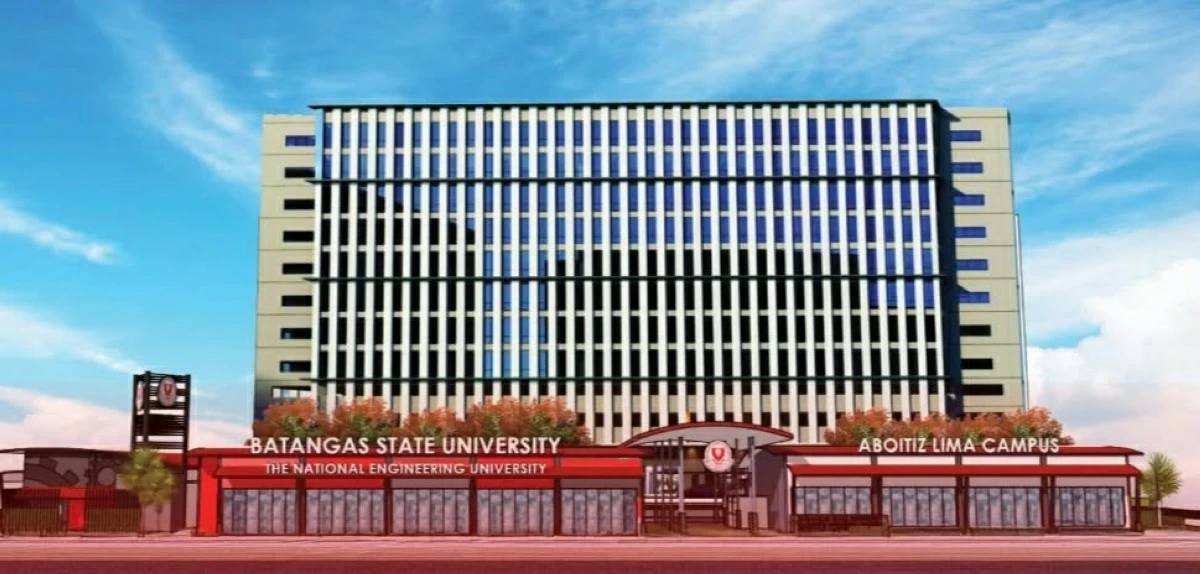
Batangas State University is part of the education program at the economic estate. (Artist's perspective: Aboitiz Economic Estates)
Co-developed with industry leaders, the curriculum provides immersive exposure to authentic professional settings that deliberately mirror the functional demands of corporate partners. This strategic alignment ensures that incoming graduates possess the exact technical competencies required to meet strict operational standards.
This is a milestone in advancing a jobs-first, education-centric approach that embeds talent development within industrial ecosystems through the Industry Microcredential Programme developed and implemented by Batangas State University’s Center for Innovation in Engineering Education (CIEE) in collaboration with industry partners within LIMA Estate.
By aligning academic programs with industry requirements, this ecosystem gives students early exposure to applied technologies and operational environments, supporting smoother transitions into employment. The initiative extends beyond skills development to link employment, education, housing, and community infrastructure into a connected system within the same community. That way, communities then become more rooted, participation deepens, and national and local economic activity becomes more sustained.