ADVERTISEMENT

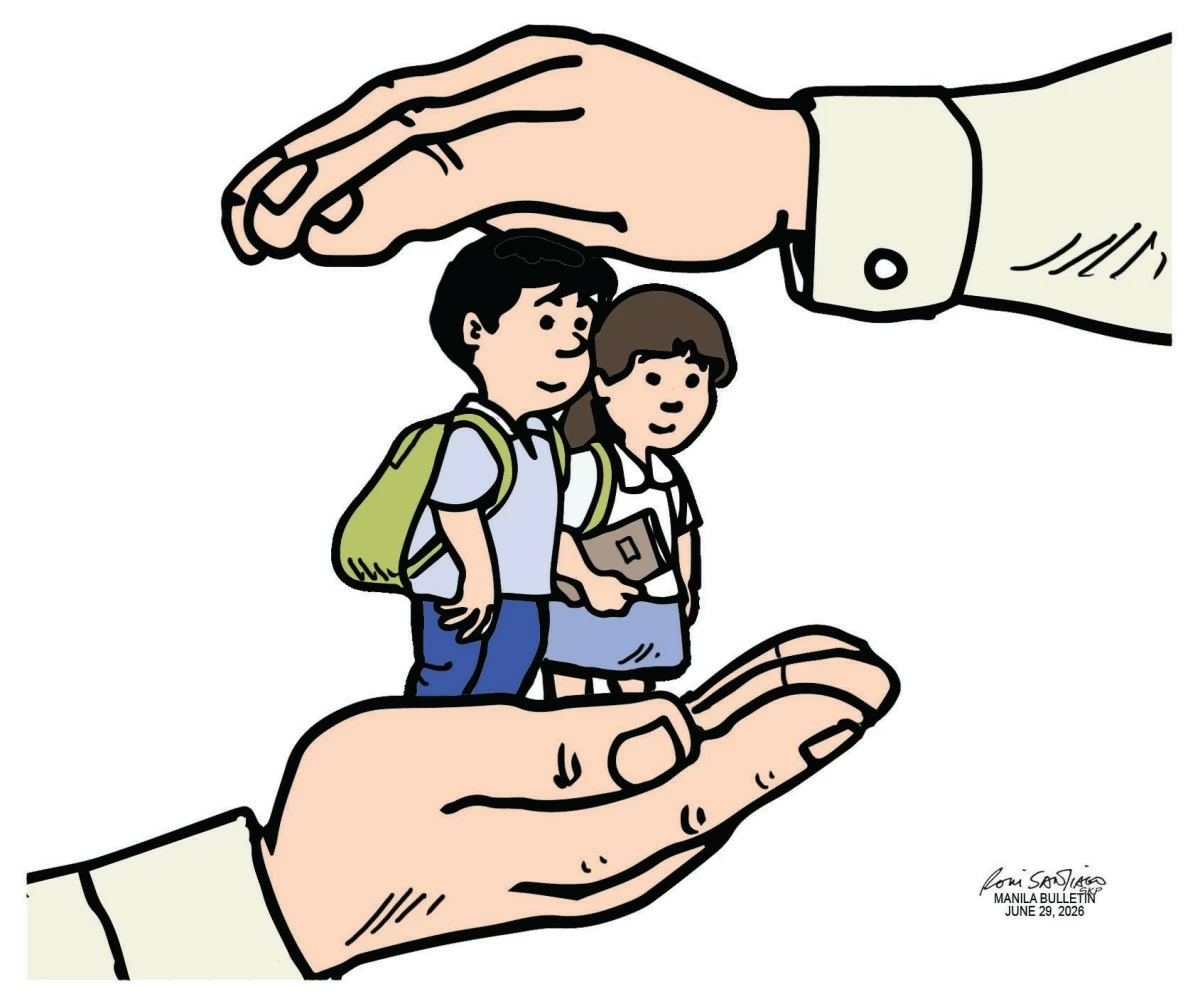
Protecting a generation before the next headline

Published Jun 29, 2026 12:05 am  |  Updated Jun 28, 2026 03:27 pm
Barely three weeks into the new school year, the nation has witnessed a succession of heartbreaking stories involving young Filipinos. What began with the trauma of a powerful earthquake disrupting the first day of classes for millions of learners was followed by an even more disturbing tragedy. The puzzling question on everybody’s mind in the aftermath of the Tacloban shooting is this: How could such violent events transpire inside a place meant to nurture hope?
Each incident has its own circumstances. One was a natural disaster beyond human control; the other was an act of violence allegedly committed by minors, with investigators examining factors that include bullying, mental health, online influences, and access to firearms. Yet together they reveal a common truth. Today’s Filipino youth are navigating a world filled with risks that are more complex than those faced by previous generations.
The temptation after every tragedy is to look for a single culprit. Some point to violent video games, others to social media, broken families, weak discipline, or gaps in school security. Reality is seldom that simple. Violence rarely emerges from one influence alone. It grows where emotional distress goes unnoticed, where bullying festers, where warning signs are ignored, and where communities fail to intervene before reasoned anger degenerates into irreversible action.
Protecting the youth, therefore, demands a whole-of-society response.
Parents remain the first line of defense. Beyond providing material needs, they must cultivate open communication, monitor their children’s digital lives without invading trust, and recognize behavioral changes that may signal emotional struggles. Listening, after all, is often the earliest form of intervention.
Schools must likewise strengthen guidance and counseling services, improve anti-bullying programs, and ensure that reporting mechanisms are confidential, responsive, and free from retaliation. Security measures have their place, but prevention begins long before a crisis knocks at the school gate and reaches the classrooms. Teachers should receive continuous training to identify students who may need psychological or social support.
Government agencies must also move beyond reactive measures. Investments in school counselors, child psychologists, and community mental health programs should become priorities rather than afterthoughts. Laws regulating firearm access must be rigorously enforced, while investigations into digital platforms should be guided by evidence, balancing child protection with respect for fundamental freedoms. Policy decisions should address root causes instead of searching for convenient scapegoats.
Technology companies and social media platforms likewise share responsibility. Stronger age verification, parental controls, and faster responses to harmful content can help reduce children’s exposure to violent or exploitative online spaces. Digital citizenship should become as essential to education as reading and mathematics.
The media, too, must exercise restraint. While the public deserves accurate reporting, sensational coverage risks glorifying perpetrators and encouraging copycat behavior. Responsible journalism informs without stoking anger and resentment.
The youth deserve more than expressions of grief after every national tragedy. They deserve schools where learning is free from fear, communities that recognize distress before it becomes disaster, and institutions that place their well-being above political debates and fleeting public outrage.
The headlines of June 2026 should not simply be remembered for their shock. They should be remembered as the moment the nation resolved that no Filipino child should face danger alone, and that safeguarding the next generation is a responsibility shared by every Filipino.
ADVERTISEMENT
.most-popular .layout-ratio{ padding-bottom: 79.13%; } @media (min-width: 768px) and (max-width: 1024px) { .widget-title { font-size: 15px !important; } }

{{ articles_filter_1561_widget.title }}

.most-popular .layout-ratio{ padding-bottom: 79.13%; } @media (min-width: 768px) and (max-width: 1024px) { .widget-title { font-size: 15px !important; } }

{{ static_articles_1562_widget.title }}

.most-popular .layout-ratio{ padding-bottom: 79.13%; } @media (min-width: 768px) and (max-width: 1024px) { .widget-title { font-size: 15px !important; } }

{{ articles_filter_1563_widget.title }}

{{ articles_filter_1564_widget.title }}

.mb-article-details { position: relative; } .mb-article-details .article-body-preview, .mb-article-details .article-body-summary{ font-size: 17px; line-height: 30px; font-family: "Libre Caslon Text", serif; color: #000; } .mb-article-details .article-body-preview iframe , .mb-article-details .article-body-summary iframe{ width: 100%; margin: auto; } .read-more-background { background: linear-gradient(180deg, color(display-p3 1.000 1.000 1.000 / 0) 13.75%, color(display-p3 1.000 1.000 1.000 / 0.8) 30.79%, color(display-p3 1.000 1.000 1.000) 72.5%); position: absolute; height: 200px; width: 100%; bottom: 0; display: flex; justify-content: center; align-items: center; padding: 0; } .read-more-background a{ color: #000; } .read-more-btn { padding: 17px 45px; font-family: Inter; font-weight: 700; font-size: 18px; line-height: 16px; text-align: center; vertical-align: middle; border: 1px solid black; background-color: white; } .hidden { display: none; }
function initializeAllSwipers() { // Get all hidden inputs with cms_article_id document.querySelectorAll('[id^="cms_article_id_"]').forEach(function (input) { const cmsArticleId = input.value; const articleSelector = '#article-' + cmsArticleId + ' .body_images'; const swiperElement = document.querySelector(articleSelector); if (swiperElement && !swiperElement.classList.contains('swiper-initialized')) { new Swiper(articleSelector, { loop: true, pagination: false, navigation: { nextEl: '#article-' + cmsArticleId + ' .swiper-button-next', prevEl: '#article-' + cmsArticleId + ' .swiper-button-prev', }, }); } }); } setTimeout(initializeAllSwipers, 3000); const intersectionObserver = new IntersectionObserver( (entries) => { entries.forEach((entry) => { if (entry.isIntersecting) { const newUrl = entry.target.getAttribute("data-url"); if (newUrl) { history.pushState(null, null, newUrl); let article = entry.target; // Extract metadata const author = article.querySelector('.author-section').textContent.replace('By', '').trim(); const section = article.querySelector('.section-info ').textContent.replace(' ', ' '); const title = article.querySelector('.article-title h1').textContent; // Parse URL for Chartbeat path format const parsedUrl = new URL(newUrl, window.location.origin); const cleanUrl = parsedUrl.host + parsedUrl.pathname; // Update Chartbeat configuration if (typeof window._sf_async_config !== 'undefined') { window._sf_async_config.path = cleanUrl; window._sf_async_config.sections = section; window._sf_async_config.authors = author; } // Track virtual page view with Chartbeat if (typeof pSUPERFLY !== 'undefined' && typeof pSUPERFLY.virtualPage === 'function') { try { pSUPERFLY.virtualPage({ path: cleanUrl, title: title, sections: section, authors: author }); } catch (error) { console.error('ping error', error); } } // Optional: Update document title if (title && title !== document.title) { document.title = title; } } } }); }, { threshold: 0.1 } ); function showArticleBody(button) { const article = button.closest("article"); const summary = article.querySelector(".article-body-summary"); const body = article.querySelector(".article-body-preview"); const readMoreSection = article.querySelector(".read-more-background"); // Hide summary and read-more section summary.style.display = "none"; readMoreSection.style.display = "none"; // Show the full article body body.classList.remove("hidden"); } document.addEventListener("DOMContentLoaded", () => { let loadCount = 0; // Track how many times articles are loaded const offset = [1, 2, 3, 4, 5, 6, 7, 8, 9, 10]; // Offset values const currentUrl = window.location.pathname.substring(1); let isLoading = false; // Prevent multiple calls if (!currentUrl) { console.log("Current URL is invalid."); return; } const sentinel = document.getElementById("load-more-sentinel"); if (!sentinel) { console.log("Sentinel element not found."); return; } function isSentinelVisible() { const rect = sentinel.getBoundingClientRect(); return ( rect.top < window.innerHeight && rect.bottom >= 0 ); } function onScroll() { if (isLoading) return; if (isSentinelVisible()) { if (loadCount >= offset.length) { console.log("Maximum load attempts reached."); window.removeEventListener("scroll", onScroll); return; } isLoading = true; const currentOffset = offset[loadCount]; window.loadMoreItems().then(() => { let article = document.querySelector('#widget_1690 > div:nth-last-of-type(2) article'); intersectionObserver.observe(article) loadCount++; }).catch(error => { console.error("Error loading more items:", error); }).finally(() => { isLoading = false; }); } } window.addEventListener("scroll", onScroll); });

Sign up by email to receive news.