






Manila Bulletin
 Lifestyle
Luminaries and Life
National Artist Kidlat Tahimik urges educators to rethink proposed general education cuts and help young Filipinos reconnect with their roots
Lifestyle
Luminaries and Life
National Artist Kidlat Tahimik urges educators to rethink proposed general education cuts and help young Filipinos reconnect with their roots
Lifestyle
Luminaries and Life
National Artist Kidlat Tahimik urges educators to rethink proposed general education cuts and help young Filipinos reconnect with their roots
National Artist Kidlat Tahimik urges educators to rethink proposed general education cuts and help young Filipinos reconnect with their roots
The lessons worth keeping
Published Jun 29, 2026 11:48 am


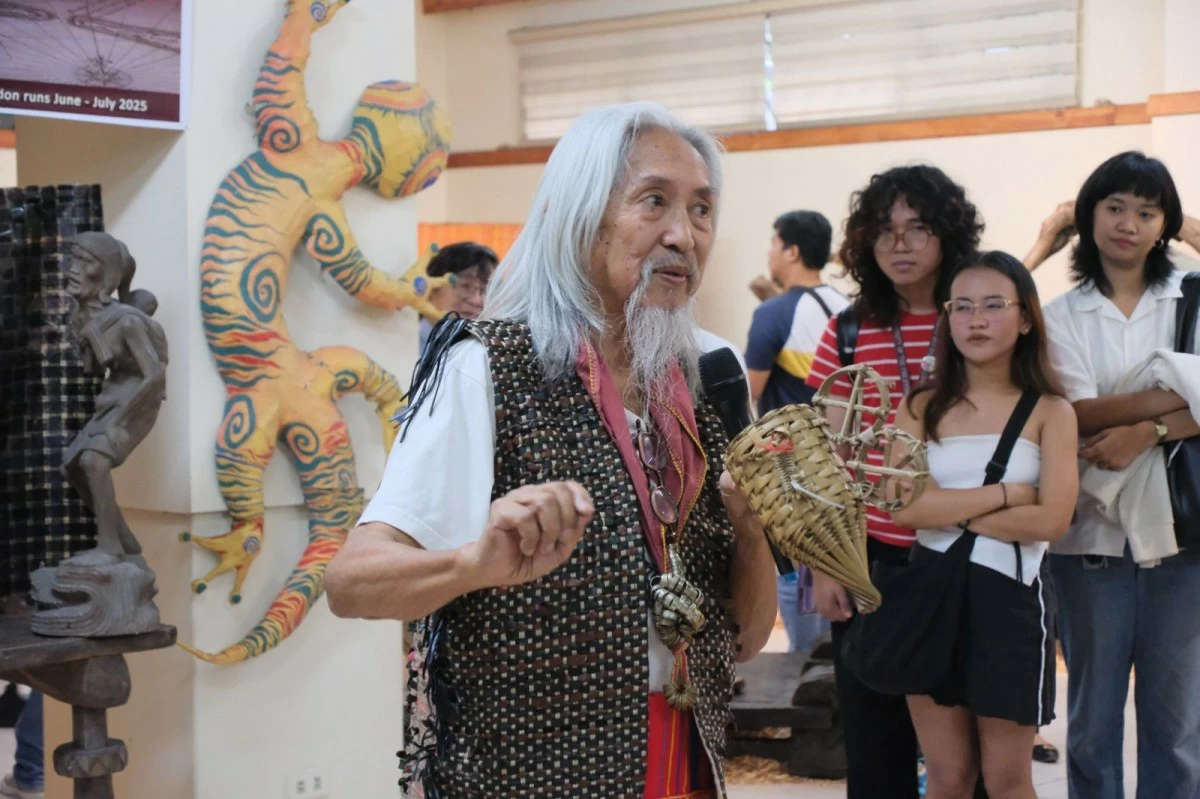
National Artist for Film Kidlat Tahimik
For many young Filipinos, college is not just about preparing for a career. It is also where they develop critical thinking, discover their identity, and deepen their understanding of the country's history and culture. That is why a proposal to reduce general education courses in higher education has sparked concern among educators, artists, and cultural advocates.
As part of the proposed Reframed General Education Curriculum (RGEC), the Commission on Higher Education (CHED) is considering reducing general education (GE) units from 36 to 18. While the proposal aims to streamline the curriculum, critics argue that it may come at the cost of producing well-rounded graduates.
Among those who strongly oppose the proposal is National Artist for Film Kidlat Tahimik. In a symbolic act of protest, the acclaimed filmmaker announced that he would surrender his National Artist medallion and the privileges that come with the title.
In an interview with Manila Bulletin Lifestyle, Tatay Kidlat, as he is affectionately known in the arts community, shared that after submitting his position paper to CHED on June 15, he personally went to the National Commission for Culture and the Arts (NCCA) on June 17 to explain his position and temporarily surrender his medallion until the issue is resolved.
“I have been aware that our education system is rooted from colonialism. So when I saw that they are reducing the GE subjects, I said: ‘Wow, we are really trying to produce graduates for the export market,” he said. “These graduates are good with quantitative thinking and they are losing the qualitative, critical thinking skills of the youth if we reduce our curriculum as they proposed.”
‘Redundancy is not necessarily evil. Even if it's repetitive, if they are important, it deepens your appreciation of important things. They only emphasize skills training for young people because those are the skills needed to work in factories or office jobs, but it doesn’t make you holistic as a human being. It’s a very colonized way of thinking.’
For Kidlat, general education subjects are more than academic requirements. They help shape students into culturally aware and socially conscious Filipinos.
When asked about the argument that these subjects have become redundant because they are already taught in elementary and high school, he said the problem is not repetition but how these lessons are taught. According to him, education should inspire students to value their roots instead of simply memorizing facts.
“Let’s find other ways of teaching to be able to add meaning to those lessons,” he said. “Let’s say on the lives of the heroes or bravery of indigenous people or understanding the scientific engineering of Ifugao’s when they built the rice terraces, which is not considered scientific by the Westerners, kaya binabale wala lahat ng ginawa ng ating mga ninuno (that's why all that our ancestors accomplished is being dismissed).”
He believes the country should take this opportunity to rethink its education system through a distinctly Filipino lens, rather than continuing to measure progress using standards inherited from colonial influences.
“We are accepting their standards for what is good education or what is progressive,” he said. “We should start thinking about what we are really looking for? What is happiness for us as Filipinos? Is it really the material things, just like the Americans? But look at their happiness index and their culture, they are lacking human connections.”
Despite the symbolic gesture of surrendering his medallion, Kidlat emphasized that his actions are not meant to insult or challenge CHED. Instead, he hopes they encourage meaningful dialogue and allow artists and cultural workers to contribute to discussions about the future of Philippine education.
More than protesting a policy, he sees the issue as an opportunity to remind young Filipinos that learning extends beyond classrooms and textbooks.
“We are all learners. In this day and age, there are many sources of information, but in the end, the knowledge coming from our lolos and lolas is still important,” he said. “And we need to be aware that it might not be as kasing bongga ng mga ginagawa sa social media (as flashy as what we do on social media), but we have to understand that our cultural wealth brought us here and made us who we are.”