







The future is bamboo
Natural and sustainable, bamboo is slowly making its way into modern homes and structures
Published Jun 28, 2026 05:13 pm
|
Updated Jun 28, 2026 04:33 pm


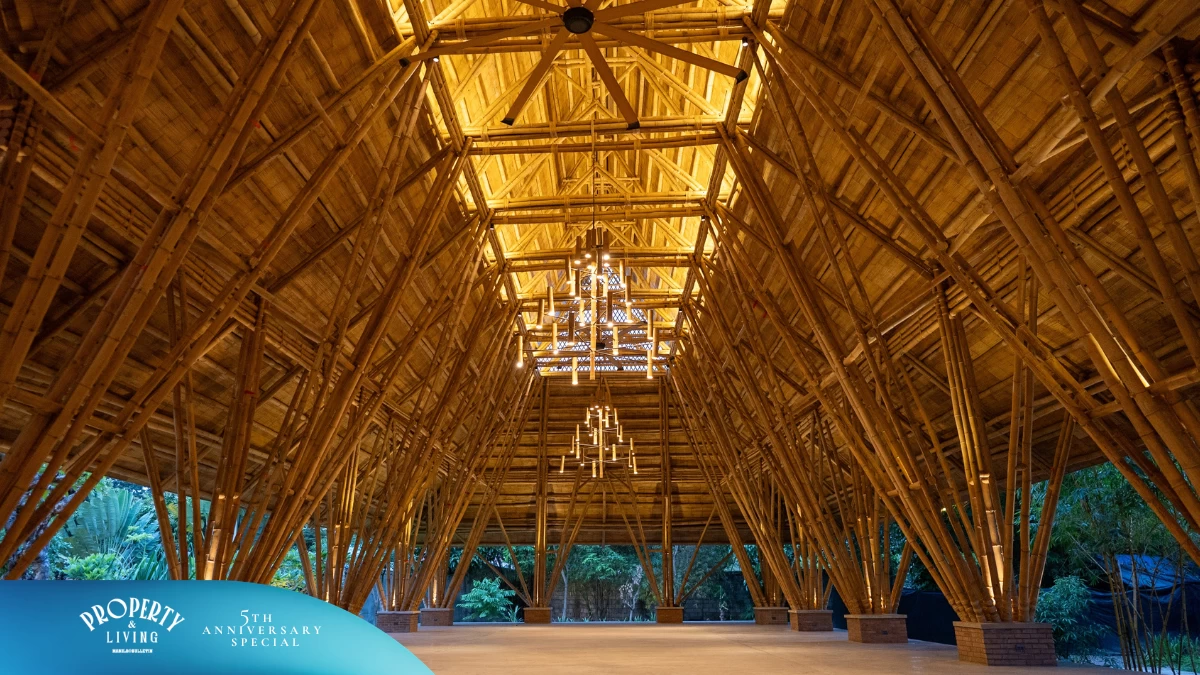
Inside the Bamboo Pavilion (Photo: Kawayan Collective)
For centuries, Filipinos have built and lived in bahay kubo made of bamboo. With the introduction of steel and lumber, bamboo was regarded as a "poor man's" building material, often sidelined for low-cost housing. Today, bamboo is slowly reclaiming its place in the construction of modern homes. By combining ancestral building wisdom with cutting-edge technologies, treated culms and engineered bamboo are emerging as premium, structurally superior alternatives to steel, lumber, and concrete.
As an educator and architect, Ray Villanueva championed the use of bamboo and has dedicated his work to elevating bamboo into mainstream Philippine construction, providing the blueprint for accessible, resilient, culturally rooted Filipino homes.
Born in the U.S., Filipino-American Ray earned his Bachelor of Science in Architecture from the University of Maryland with summa cum laude honors and completed his Master of Architecture at the University of Washington.
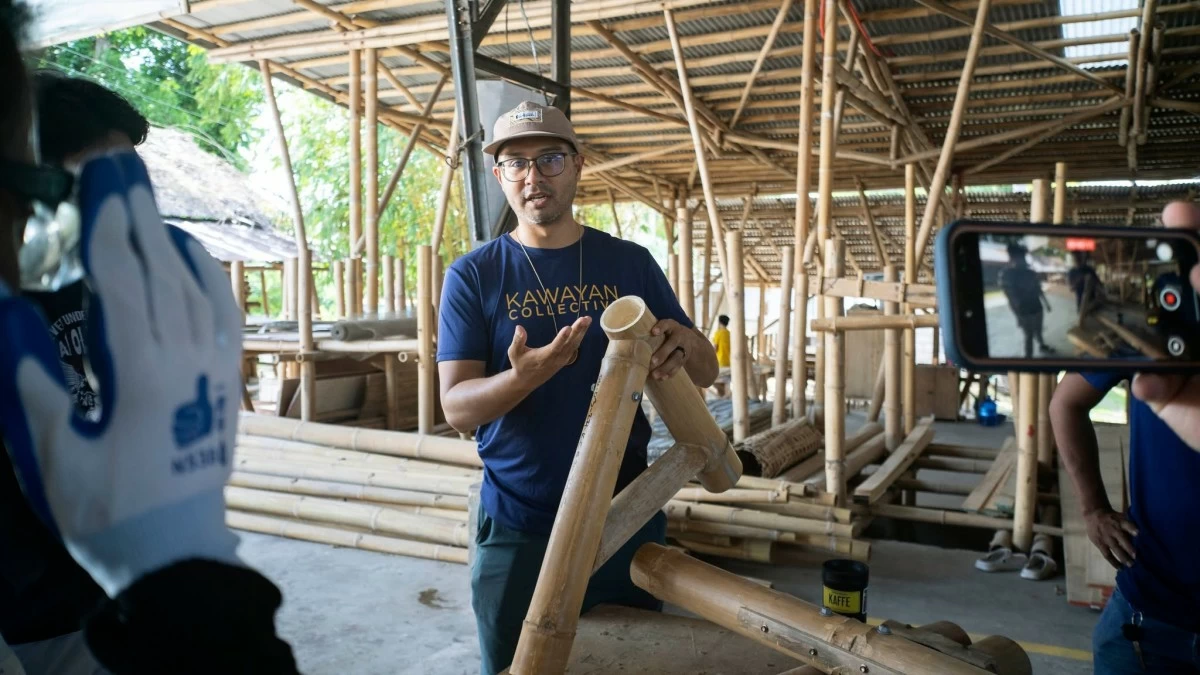
Educator and Kawayan Collective Architect Ray Villanueva (Photo: Kawayan Collective)
While teaching at the Foundation University in Dumaguete City, Arch. Ray co-founded the Estudio Damgo, a student-led community design and build program, in 2012. That started his journey into designing and building structures made of bamboo, showing the material’s properties and potential not only as a substitute but also as a primary material for construction.
As one of the fastest-growing plants, bamboo is a self-renewing resource from nature. It has been recorded to grow 47.6 inches in 24 hours, while some species can even grow over a meter per day under optimal tropical conditions. Bamboos can mature and be harvested in three to five years compared to the 20 to 30 years of most softwoods. The bamboo culms are widely available and thrive all over the country, making the material logistically more accessible and cost-efficient.
Strong and sturdy, bamboo has been used to build bridges, houses, and other structures. The bamboo culms can maintain structural integrity not just during the design and construction phases, but across the entire operational lifespan of a structure. What most impressed Arch. Ray is the bamboo’s strength-to-weight ratio. “It can carry a lot but can weigh a lot less than steel or concrete.”
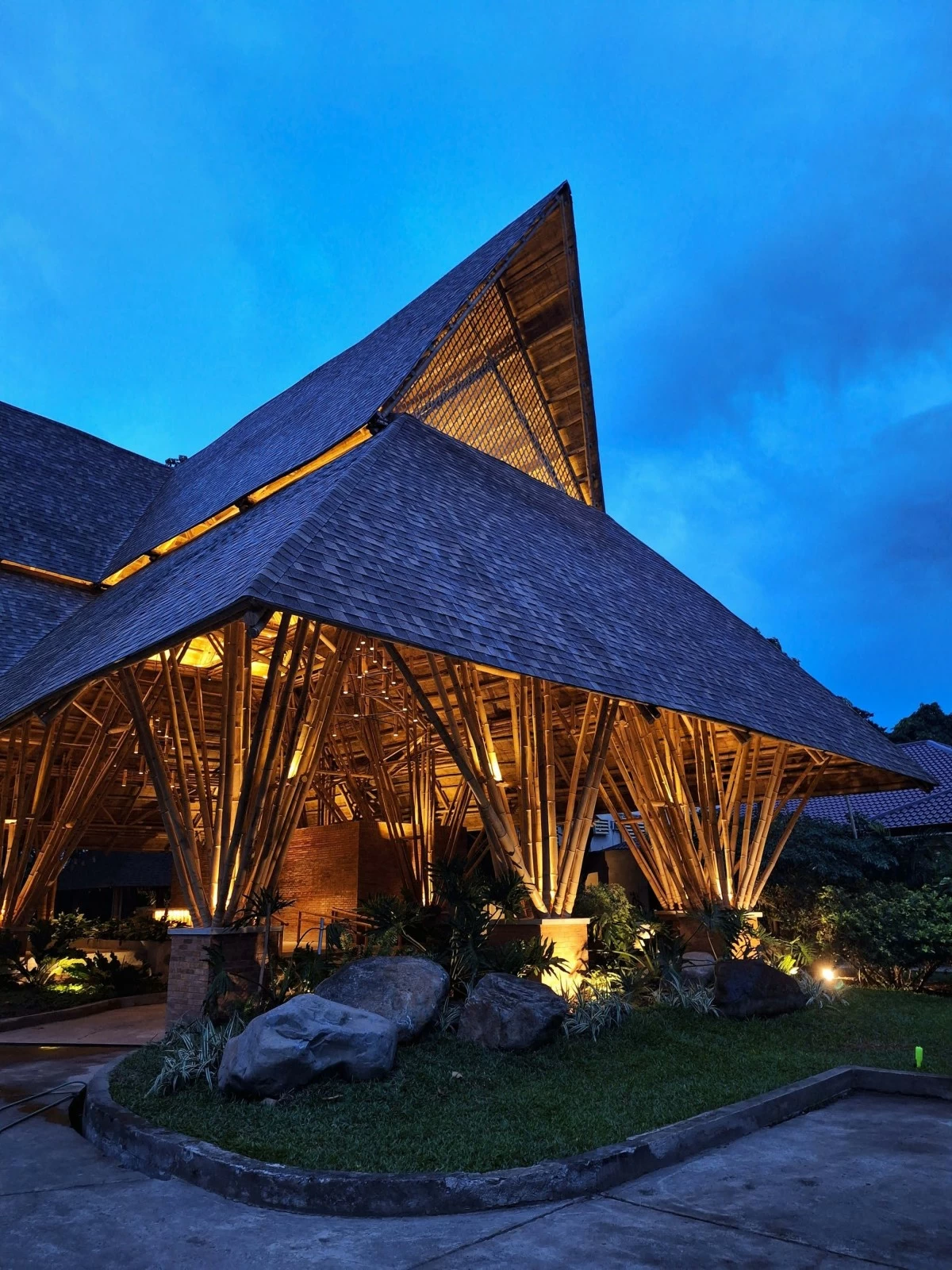
The Bamboo Pavilion in Dumaguete is the tallest bamboo pavilion in the country. (Photo: Kawayan Collective)
Bamboo is also climate resilient, able to withstand intense typhoons, heatwaves, and earthquakes. When used in modern construction, bamboo does have the ability to be more pliant and move under pressure compared to a concrete house. Its permeability addresses the accumulation of high temperatures in structures. “A bamboo house is cooler for sure than a concrete house. From our measurements, it is about five degrees cooler,” adds Arch. Ray.
Bamboos can absorb massive amounts of carbon dioxide, with one hectare of bamboo sequestering about 17 tons of carbon a year. Structural bamboo can prevent or offset carbon emissions by up to seven times compared to conventional concrete and steel construction.
Arch. Ray estimates that modern bamboo construction has only been around for 20-25 years in the country. With a vision of building better homes for Filipinos, he and his wife, Amy, co-initiated the Kawayan Collective Agriculture Cooperative, a social enterprise that processes and produces construction-grade treated bamboo in 2018. Starting with his own residential house, made from bamboo and “bato," thus wittingly called BnB, he has built and supported the construction of eye-catching structures that best showcase bamboo as a building material and structural component.
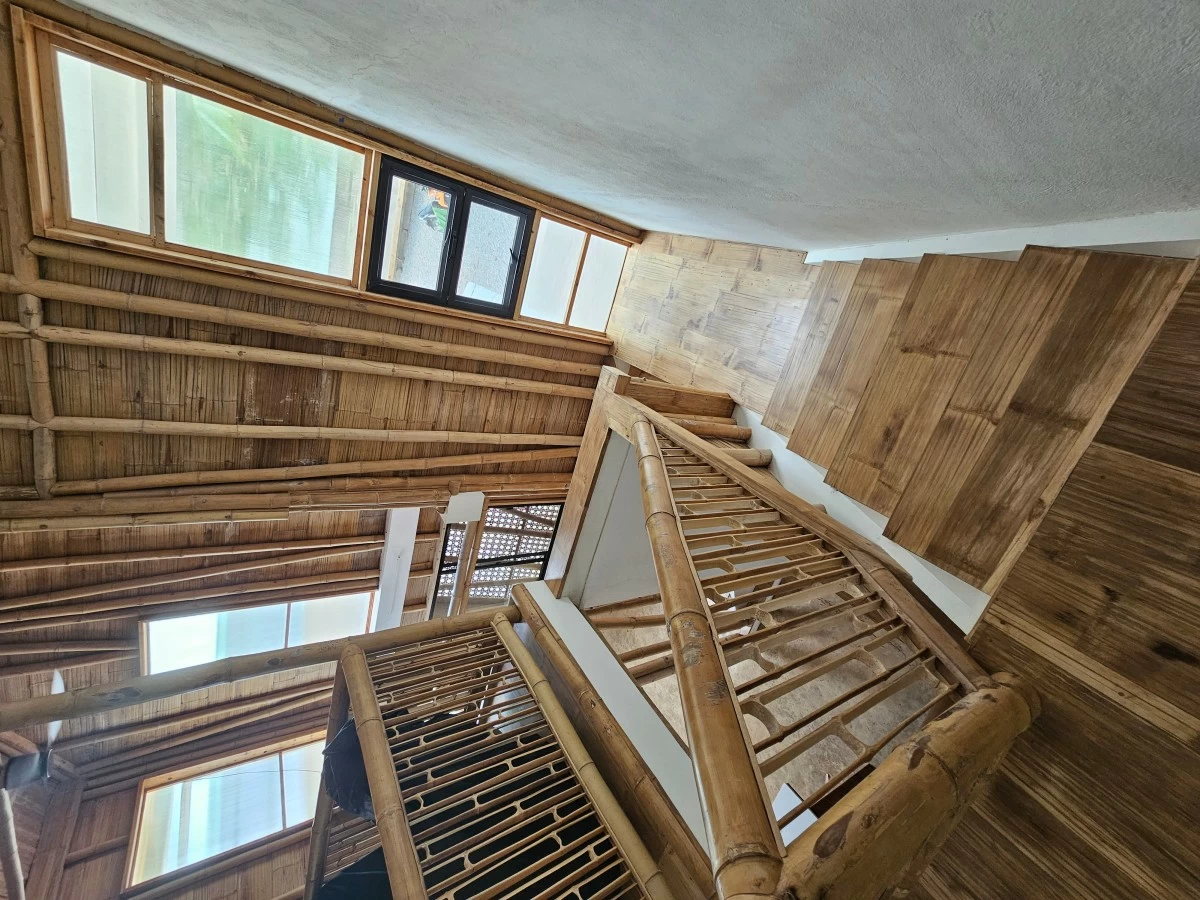
Inside a two-level home at the Kawayan Casitas (Photo: Kawayan Collective)
Located within The Henry Resort in Dumaguete, the Bamboo Pavilion is a testament to the complexity and versatility of bamboo in modern architecture. Completed in 2023, the structure is the tallest bamboo pavilion to date in the country, standing at 16.5 meters with approximately 575 sqm of floor area. Juan Ponce de Leon of the Leon Gallery commissioned Arch. Rhalf Abne of Kawayan Design Studio for architectural design, inspired by the Kawayan Torogan. Jason Toralde provided the structural engineering, while Kawayan Collective supplied the treated bamboo poles.
Another bamboo landmark is the Banwag Pharos '2024,' a gathering space in Bangsamoro, Maguindanao, owned by P.S. Sarmiento Group. Designed and built by Studio Impossible Projects, the dome-shaped pavilion displays Islamic geometric patterns and robust construction that can withstand wind speeds of up to 270 kms per hour. Jasper Niens worked on the design and engineering tasks using bamboo, stainless steel, and tensile membranes. Kawayan Collective delivered the prefab bamboo material.
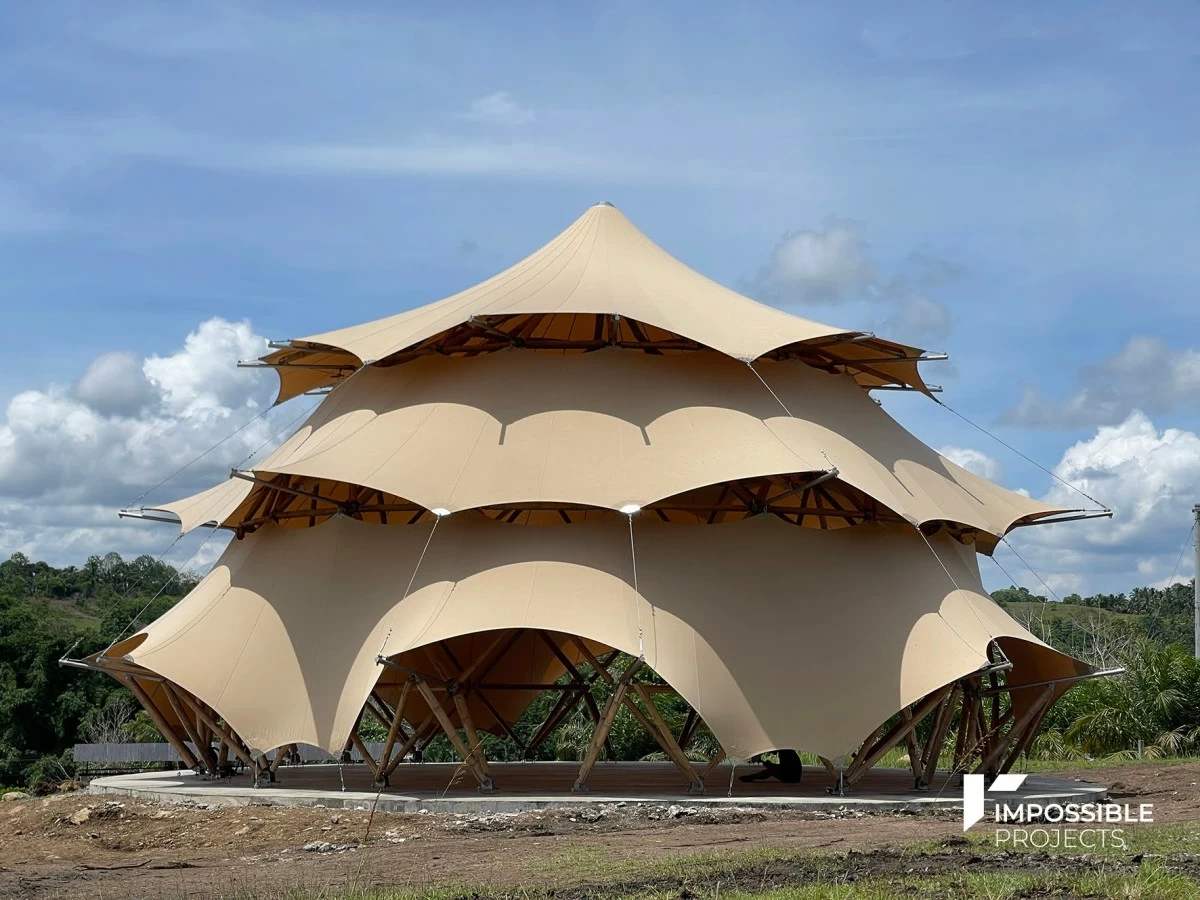
The dome-shaped Banwag Pharos 2024 is made of bamboo, steel, and tensile membrane by Impossible Projects. (Photo: Kawayan Collective)
In the development of bamboo for mass housing, Kawayan Collective designed, built, and developed Kawayan Casitas, a 2,000-sqm eco-village located in Dauin, Negros Oriental, that opened in 2021. Built using Cement Bamboo Frame Technology (CBFT), the cool, durable, low-maintenance, and sustainable house and lots cost from P1 million to P6.5 million. As of this date, all units have been sold or rented.
In the pipeline is its land expansion of 8,000 sqm adjacent to the existing model homes, which will add approximately 20 units. Plans are also underway to make units available on Airbnb for short stays for potential homebuyers starting this August.
Also for this year, the Canlaon housing project for Typhoon Tino victims and the relocation housing far from Mount Kanlaon will commence, utilizing a cost-effective 28-square-meter starter home.
Kawayan Collective, with Base Bahay Foundation, an NGO for alternative building technologies, is also on a mission to actively promote CBFT-built houses to highlight bamboo’s industrial potential and structural reliability. “Together, we are making it easier for architects, engineers, and developers to choose bamboo as a sustainable, high-performance building solution,” emphasized Arch. Ray.