






Manila Bulletin
 Philippines
National
Sauce for the goose is sauce for the gander: Solon chimes in on VP Duterte death threat vs PBBM
Philippines
National
Sauce for the goose is sauce for the gander: Solon chimes in on VP Duterte death threat vs PBBM
Philippines
National
Sauce for the goose is sauce for the gander: Solon chimes in on VP Duterte death threat vs PBBM
Sauce for the goose is sauce for the gander: Solon chimes in on VP Duterte death threat vs PBBM
Published Jun 28, 2026 02:58 pm


At A Glance
- Deputy Speaker Paolo Ortega argued that Vice President Sara Duterte's death threats must be judged by the same standard as teacher Ronnel Mas, who was arrested in 2020 for a similar remark against then‑president Rodrigo Duterte.
- He stressed that the Vice President's public declaration carried greater weight, given her constitutional role and potential succession to the presidency.
- Ortega rejects the defense's free speech claim, insisting that the death threats are not opinions.
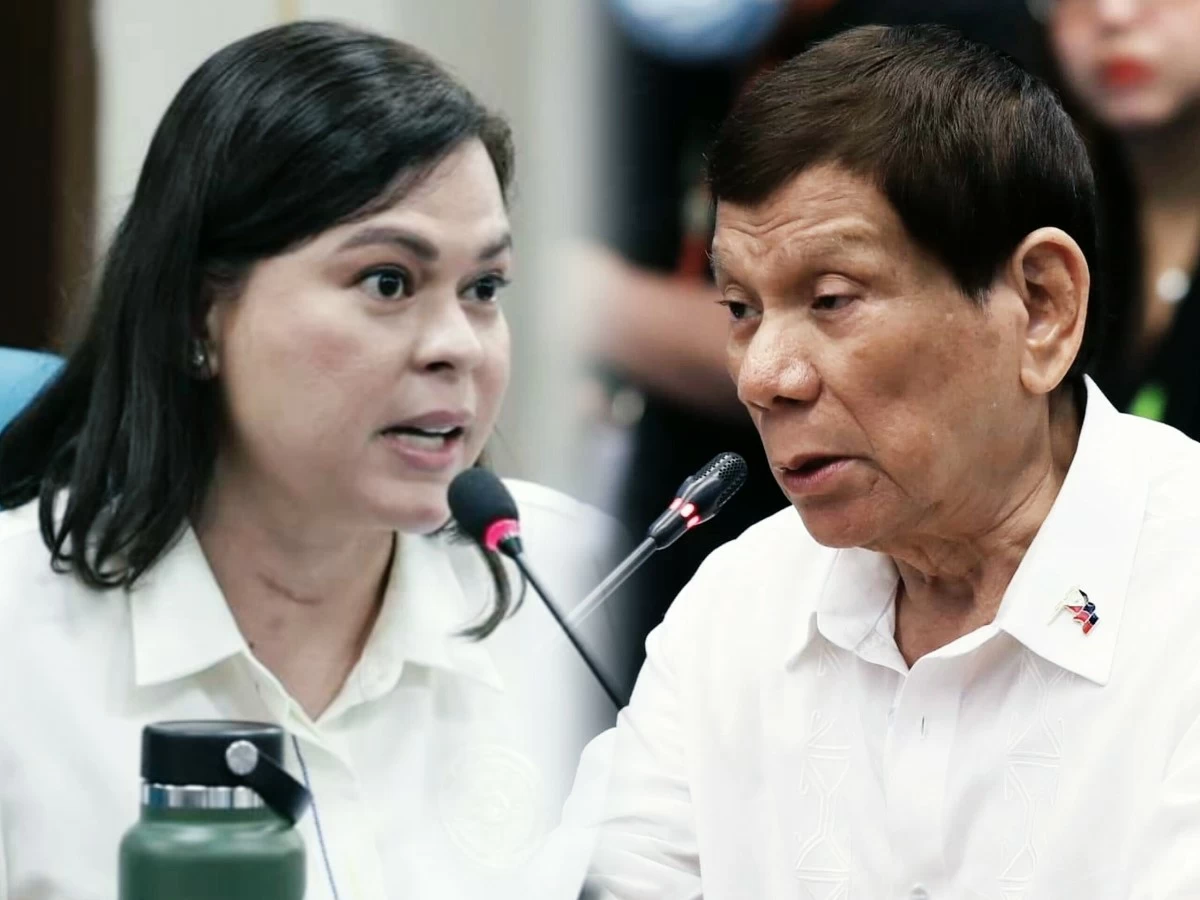
Vice President Sara Duterte (left), former president Rodrigo Duterte (Facebook)
What's sauce for the goose should be sauce for the gander, in the same way that individuals who make "death threats" against sitting presidents should be equally held accountable.
This was the crux of House Deputy Speaker La Union 1st district Rep. Paolo Ortega V's argument as he drew parallels between impeachment trial respondent Vice President Sara Duterte and public school teacher Ronnel Mas.
Mas was arrested in 2020 after offering P50 million on social media to anyone who could kill then-president Rodrigo Duterte.
As such, Ortega says Vice President Duterte cannot be held to a lower standard after publicly saying on Nov. 23, 2024 that she had instructed someone to assassinate President Marcos, First Lady Liza Araneta-Marcos, and former House Speaker Martin Romualdez if she herself gets killed.
Vice President Duterte is the eldest daughter of the former president.
“Kung ordinaryong teacher, hinuli dahil nag-offer ng P50 million sa isang post para ipapatay ang Pangulo. Pero kapag Vice President ang nagsabing may kinausap siya na papatay sa Pangulo, First Lady at Speaker kung may mangyari sa kanya, biglang free speech lang?” Ortega said over the weekend.
(If an ordinary teacher was arrested for offering P50 million in a post to kill the President, but when the Vice President says she spoke to someone to kill the President, First Lady, and Speaker if something happened to her, it suddenly becomes just free speech?)
He was referring to the defense lawyers' argument that the remarks uttered by the Vice President toward Marcos and members of the First Family were covered by freedom of speech.
“Hindi puwedeng magkaiba ang sukatan o standards kapag makapangyarihan na ang nagsasalita (There cannot be different standards when powerful people speak)," Ortega said.
It can be recalled that Mas later apologized for his kill offer and even described it as a joke.
In comparison, the younger Duterte said her assassination plot was "No joke, no joke."
“Hindi natin minamaliit ang karapatan sa free speech. Pero kung ang biro o post ng isang teacher ay agad tinrato bilang seryosong banta noon, bakit ngayon parang gustong palabasin na hindi seryosong banta ang mas mabigat na pahayag mula sa Pangalawang Pangulo?” Ortega asked.
(We do not belittle the right to free speech. But if a teacher’s joke or post was immediately treated as a serious threat then, why now make it seem that the heavier statement from the Vice President is not a serious threat?)
The Ilocano says the comparison is important because Duterte’s own statement was not merely a random post but a public declaration by the official first in line to succeed the President.
“Sa kaso ng teacher, offer umano na P50 million para patayin ang Pangulo. Sa kaso ng Vice President, sinabi niya mismo na may nakausap siyang tao at kung siya ay mapatay, patayin si BBM, si First Lady Liza at si Speaker Romualdez. Kung seryoso ang tingin natin sa una, mas seryoso dapat ang tingin natin sa pangalawa,” he said.
(In the teacher’s case, it was an alleged P50 million offer to kill the President. In the Vice President’s case, she herself said she spoke to someone and if she was killed, to kill BBM, First Lady Liza, and Speaker Romualdez. If we took the first seriously, we should take the second even more seriously.)
“Simple lang naman ang tanong natin: bakit noong ordinaryong mamamayan ang nagsalita tungkol sa pagpatay sa Pangulo, may agarang pananagutan; pero kapag Vice President ang nagsalita, hihingi pa tayo ng espesyal na palusot?” the deputy speaker said as he hammered home his point.
(Our simple question is: why was there immediate accountability when an ordinary citizen spoke of killing the President, but when the Vice President spoke, we look for a special excuse?)
Ortega is an endorser of one of the four impeachment complaints filed against the Vice President this year.
Higher standard of restraint
He said the Office of the Vice President (OVP) carries a higher standard of restraint because its occupant may assume the presidency under the Constitution at any time.
“Hindi private citizen ang nagsalita dito. Ang nagsalita ay Pangalawang Pangulo ng Pilipinas, ang opisyal na puwedeng maging Pangulo anumang oras kung mabakante ang Malacañang. Kaya ang bawat salita niya, lalo na tungkol sa buhay ng Pangulo, may bigat na hindi puwedeng basta i-dismiss.)(This was not a private citizen speaking. It was the Vice President of the Philippines, an official who could become President anytime if Malacañang is vacated. So every word she says, especially about the President’s life, carries weight that cannot just be dismissed.)
He maintained that impeachment is the proper constitutional process to determine whether such conduct remains consistent with the trust required of a high public office.
“The Vice President’s opinions are not on trial here. Making threats are not opinions. The more important question here is: is she fit to hold the second-highest public office if she behaves this way?” he said.
Ortega said the Senate impeachment court should be allowed to hear the evidence, weigh the context and decide whether the Vice President’s statement can be reconciled with the standards expected of a constitutional officer.
“Kung sinasabi ng depensa na walang mali, harapin nila ang proseso. Ilabas ang paliwanag, ilabas ang ebidensya at hayaan ang impeachment court ang magpasya kung ordinaryong free speech ba iyon o seryosong paglabag sa public trust,” he further said.
(If the defense says there was nothing wrong, then face the process. Present the explanation, present the evidence, and let the impeachment court decide whether that was ordinary free speech or a serious violation of public trust.)