






Manila Bulletin
 Philippines
National
DND hits 'insincerity' of Chinese Embassy as maritime word war escalates ahead of arbitral ruling anniversary
Philippines
National
DND hits 'insincerity' of Chinese Embassy as maritime word war escalates ahead of arbitral ruling anniversary
Philippines
National
DND hits 'insincerity' of Chinese Embassy as maritime word war escalates ahead of arbitral ruling anniversary
DND hits 'insincerity' of Chinese Embassy as maritime word war escalates ahead of arbitral ruling anniversary
Published Jun 28, 2026 08:45 am


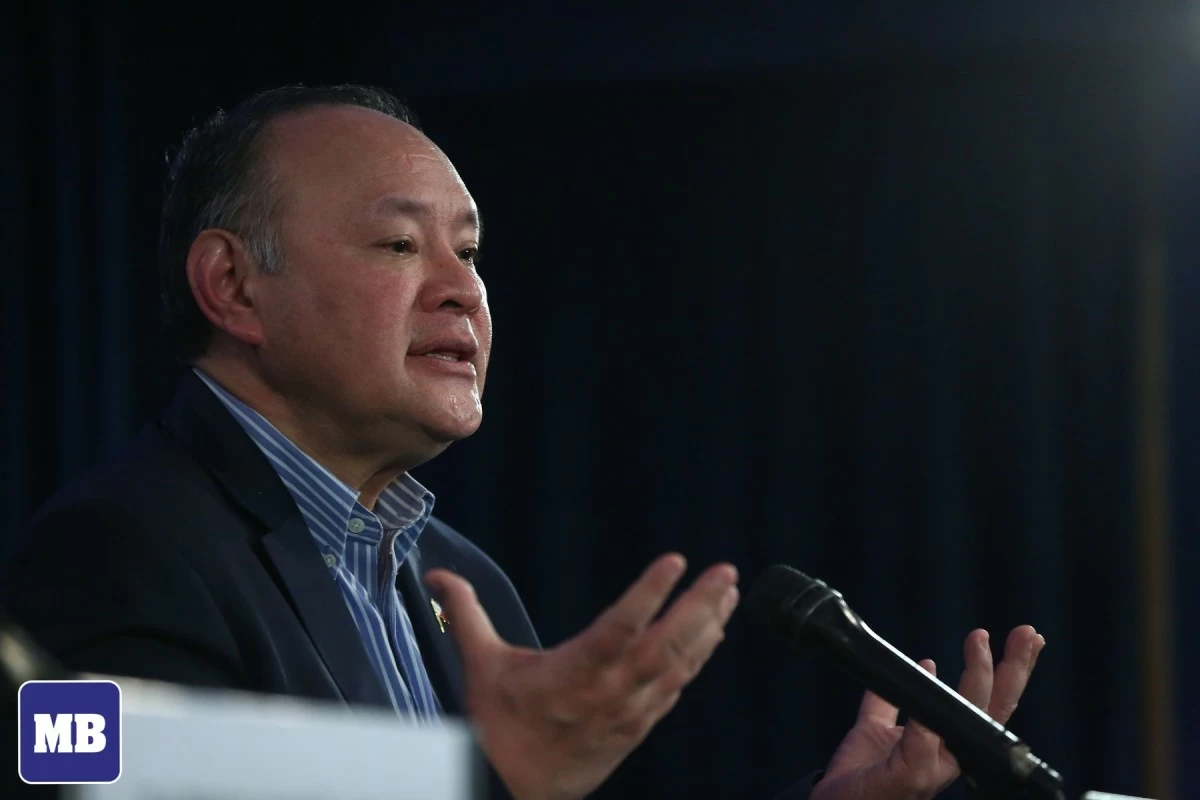
Department of National Defense Secretary Gilberto Teodoro Jr. (MANILA BULLETIN)
The Department of National Defense (DND) on Sunday, June 28, accused the Chinese Embassy in Manila of showing “insincerity” and “duplicity” as the exchange between the Philippines and China over the 2016 South China Sea arbitral ruling intensified days before its 10th anniversary.
DND Secretary Gilberto Teodoro Jr. criticized the Chinese Embassy for belittling the arbitral award, which rejected its sweeping maritime claims in the South China Sea.
“The Chinese Embassy statement replying to our Department of Foreign Affairs [DFA] is a window into the true intentions of the Chinese Communist Party in dealing with our country. It clearly shows their insincerity and duplicity which are amply personified by their Embassy officials,” Teodoro said in a statement.
“We condemn the arrogant display of deceitful indignation by them. Hindi kapanipaniwala ang mga sinasabi kaya idinidaan sa alboroto. Hindi tayo pasisiil (What they are saying is unbelievable that is why they resort to making a commotion. We will not be oppressed),” he added.
Tensions continue in the West Philippine Sea (WPS) where Philippine and Chinese vessels have repeatedly figured in confrontations over the past several years.
Authorities have accused the China Coast Guard (CCG), People’s Liberation Army (PLA)-Navy, and Chinese maritime militia of using water cannons, dangerous maneuvers, ramming incidents, laser devices, and persistent shadowing against Philippine military and civilian vessels conducting lawful missions within the country's exclusive economic zone (EEZ).
Beijing has denied the accusations and insists it is enforcing its sovereignty over waters and features it claims in the South China Sea.
Word war
Earlier, the Chinese Embassy rejected the DFA's June 22 statement affirming the validity of the 2016 arbitral award. In a six-point reply issued on June 23, the embassy described the ruling as “illegal, null and void.”
The 2016 arbitral award was issued on July 12, 2016 by an arbitral tribunal constituted under the United Nations Convention on the Law of the Sea (UNCLOS) after the Philippines filed a case against China in 2013.
The tribunal ruled that China's claim to historic rights within its "nine-dash line" has no legal basis under UNCLOS. It also held that several disputed features in the Spratly Islands, including Mischief Reef, which is now heavily fortified and militarized by China, are low-tide elevations that cannot be claimed as sovereign territory or generate maritime zones.
But according to the Chinese Embassy, the arbitral tribunal “distorted and abused” the dispute settlement mechanism under the UNCLOS, “wrongly interpreted” the law, and had “no jurisdiction” over the case because it involved territorial issues.
The embassy also insisted that China's “territorial sovereignty and maritime rights and interests in the South China Sea are under no circumstances affected by the award.”
It further accused the tribunal of abusing UNCLOS procedures, violating the principle of state consent, and issuing an award that challenged “the international rule of law.”
However, the DFA categorically rejected the embassy's attacks against the arbitral ruling.
“The Award was rendered by an arbitral tribunal constituted in accordance with Annex VII of UNCLOS, a treaty to which both the Philippines and China are States Parties,” the DFA said.
“The award is final and binding and has become an unassailable part of the corpus of international law, providing legal clarity regarding maritime rights and entitlements in the South China Sea. It is not and will never be illegal, null and void,” it added.
The DFA also rejected China's argument that the tribunal had no jurisdiction over the case.
It said the arbitral tribunal had already ruled that the dispute involved the interpretation and application of UNCLOS rather than questions of territorial sovereignty. The tribunal likewise found that the Philippines complied with the Convention's requirement to exchange views before initiating arbitration.
While reaffirming Manila's commitment to diplomacy, the DFA said the Philippines had the right to seek compulsory dispute settlement under UNCLOS after years of negotiations failed to resolve the dispute.