







PH, US coast guards deepen maritime ties
Published Jun 27, 2026 10:24 am


At A Glance
- The Philippine Coast Guard and the United States Coast Guard reaffirmed stronger operational cooperation in maritime security, search and rescue, marine environmental protection, and interoperability during a high-level meeting in Manila.
- Both coast guards committed to continue joint engagements through Balikatan, SEACAT, SEAMLEI, and the RIMPAC Exercise to strengthen coordination and regional maritime readiness.
- The partnership builds on previous USCG support during the MT Princess Empress and MT Terranova oil spills, which helped enhance the PCG's marine environmental response capabilities through technical assistance and specialized training.
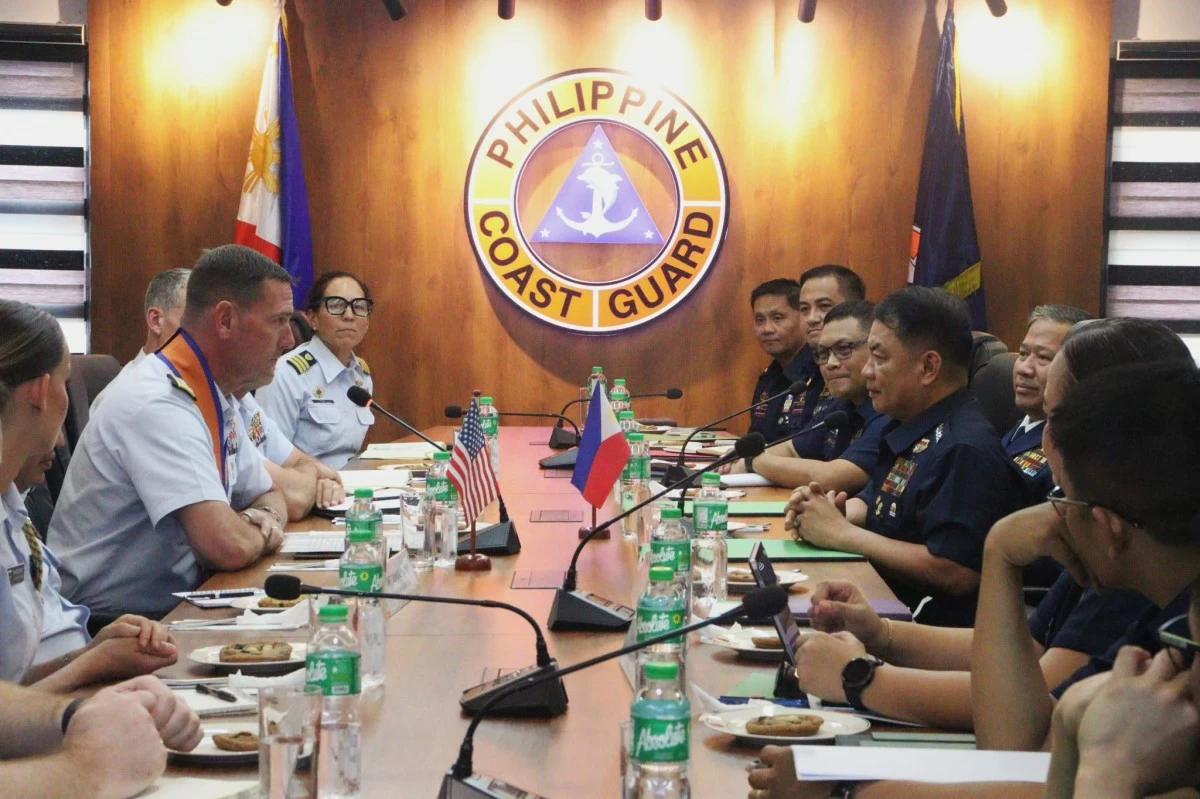
United States Coast Guard (USCG) Pacific Area Commander Vice Admiral Joseph R. Buzzella (third from left) and Philippine Coast Guard (PCG) Commandant Admiral Ronnie Gil Gavan (third from right) discuss deepening maritime security cooperation between the two forces during a meeting at the PCG National Headquarters in Port Area, Manila on June 25, 2026. (Photo: PCG)
The Philippine Coast Guard (PCG) and the United States Coast Guard (USCG) have reaffirmed their commitment to deepen operational cooperation amid rising regional maritime security challenges.
The commitment was underscored during the official visit of USCG Pacific Area Commander Vice Admiral Joseph R. Buzzella to the PCG National Headquarters in Port Area, Manila on June 25 where he met with PCG Commandant Admiral Ronnie Gil L. Gavan.
The PCG said the meeting focused on expanding cooperation between the two forces under the Philippines-United States Mutual Defense Board and Security Engagement Board (MDB-SEB).
The two officials’ discussions covered maritime domain awareness, search and rescue, marine environmental protection, and operational interoperability through the Philippine-United States Aeronautical and Maritime Search and Rescue Agreement (AMSAR).
The two coast guards also reaffirmed their commitment to key bilateral engagements including the Exercise Balikatan, the Southeast Asia Cooperation and Training (SEACAT), the Southeast Asia Maritime Law Enforcement Initiative (SEAMLEI), and the Rim of the Pacific (RIMPAC) Exercise.
PCG spokesperson Commodore Noemie Cayabyab stressed that the latest meeting builds on years of cooperation between the two services, particularly in responding to major maritime emergencies in the Philippines.
The PCG recalled that following the MT Princess Empress oil spill in 2023, specialists from the USCG National Strike Force provided technical expertise, incident management support, and guidance on containment and cleanup operations.
That cooperation continued in 2024 during the MT Terranova oil spill in Manila Bay when a joint USCG and National Oceanic and Atmospheric Administration (NOAA) team conducted specialized training for PCG personnel on the Shoreline Cleanup Assessment Technique (SCAT), GNOME spill modeling, the Environmental Response Management Application (ERMA), and shoreline assessment.
The PCG said the training significantly strengthened its capability to respond to marine environmental incidents. The USCG has also continued providing technical assistance and capacity-building programs, including activities in Mindanao.
“The meeting reaffirmed the shared commitment of both Coast Guards to strengthening interoperability, enhancing maritime safety and environmental protection, and promoting a secure, stable, and rules-based maritime domain through sustained Coast Guard-to-Coast Guard cooperation,” Cayabyab said.