ADVERTISEMENT

Jinggoy Buensuceso's cosmic journey

What gallery visitors can expect from 'Cosmic Blooms'

Published Jun 27, 2026 02:05 pm  |  Updated Jul 1, 2026 10:49 am

At A Glance

  • Jinggoy's work consistently explores the relationship between the individual and the cosmos, driven by the belief that our lives exist within the infinite folds of the universe.
The evolution of a sculptor’s practice is rarely a straight line; more often, it is a continuous process of unfolding, transformation, and becoming. For Jinggoy Buensuceso, this journey reaches a major milestone this June as he brings his immersive exhibit to Luenrit Yaowarat in Bangkok, Thailand. Bringing together elements of sculpture, architecture, and spatial installation, the exhibit marks an ambitious new chapter rooted in a deeply personal narrative.
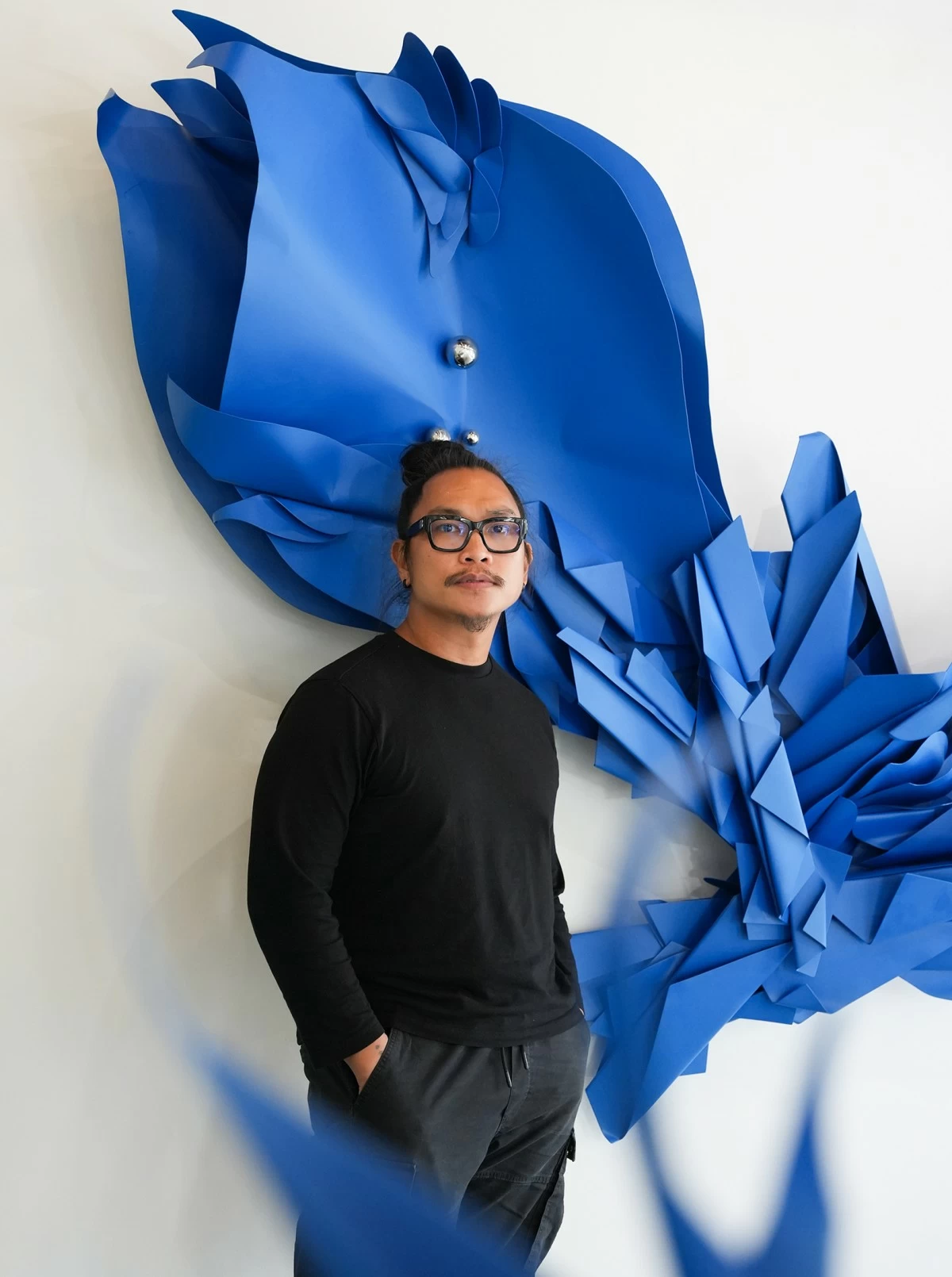
MEET THE ARTIST Jinggoy Buensuceso
The alchemy of form
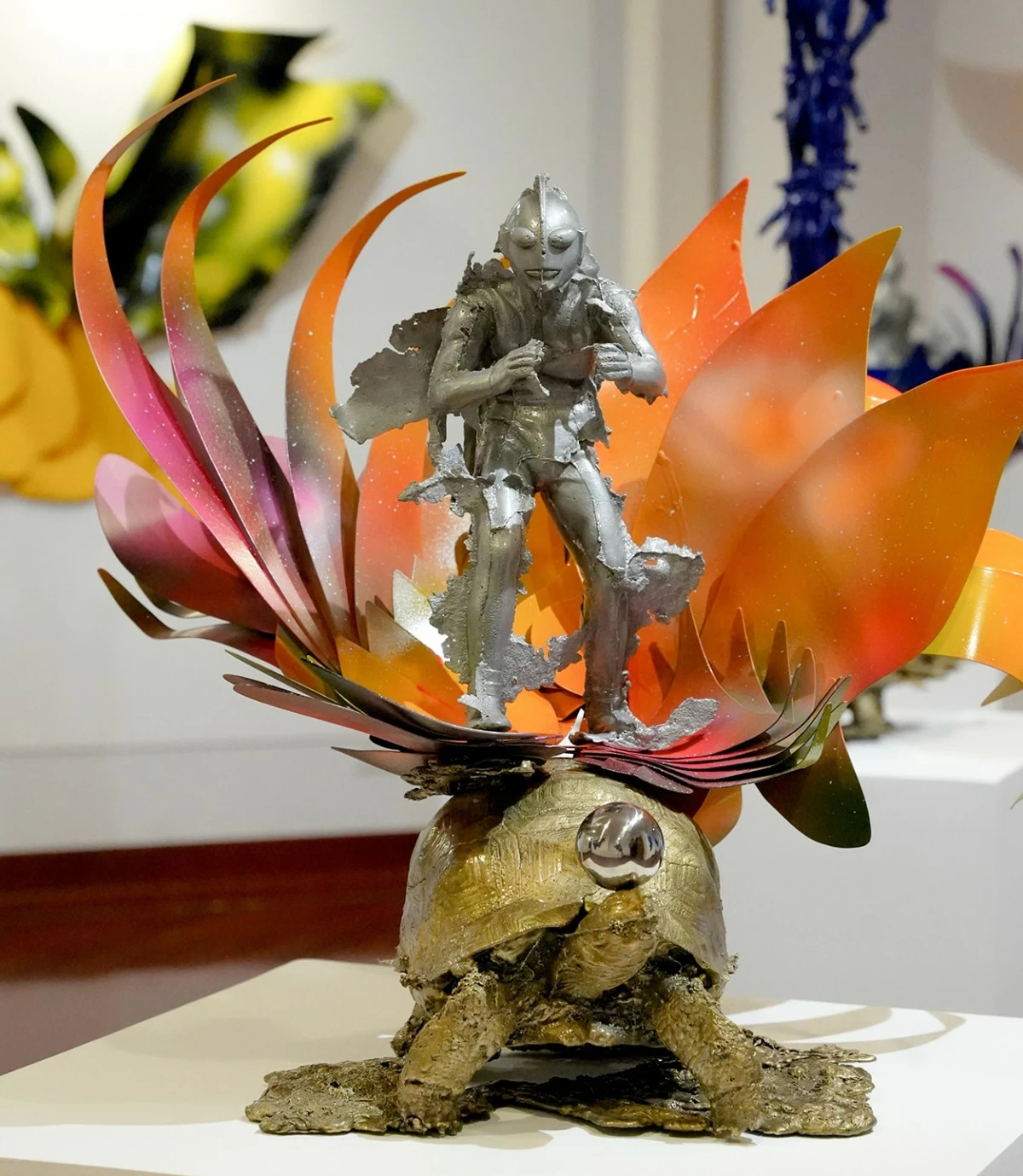
To understand the kinetic energy behind these structures, one must look back to the artist’s unconventional beginnings in Samal, Bataan. “At age nine, I was a weapon maker,” Jinggoy shares, recalling a childhood spent learning how to melt zinc and sand-cast metal by hand.
“What hooked me wasn’t the weapon,” he adds. “It was the metal and the process. Watching something solid melt, transform with fire, and emerge as something entirely different fascinated me.”
Today, that relationship has matured into a sophisticated, origami-based sculptural language where folding, tension, fragmentation, and flow become expressions of energy in motion.
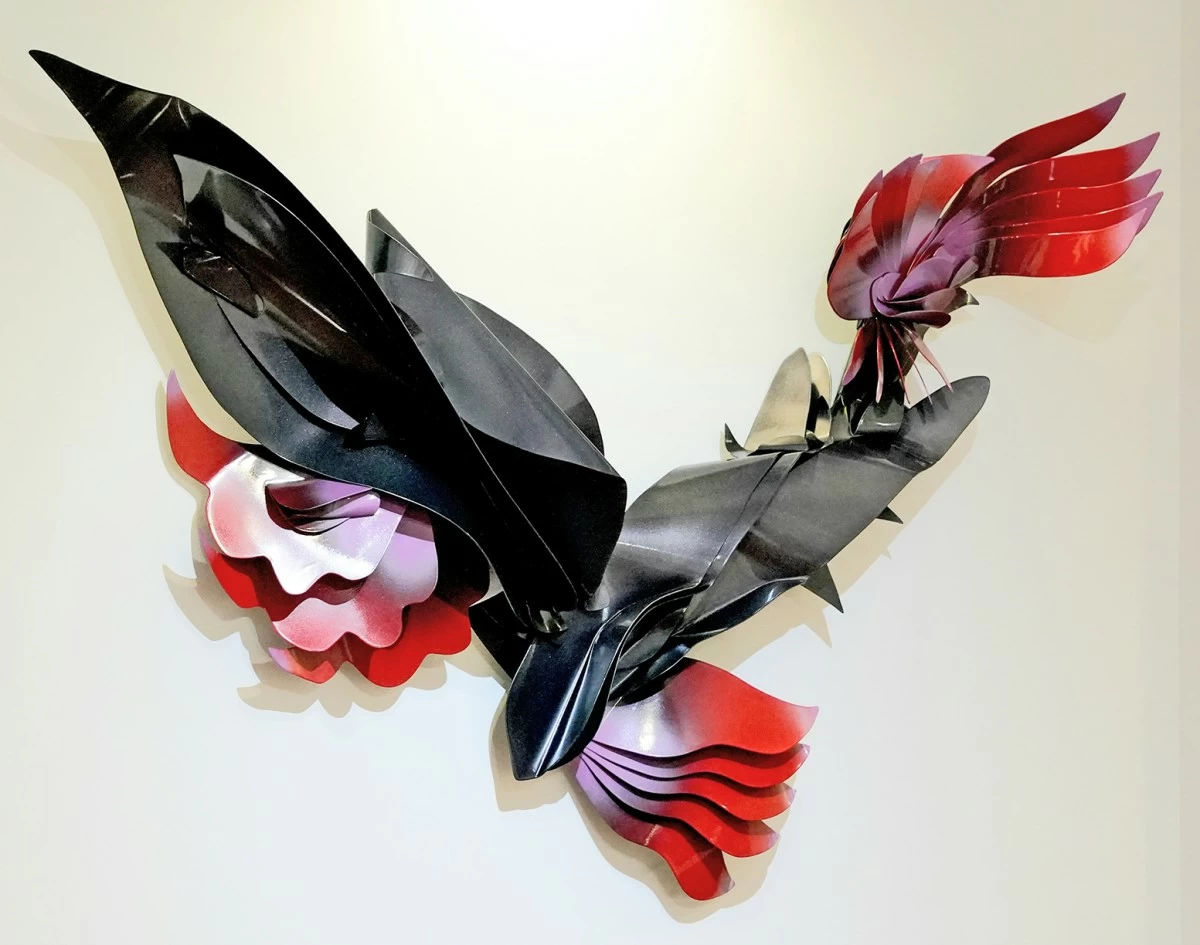
This philosophy is beautifully articulated in his striking wall-bound sculptures, where deep, dark metallic folds contrast sharply with vibrant gradients. His pieces embody what the artist calls a “kinetic presence,” not because the sculptures mechanically move, but because “they carry the movement within their form and presence.” As light changes throughout the day, the work shifts with it, creating different perceptions and experiences.
Jinggoy’s work consistently explores the relationship between the individual and the cosmos, driven by the belief that our lives exist within the infinite folds of the universe. As the artist notes, “We carry the universe in our bodies, sharing the same carbon in our teeth as the stars.”
A journey through light and space
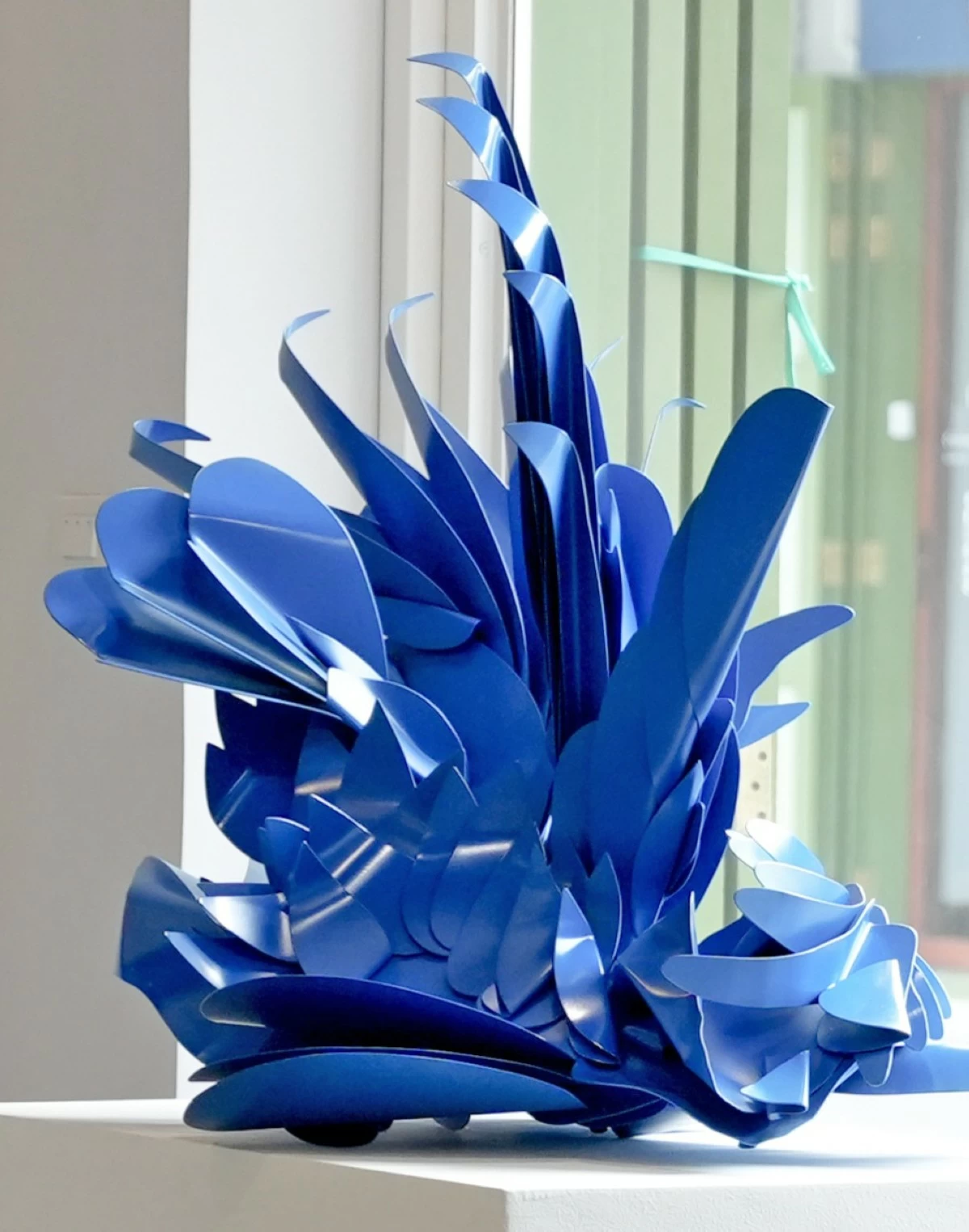
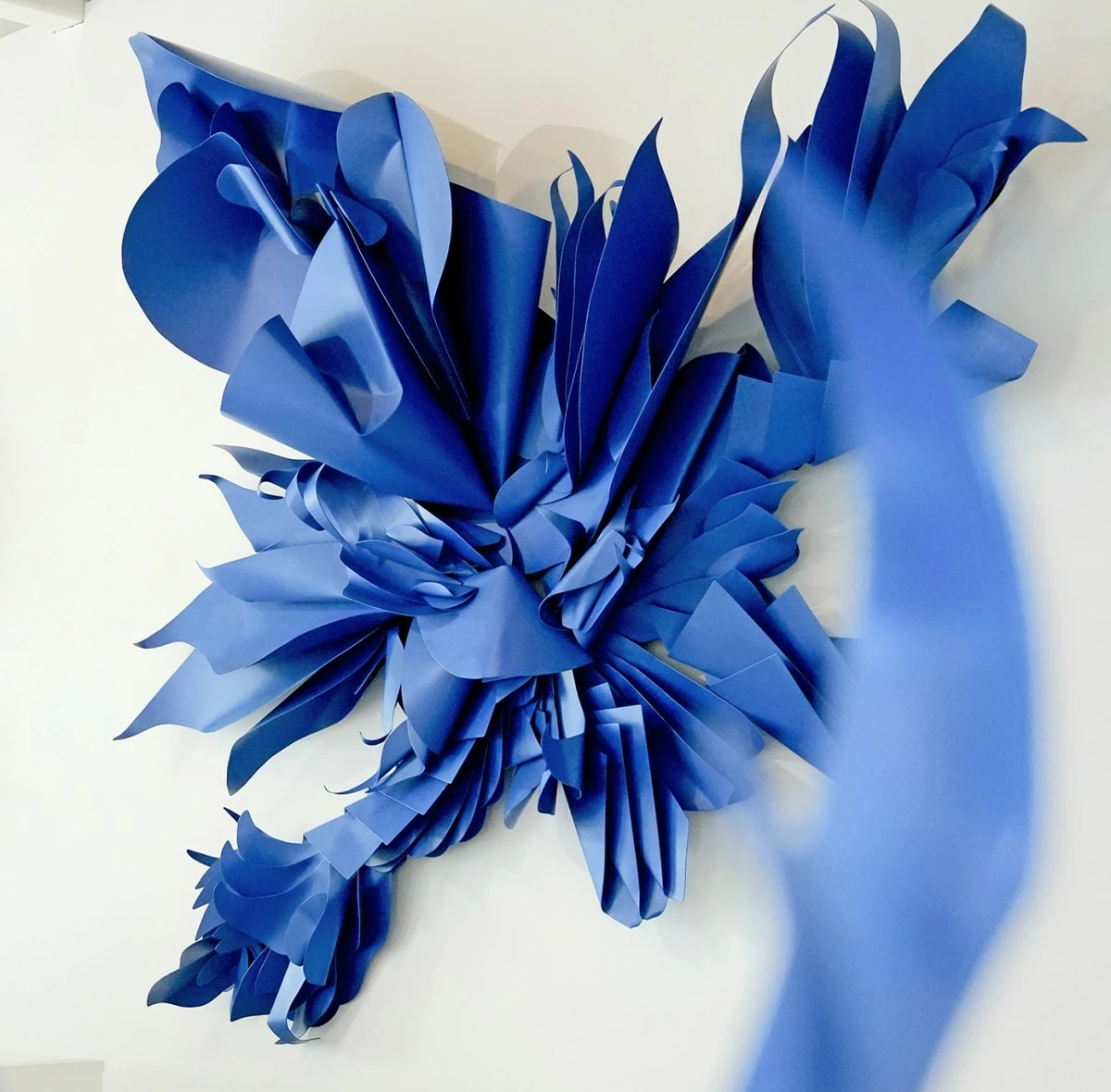
The centerpiece of this exhibit relies heavily on a deeply symbolic motif. “It all started with a blue flower,” the sculptor explains, describing “Liwayway,” the piece inspired by the Tagalog word for the break of dawn that anchors the entire exhibit. “When you stand before it, you begin to wonder whether you are the one consuming the flower or whether the flower is consuming you. There’s something primordial about that encounter.”
This fascination with organic, undulating blue geometries is also starkly visible in his other pieces, where sharp origami-inspired folds mimic the sharp yet delicate layers of a complex botanical structure. The repetitive act of creating these forms carries a rhythmic, meditative quality for the artist. “There’s a rhythm to it that feels almost like acupuncture, a cycle of tension, release, and focus. For me, it is healing, beauty in action for the soul.”
Beyond traditional forms, the artist thrives in the spaces between disciplines, allowing different materials, ideas, and ways of thinking to collide. This playful, risk-taking manipulation of material also manifests vividly in the exhibit.
The immersive experience
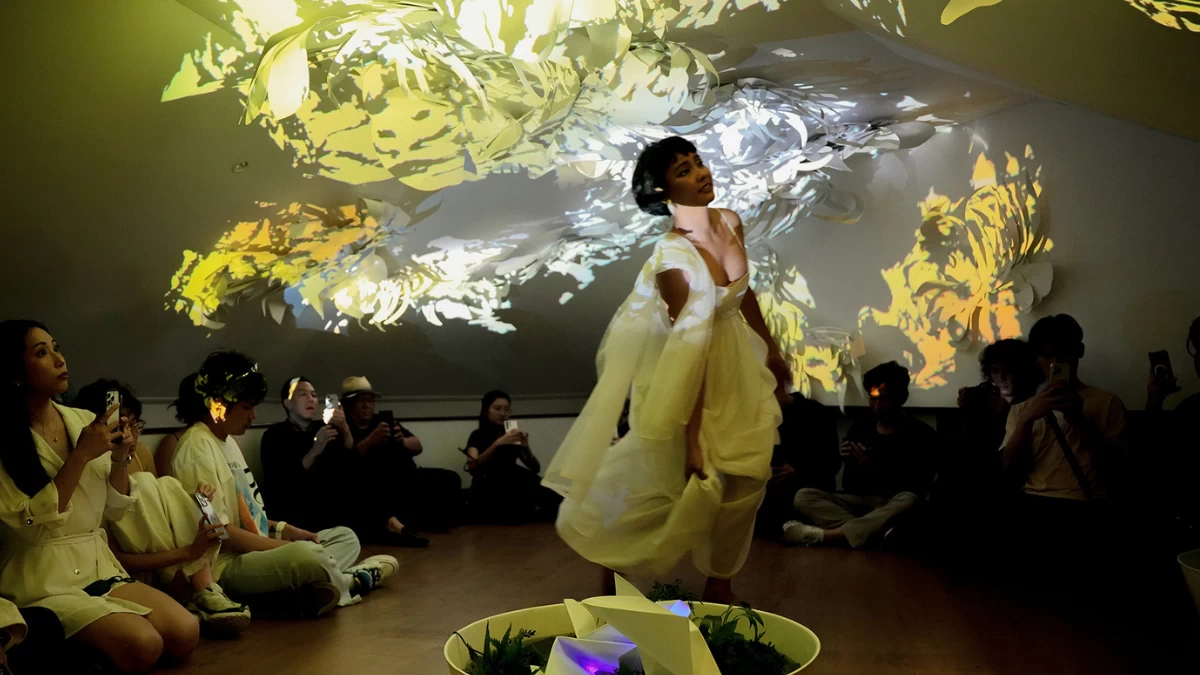
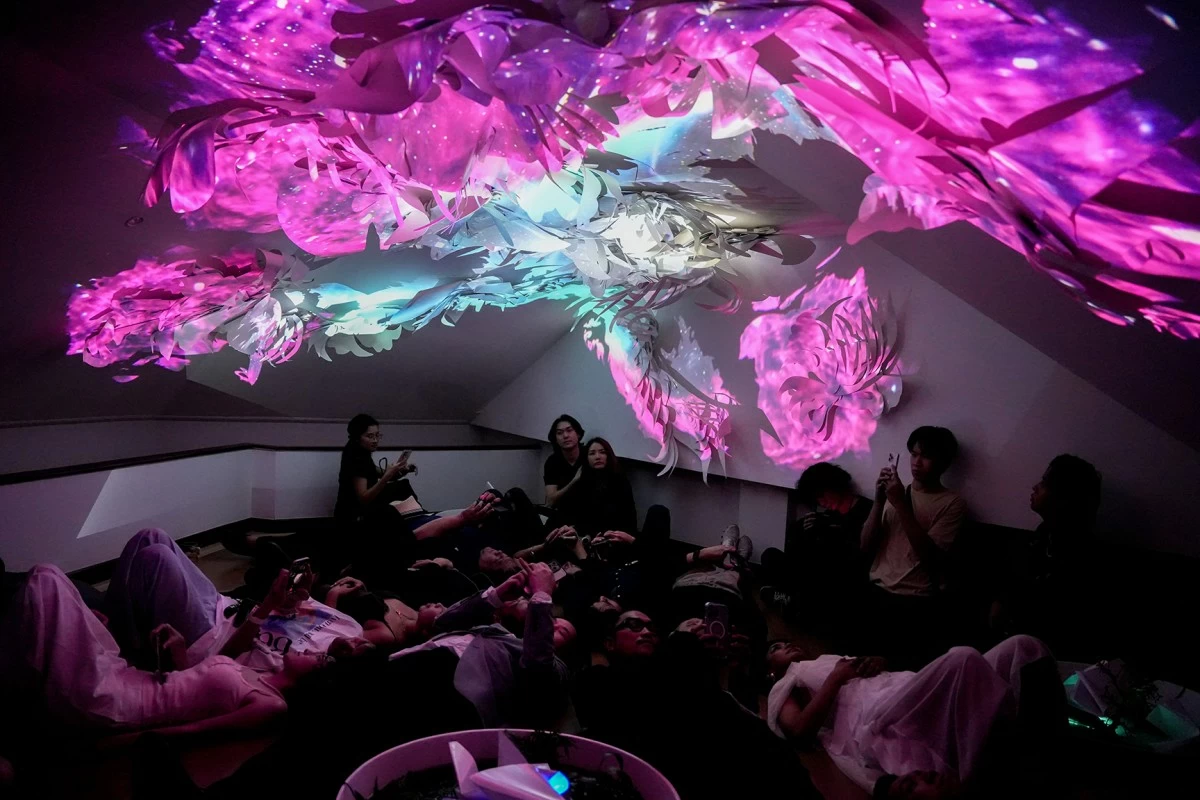
“Cosmic Bloom” shifts the viewer from a passive observer to an active participant within a living environment designed to explore how people experience sculpture beyond the object itself. Audiences are invited to inhabit the artwork itself, lying beneath a cascading canopy of paper-thin sculptural folds bathed in shifting, hallucinatory projections of pink, purple, and gold light.
Whether experiences alongside a fluid dance performance or in a quiet, solitary reflection, the environment demands that the viewer simply “be present.”
“The work isn’t asking to be understood immediately,” the artist muses. “It’s asking to be experienced.”
When asked how he knows a complex, multi-layered installation like this is truly complete, or if it is difficult to let go of an environment built from an initial obsession, the artist points to an internal emotional anchor rather than a physical final stroke: “Acceptance. You’ll feel when your soul is full, and it is done.”
“Cosmic Blooms” is on view until July 28 at Luenrit Yaowarat, Bangkok, Thailand.

Related Tags

Arts and Culture Jinggoy Buensuceso
ADVERTISEMENT
.most-popular .layout-ratio{ padding-bottom: 79.13%; } @media (min-width: 768px) and (max-width: 1024px) { .widget-title { font-size: 15px !important; } }

{{ articles_filter_1561_widget.title }}

.most-popular .layout-ratio{ padding-bottom: 79.13%; } @media (min-width: 768px) and (max-width: 1024px) { .widget-title { font-size: 15px !important; } }

{{ static_articles_1562_widget.title }}

.most-popular .layout-ratio{ padding-bottom: 79.13%; } @media (min-width: 768px) and (max-width: 1024px) { .widget-title { font-size: 15px !important; } }

{{ articles_filter_1563_widget.title }}

{{ articles_filter_1564_widget.title }}

.mb-article-details { position: relative; } .mb-article-details .article-body-preview, .mb-article-details .article-body-summary{ font-size: 17px; line-height: 30px; font-family: "Libre Caslon Text", serif; color: #000; } .mb-article-details .article-body-preview iframe , .mb-article-details .article-body-summary iframe{ width: 100%; margin: auto; } .read-more-background { background: linear-gradient(180deg, color(display-p3 1.000 1.000 1.000 / 0) 13.75%, color(display-p3 1.000 1.000 1.000 / 0.8) 30.79%, color(display-p3 1.000 1.000 1.000) 72.5%); position: absolute; height: 200px; width: 100%; bottom: 0; display: flex; justify-content: center; align-items: center; padding: 0; } .read-more-background a{ color: #000; } .read-more-btn { padding: 17px 45px; font-family: Inter; font-weight: 700; font-size: 18px; line-height: 16px; text-align: center; vertical-align: middle; border: 1px solid black; background-color: white; } .hidden { display: none; }
function initializeAllSwipers() { // Get all hidden inputs with cms_article_id document.querySelectorAll('[id^="cms_article_id_"]').forEach(function (input) { const cmsArticleId = input.value; const articleSelector = '#article-' + cmsArticleId + ' .body_images'; const swiperElement = document.querySelector(articleSelector); if (swiperElement && !swiperElement.classList.contains('swiper-initialized')) { new Swiper(articleSelector, { loop: true, pagination: false, navigation: { nextEl: '#article-' + cmsArticleId + ' .swiper-button-next', prevEl: '#article-' + cmsArticleId + ' .swiper-button-prev', }, }); } }); } setTimeout(initializeAllSwipers, 3000); const intersectionObserver = new IntersectionObserver( (entries) => { entries.forEach((entry) => { if (entry.isIntersecting) { const newUrl = entry.target.getAttribute("data-url"); if (newUrl) { history.pushState(null, null, newUrl); let article = entry.target; // Extract metadata const author = article.querySelector('.author-section').textContent.replace('By', '').trim(); const section = article.querySelector('.section-info ').textContent.replace(' ', ' '); const title = article.querySelector('.article-title h1').textContent; // Parse URL for Chartbeat path format const parsedUrl = new URL(newUrl, window.location.origin); const cleanUrl = parsedUrl.host + parsedUrl.pathname; // Update Chartbeat configuration if (typeof window._sf_async_config !== 'undefined') { window._sf_async_config.path = cleanUrl; window._sf_async_config.sections = section; window._sf_async_config.authors = author; } // Track virtual page view with Chartbeat if (typeof pSUPERFLY !== 'undefined' && typeof pSUPERFLY.virtualPage === 'function') { try { pSUPERFLY.virtualPage({ path: cleanUrl, title: title, sections: section, authors: author }); } catch (error) { console.error('ping error', error); } } // Optional: Update document title if (title && title !== document.title) { document.title = title; } } } }); }, { threshold: 0.1 } ); function showArticleBody(button) { const article = button.closest("article"); const summary = article.querySelector(".article-body-summary"); const body = article.querySelector(".article-body-preview"); const readMoreSection = article.querySelector(".read-more-background"); // Hide summary and read-more section summary.style.display = "none"; readMoreSection.style.display = "none"; // Show the full article body body.classList.remove("hidden"); } document.addEventListener("DOMContentLoaded", () => { let loadCount = 0; // Track how many times articles are loaded const offset = [1, 2, 3, 4, 5, 6, 7, 8, 9, 10]; // Offset values const currentUrl = window.location.pathname.substring(1); let isLoading = false; // Prevent multiple calls if (!currentUrl) { console.log("Current URL is invalid."); return; } const sentinel = document.getElementById("load-more-sentinel"); if (!sentinel) { console.log("Sentinel element not found."); return; } function isSentinelVisible() { const rect = sentinel.getBoundingClientRect(); return ( rect.top < window.innerHeight && rect.bottom >= 0 ); } function onScroll() { if (isLoading) return; if (isSentinelVisible()) { if (loadCount >= offset.length) { console.log("Maximum load attempts reached."); window.removeEventListener("scroll", onScroll); return; } isLoading = true; const currentOffset = offset[loadCount]; window.loadMoreItems().then(() => { let article = document.querySelector('#widget_1690 > div:nth-last-of-type(2) article'); intersectionObserver.observe(article) loadCount++; }).catch(error => { console.error("Error loading more items:", error); }).finally(() => { isLoading = false; }); } } window.addEventListener("scroll", onScroll); });

Sign up by email to receive news.