

ADVERTISEMENT

Habagat, ITCZ to bring rains across Luzon, Visayas, Mindanao — PAGASA

Published Jun 27, 2026 10:21 am  |  Updated Jun 27, 2026 02:49 pm

At A Glance

  • Meanwhile, PAGASA said it is not monitoring any low-pressure area (LPA) or tropical cyclone inside or near the Philippine Area of Responsibility (PAR).
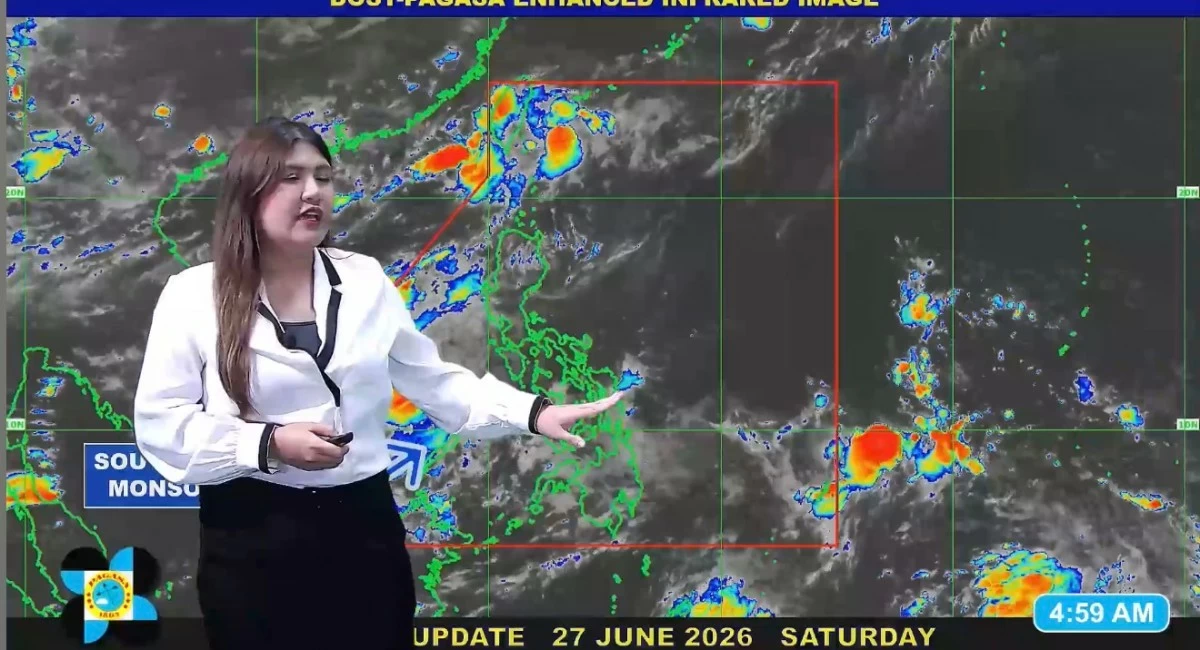
(DOST-PAGASA)
(DOST-PAGASA)
The southwest monsoon or habagat continues to affect Luzon and parts of the Visayas, while the Intertropical Convergence Zone (ITCZ) is bringing rains over several areas in the Visayas and Mindanao, the Philippine Atmospheric, Geophysical and Astronomical Services Administration (PAGASA) said on Saturday, June 27.
PAGASA weather specialist Veronica Torres said the habagat remains the prevailing weather system over much of Luzon and parts of the Visayas.
“Ang southwest monsoon o habagat ay patuloy pa rin ang epekto sa Luzon at pati na rin sa may lugar ng Visayas (The southwest monsoon or habagat continues to affect Luzon as well as parts of the Visayas),” she said.
Torres also said the ITCZ, a weather system east of the country, is causing rains over parts of the Visayas and Mindanao.
“Itong linya ng kaulapan sa may silangan ng ating bansa, ito ang tinatawag na Intertropical Convergence Zone or ITCZ. Ito ang salubungan ng hangin galing northern and southern hemisphere. Ito naman ang nagpapaulan sa ilang bahagi ng Visayas at Mindanao (This band of clouds east of the country is what we call the Intertropical Convergence Zone or ITCZ. It is the convergence of winds coming from the Northern and Southern Hemispheres. It is also the weather system bringing rains over parts of the Visayas and Mindanao),” she stated.
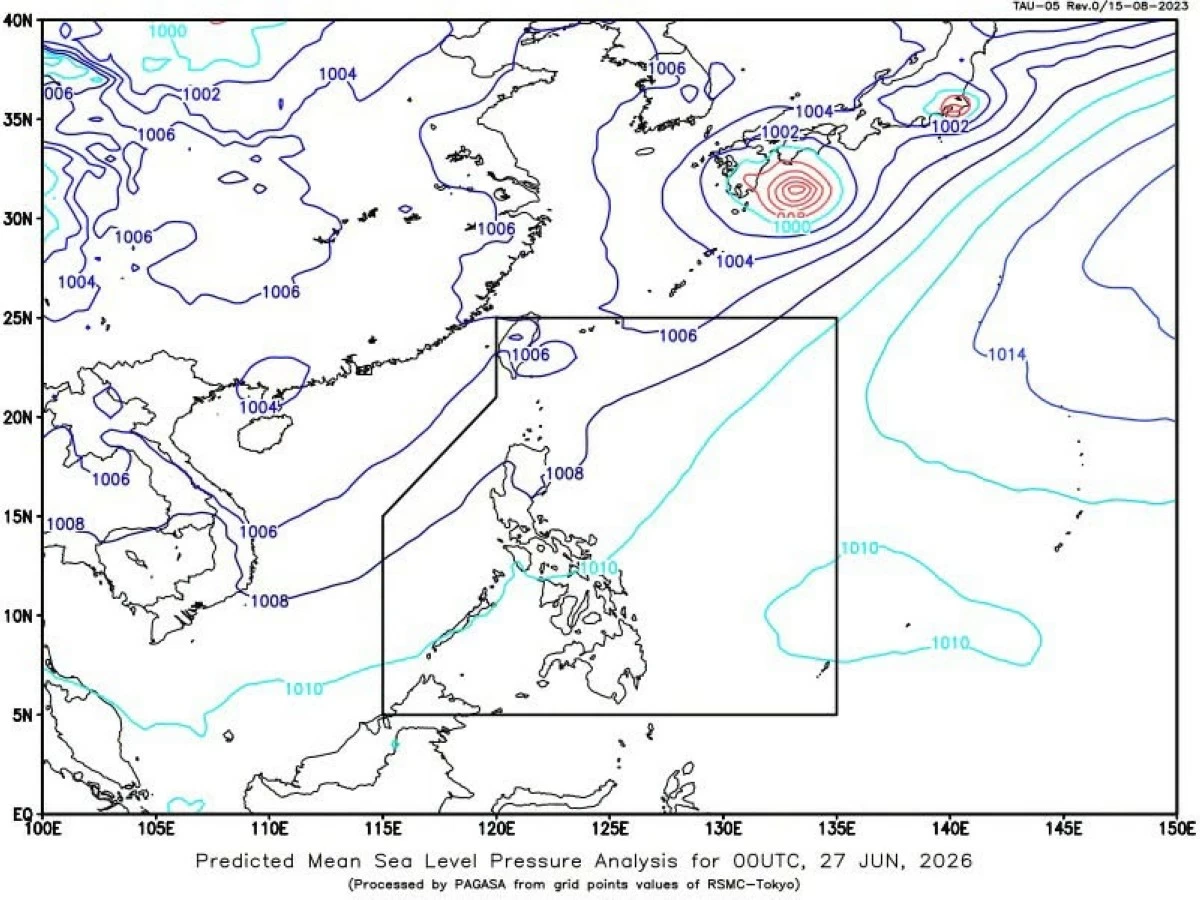
(DOST-PAGASA)
(DOST-PAGASA)
Meanwhile, PAGASA said it is not monitoring any low-pressure area (LPA) or tropical cyclone inside or near the Philippine Area of Responsibility (PAR).
“Sa ngayon naman, wala tayong na-mo-monitor na low-pressure area or bagyo sa loob or malapit sa ating Philippine Area of Responsibility (As of now, we are not monitoring any low-pressure area or tropical cyclone inside or near the Philippine Area of Responsibility),” the agency said.
The state weather bureau, however, reminded the public that the ITCZ can still develop into an LPA, prompting the public to continue monitoring PAGASA advisories.
“Gayun pa man, itong inter tropical convergence zone ay kadalasang nakaka-produce ng mga low-pressure area kaya patuloy pa rin tayong mag-antabay sa mga ilalabas update ng PAGASA (Nevertheless, the Intertropical Convergence Zone can often produce low-pressure areas, so we should continue to monitor the updates that PAGASA will issue),” said Torres.

Related Tags

Habagat ITCZ weather PAGASA Philippines Luzon Visayas Mindanao rain weather update
ADVERTISEMENT
.most-popular .layout-ratio{ padding-bottom: 79.13%; } @media (min-width: 768px) and (max-width: 1024px) { .widget-title { font-size: 15px !important; } }

{{ articles_filter_1561_widget.title }}

.most-popular .layout-ratio{ padding-bottom: 79.13%; } @media (min-width: 768px) and (max-width: 1024px) { .widget-title { font-size: 15px !important; } }

{{ static_articles_1562_widget.title }}

.most-popular .layout-ratio{ padding-bottom: 79.13%; } @media (min-width: 768px) and (max-width: 1024px) { .widget-title { font-size: 15px !important; } }

{{ articles_filter_1563_widget.title }}

{{ articles_filter_1564_widget.title }}

.mb-article-details { position: relative; } .mb-article-details .article-body-preview, .mb-article-details .article-body-summary{ font-size: 17px; line-height: 30px; font-family: "Libre Caslon Text", serif; color: #000; } .mb-article-details .article-body-preview iframe , .mb-article-details .article-body-summary iframe{ width: 100%; margin: auto; } .read-more-background { background: linear-gradient(180deg, color(display-p3 1.000 1.000 1.000 / 0) 13.75%, color(display-p3 1.000 1.000 1.000 / 0.8) 30.79%, color(display-p3 1.000 1.000 1.000) 72.5%); position: absolute; height: 200px; width: 100%; bottom: 0; display: flex; justify-content: center; align-items: center; padding: 0; } .read-more-background a{ color: #000; } .read-more-btn { padding: 17px 45px; font-family: Inter; font-weight: 700; font-size: 18px; line-height: 16px; text-align: center; vertical-align: middle; border: 1px solid black; background-color: white; } .hidden { display: none; }
function initializeAllSwipers() { // Get all hidden inputs with cms_article_id document.querySelectorAll('[id^="cms_article_id_"]').forEach(function (input) { const cmsArticleId = input.value; const articleSelector = '#article-' + cmsArticleId + ' .body_images'; const swiperElement = document.querySelector(articleSelector); if (swiperElement && !swiperElement.classList.contains('swiper-initialized')) { new Swiper(articleSelector, { loop: true, pagination: false, navigation: { nextEl: '#article-' + cmsArticleId + ' .swiper-button-next', prevEl: '#article-' + cmsArticleId + ' .swiper-button-prev', }, }); } }); } setTimeout(initializeAllSwipers, 3000); const intersectionObserver = new IntersectionObserver( (entries) => { entries.forEach((entry) => { if (entry.isIntersecting) { const newUrl = entry.target.getAttribute("data-url"); if (newUrl) { history.pushState(null, null, newUrl); let article = entry.target; // Extract metadata const author = article.querySelector('.author-section').textContent.replace('By', '').trim(); const section = article.querySelector('.section-info ').textContent.replace(' ', ' '); const title = article.querySelector('.article-title h1').textContent; // Parse URL for Chartbeat path format const parsedUrl = new URL(newUrl, window.location.origin); const cleanUrl = parsedUrl.host + parsedUrl.pathname; // Update Chartbeat configuration if (typeof window._sf_async_config !== 'undefined') { window._sf_async_config.path = cleanUrl; window._sf_async_config.sections = section; window._sf_async_config.authors = author; } // Track virtual page view with Chartbeat if (typeof pSUPERFLY !== 'undefined' && typeof pSUPERFLY.virtualPage === 'function') { try { pSUPERFLY.virtualPage({ path: cleanUrl, title: title, sections: section, authors: author }); } catch (error) { console.error('ping error', error); } } // Optional: Update document title if (title && title !== document.title) { document.title = title; } } } }); }, { threshold: 0.1 } ); function showArticleBody(button) { const article = button.closest("article"); const summary = article.querySelector(".article-body-summary"); const body = article.querySelector(".article-body-preview"); const readMoreSection = article.querySelector(".read-more-background"); // Hide summary and read-more section summary.style.display = "none"; readMoreSection.style.display = "none"; // Show the full article body body.classList.remove("hidden"); } document.addEventListener("DOMContentLoaded", () => { let loadCount = 0; // Track how many times articles are loaded const offset = [1, 2, 3, 4, 5, 6, 7, 8, 9, 10]; // Offset values const currentUrl = window.location.pathname.substring(1); let isLoading = false; // Prevent multiple calls if (!currentUrl) { console.log("Current URL is invalid."); return; } const sentinel = document.getElementById("load-more-sentinel"); if (!sentinel) { console.log("Sentinel element not found."); return; } function isSentinelVisible() { const rect = sentinel.getBoundingClientRect(); return ( rect.top < window.innerHeight && rect.bottom >= 0 ); } function onScroll() { if (isLoading) return; if (isSentinelVisible()) { if (loadCount >= offset.length) { console.log("Maximum load attempts reached."); window.removeEventListener("scroll", onScroll); return; } isLoading = true; const currentOffset = offset[loadCount]; window.loadMoreItems().then(() => { let article = document.querySelector('#widget_1690 > div:nth-last-of-type(2) article'); intersectionObserver.observe(article) loadCount++; }).catch(error => { console.error("Error loading more items:", error); }).finally(() => { isLoading = false; }); } } window.addEventListener("scroll", onScroll); });

Sign up by email to receive news.