







Bringing classical music to the next generation
Published Jun 27, 2026 02:33 pm


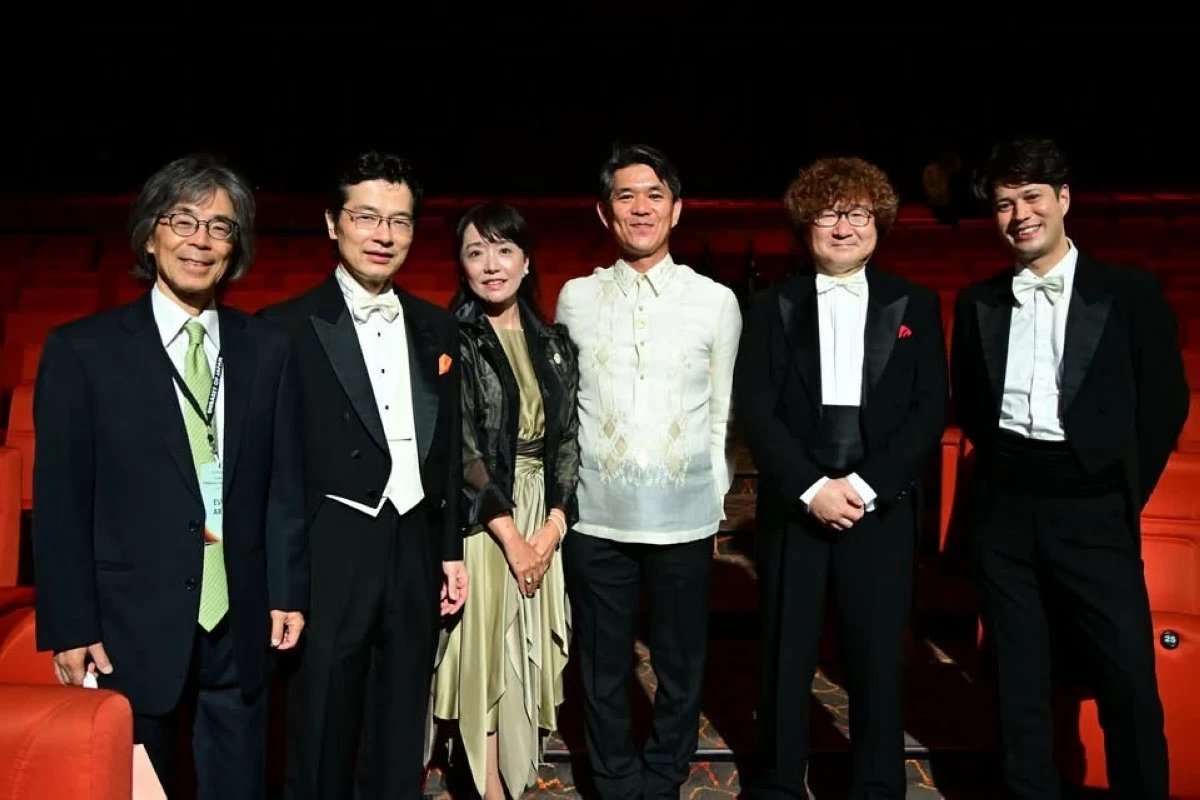
New Japan Philharmonic General Manager Fumihiko Sato, Concert Master Nishie Tatsuro, Madame Akiko Endo, Ambassador Kazuya Endo, Solo Concert Master Choi Moon-soo, and Violinist Sohei Billman. (Photos: Japanese Embassy)
Classical music has survived for centuries because each generation has found a way to pass it on. Today, one of its greatest challenges is ensuring that the arts remain accessible—not only to seasoned concertgoers, but also to young people who may be hearing an orchestra perform live for the very first time.
That commitment to broadening access was one of the ideas discussed during “A 70 Year Opus: Celebrating Philippines-Japan Friendship in Concert,” held at The Theater at Solaire, where diplomats, government officials, business leaders, academics, and music lovers gathered to celebrate 70 years of Philippines-Japan friendship. New Japan Philharmonic General Manager Fumihiko Sato shared that the orchestra regularly visits schools across Japan to introduce students to classical music, believing that lifelong appreciation begins with access and early exposure.
That philosophy formed a fitting backdrop to the orchestra’s first-ever performance in the Philippines, held as part of the celebration of the 70th anniversary of Philippines-Japan diplomatic relations.
Hosted by the Embassy of Japan in partnership with the Cultural Center of the Philippines (CCP), the evening gathered government officials, members of the diplomatic corps, business leaders, academics, and music lovers in a celebration that reflected how culture continues to shape one of Asia’s closest bilateral relationships.
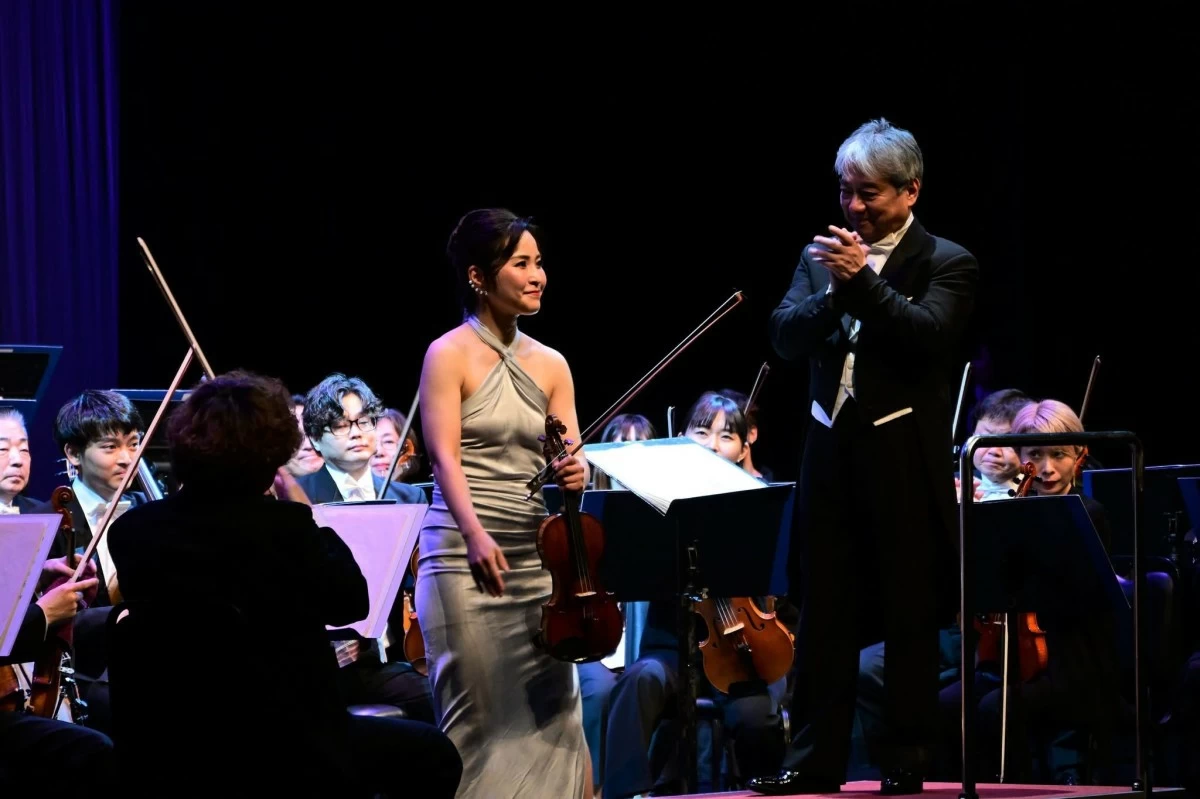
The Japanese Embassy brought some of their top talents to Manila. The New Japan Philharmonic, 2007 International Tchaikovsky Competition gold medalist Mayuko Kamio, and award-winning conductor Tetsuji Honna.
In his remarks, Japanese Ambassador Endo Kazuya described culture as one of the strongest threads woven through seven decades of friendship. “Of all the ties that bind us, culture has perhaps woven our most enduring threads,” he said. “Music connects, endures, and transcends languages and distance.”
Under the baton of internationally acclaimed conductor Tetsuji Honna, the New Japan Philharmonic delivered commanding performances of Tchaikovsky’s “Violin Concerto in D major, Op. 35” and Beethoven’s “Symphony No. 7 in A major, Op. 92”. Joining the orchestra was celebrated Japanese violinist Mayuko Kamio, whose interpretation of Tchaikovsky’s demanding concerto demonstrated both remarkable technical precision and expressive depth. Kamio, the gold medalist of the 2007 International Tchaikovsky Competition made concerto debut in Tokyo at the age of 10 and has performed in the United States, Russia, Germany, Poland, and Japan.
The audience was also treated to two unexpected encores that reflected the unique cultural relationship between the Philippines and Japan: Freddie Aguilar’s “Anak” and the beloved theme from anime “Voltes V”, drawing enthusiastic applause from concertgoers.
For CCP President Kaye Tiñga, the evening illustrated music’s unique ability to connect people beyond language and geography.
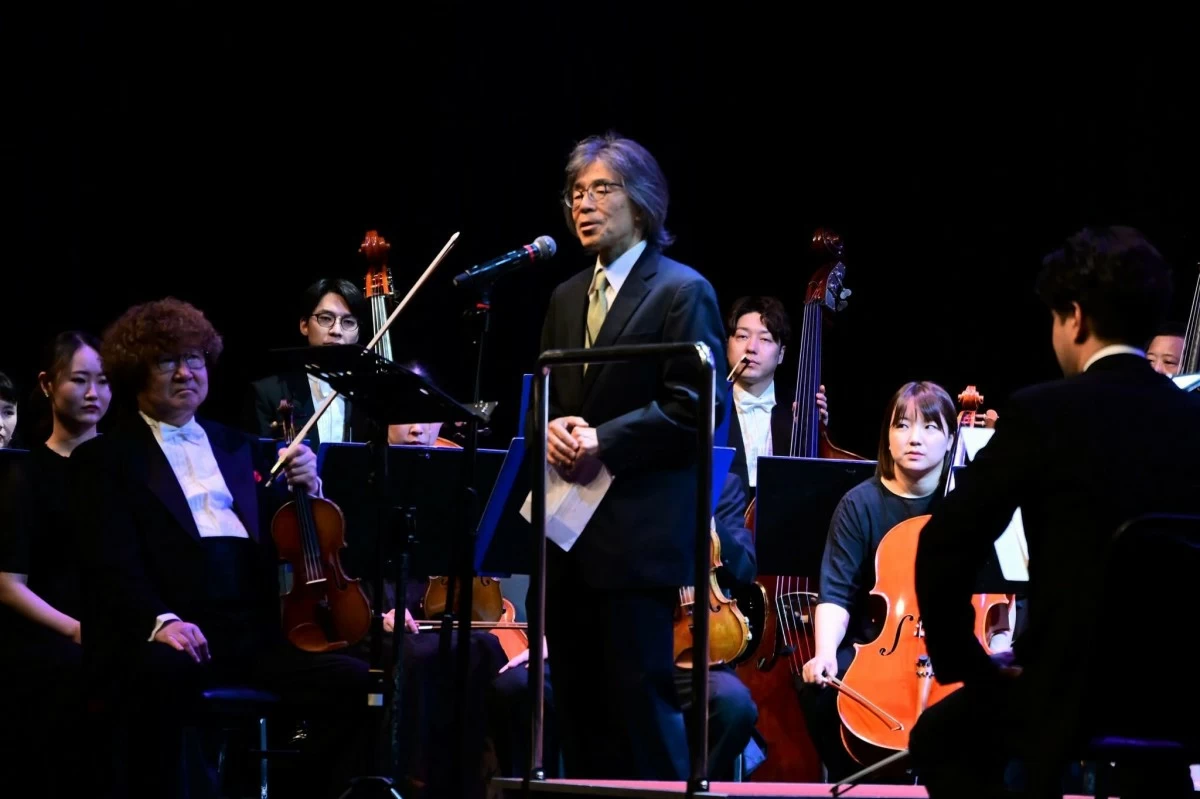
New Japan Philharmonic General Manager Fumihiko Sato believes in bringing classical music to the younger generation.
“As tonight’s concert reflects on the peace, prosperity and possibilities woven by Japan and the Philippines’ decades-long friendship, it also proves that the magic of music knows no bounds,” she said. “It connects nations and borders, eliciting emotions that no words can capture.”
She also recalled the vision of Seiji Ozawa and Naozumi Yamamoto, who helped establish the New Japan Philharmonic more than five decades ago.
“Let’s make music together,” she said, echoing their enduring philosophy.
That collaborative spirit has long defined cultural exchanges between Japan and the Philippines. From student exchanges and performing arts collaborations to anime, film, literature, and traditional arts, cultural diplomacy has remained one of the most visible and accessible dimensions of bilateral relations.
This year’s 70th anniversary theme—“Weaving the Future Together: Peace, Prosperity, Possibilities”—captures that continuing evolution.
As the ambassador reflected: great composers never truly leave us because their music continues to live through each new performance. “Tonight,” he said, “I hope our friendship captures some of that immortality.”
Perhaps that is the enduring lesson of cultural diplomacy. Music may last because each generation chooses to perform it again. Friendships between nations endure for much the same reason—because each generation chooses to nurture them anew.