






Manila Bulletin
 Lifestyle
Youth
At the 2026 NBA Championship, the Knicks showed that the greatest victories are built one sacrifice at a time
Lifestyle
Youth
At the 2026 NBA Championship, the Knicks showed that the greatest victories are built one sacrifice at a time
Lifestyle
Youth
At the 2026 NBA Championship, the Knicks showed that the greatest victories are built one sacrifice at a time
At the 2026 NBA Championship, the Knicks showed that the greatest victories are built one sacrifice at a time
The long road to believing
Published Jun 27, 2026 11:00 am


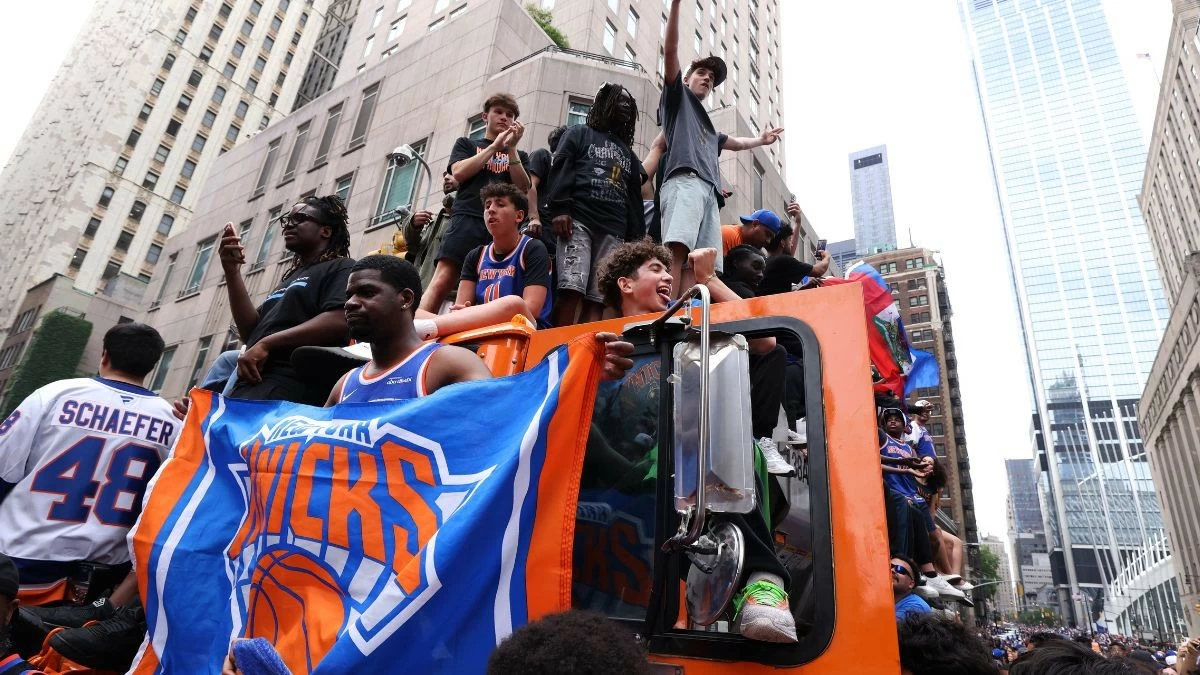
New York Knicks fans celebrate the team's NBA championship following a ticker-tape parade down Lower Manhattan's "Canyon of Heroes" on Broadway, Thursday, June 18, 2026 in New York. This was the Knicks' first NBA championship in 53 years. (Jason DeCrow/Alliance for Downtown New York via AP Content Services)
By Mackenzie Kaitlin Huang
I had not seen my mother cry in over two years, but there she was, sitting on the sofa, face buried in her hands.
The New York Knicks had just won the 2026 NBA championship.
For most franchises, a title is just another banner in the rafters. For New York, it was an incredible comeback that completely shattered a championship drought. Fifty-three years had passed since the Knicks last stood atop the basketball leagues. Generations of fans had been born, grown up, and grown old without witnessing a championship. There were consistent near misses, questionable trades, and the annual ritual of believing that this year would be different.
And somehow, against all odds, it finally was.
On paper, the team shouldn’t have won. There were more talented rosters, teams with multiple superstars, and more efficient offenses. Statistically speaking, several franchises had advantages over New York. Yet basketball has always had a way of exposing the limitations of numbers, and sometimes the whole becomes greater than the sum of its parts.
The 2026 Knicks embodied that principle. No player was bigger than the team, with everyone embracing their roles. Everyone understood what was required of them, and nobody seemed concerned with whose name appeared in the headlines the next morning.

Mackenzie Kaitlin Huang
What emerged was something that psychologists call “collective efficacy,” the shared belief among members of a group that, together, they can accomplish something greater than any individual could alone. Their teamwork and trust had more of an impact than just sheer talent.
Perhaps no player symbolized that trust more than Jalen Brunson. In an era increasingly defined by maximizing contracts and individual brands, Jalen reportedly sacrificed approximately $113 million in potential earnings to give the Knicks flexibility to continue building around him. It was a decision that made little financial sense and perfect basketball sense. Sacrifice, however, has an incredible way of spreading.
Social psychologists call it normative reciprocity, when one member of a group willingly gives something up for the collective, and others are inspired to do the same. Jalen’s decision established a culture where winning mattered more than personal accolades.
Championship teams are rarely built solely on talent. They are built on shared sacrifices, mutual trust, and the willingness to place the group above oneself. The Knicks had followed their leader.
Their success was a reminder of something sports have taught for generations: hard work can overcome superior talent when superior talent fails to work equally hard.
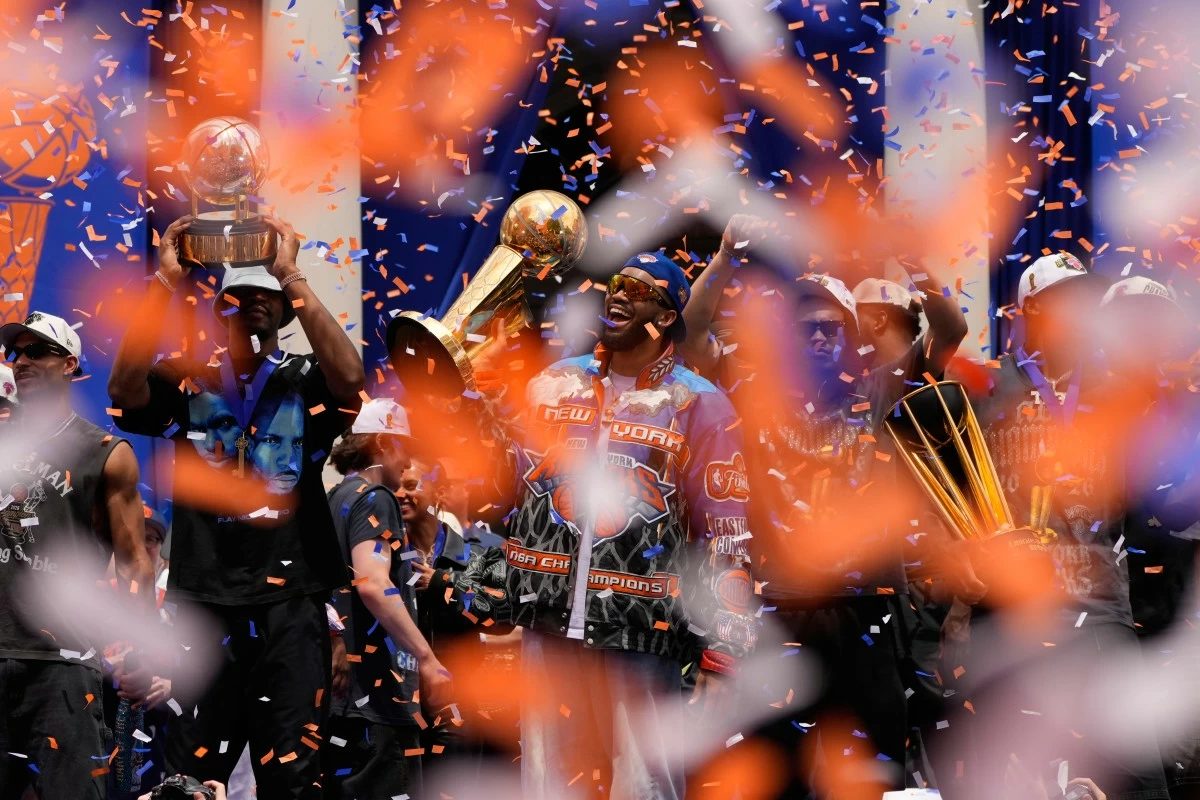
New York Knicks center Karl-Anthony Towns, center, celebrates with teammates during the New York Knicks' NBA championship parade Thursday, June 18, 2026, in New York. (AP Photo/Yuki Iwamura)
Psychologist Angela Duckworth’s research on grit, the combination of passion and perseverance, suggests that sustained effort typically matters more than natural ability. The 2026 Knicks became a case study in principle. Night after night, they simply refused to be overworked.
In the end, that mentality became contagious.
Perhaps that’s why the championship meant so much to so many people. Sports psychologists refer to a phenomenon called “Basking in Reflected Glory,” the tendency for individuals to experience genuine emotional satisfaction from success of groups with which they identify.
Fans not only watch their teams, but become part of them, too. Their victories become personal victories. It explains why strangers embraced in the streets, why lifelong fans cried, and why my mother cried. Because being a Knicks fan had never been easy.
But suffering creates identity, and shared suffering creates community. That shared suffering had finally become triumph, creating a family where millions of people who had never met felt connected by something larger than themselves.
Arguably, that is what made this championship historic. Not simply that the Knicks won, but how they won. Not with overwhelming talent, shortcuts, or a miracle superteam assembled overnight. They won because 11 players bought into something bigger than themselves. Because sacrifice inspired more sacrifice. Because their grit outlasted talent. Because sometimes, the whole truly is greater than the sum of its parts.
And in Manila, a place halfway around the world from the US, sitting on the sofa with tears streaming down her face, my mother reminded me of something 53 years of heartbreak had never managed to erase: hope. No matter how long it takes, it is always worth believing in.
Mackenzie Kaitlin Huang, is a student journalist passionate about youth and mental health, with a growing interest in politics and public policy. I write in order to explore how social issues affect real lives—from the pressures of social media to policies and politics shaping Filipino communities.
“Voices” is Manila Bulletin Lifestyle’s dedicated space for young writers and future journalists. Have a story to tell? We’re accepting article submissions from young writers aged 25 and below, with each piece capped at 500 words. Send your work to [email protected] with the subject line “Voices: (Article Title),” or message us via Instagram at @manilabulletinlifestyle.
Don’t forget to include a short bio with your age, school, course, hobbies, and any other details you’d like readers to know. We can’t wait to read your stories!