ADVERTISEMENT

USDA raises Philippines rice import forecast on lower local output projection

Published Jun 26, 2026 03:31 pm
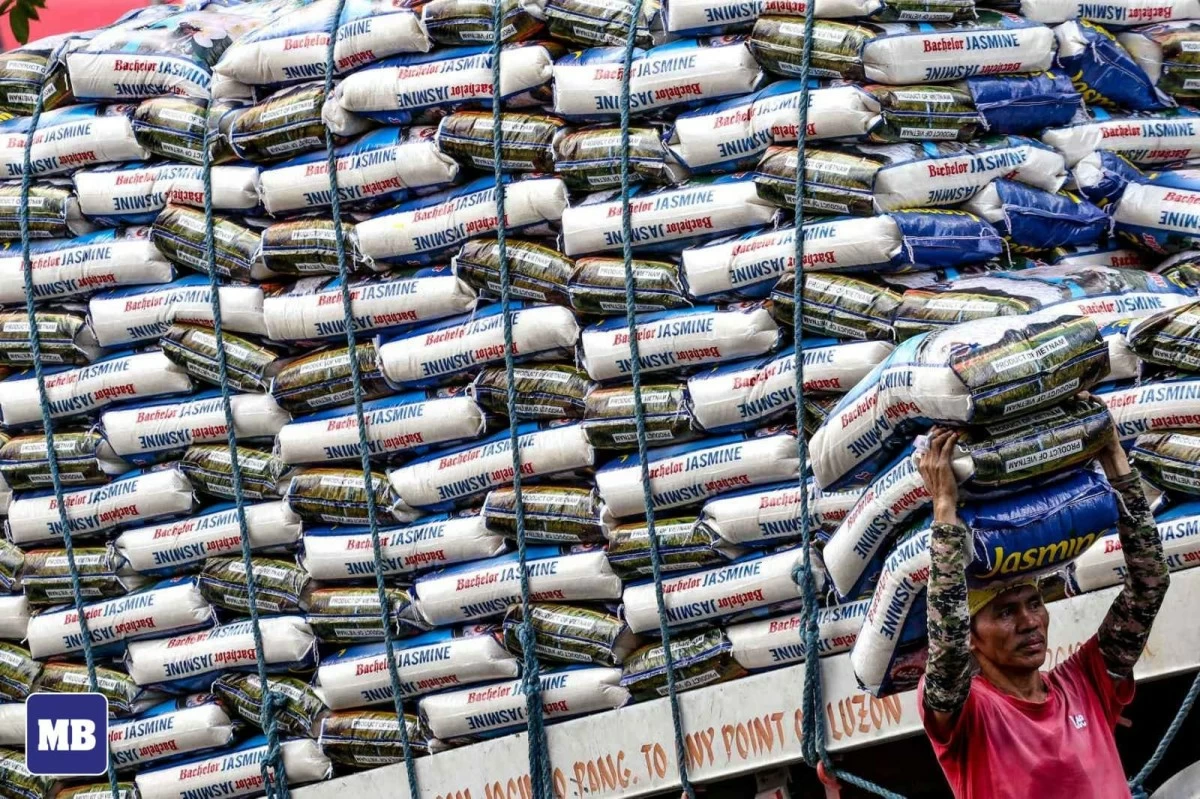
(Manila Bulletin file photo)
The United States Department of Agriculture (USDA) has adjusted upward its rice import forecast for the Philippines to 5.20 million metric tons (MT) in the upcoming marketing year (MY), as it expects the country to post lower rice output than initially projected.
In its Grain and Feeds report dated June 24, the USDA said the Philippines would import an additional 100,000 MT from the previous estimate of 5.10 million MT for MY 2026-2027, which begins next month and ends in June next year.
The international agency attributed the revision to continued demand growth and projected lower milled rice production, influenced by elevated input costs.
According to the report, the country’s milled rice output would drop by around 100,000 MT in the coming MY to 12.30 million MT from its earlier forecast of 12.40 million MT. In line with this, the domestic rice harvest area is seen declining to 4.65 million hectares (ha) from 4.70 million ha.
“Rising input costs continue to weigh on area planted, as high fuel and fertilizer prices reduce farm profitability and limit the incentive to expand planted area,” the report read.
While the Department of Agriculture (DA) has been providing fuel subsidies and fertilizers to shield farmers from the impact of the Middle East crisis, the USDA said “these measures only partially offset the burden of elevated input costs.”
The USDA noted that local production, especially in lowland areas, would also be affected by reduced water levels in major dam reservoirs already observed this month.
With the looming threat of a super El Niño, the international agency said this may lead to lower production levels in the coming months as the effects of reduced irrigation levels and drought become clearer.
Despite the lower rice production, the USDA said the country’s importation would remain moderate following the government’s imposition of a price cap of ₱50 per kilo on imported rice.
Enacted to curb excessive price hikes, the measure is expected to compress profit margins for importers, reducing incentives to bring in additional imported rice.
The USDA said the implementation of the price-indexed tariff mechanism also raises the landed cost of imported rice based on prevailing international price levels, further weakening import demand from the commercial sector.
“The net effect is that the supply gap created by lower production is absorbed partly through higher imports and partly through a drawdown in ending stocks,” it said.
The Philippines is projected to have ending stocks of 2.64 million MT for MY 2026-2027, down by 5.4 percent from the previous forecast of 2.79 million MT, according to the USDA.
Meanwhile, the country’s consumption of milled rice is expected to remain unchanged at 17.65 million MT, even after taking into account the impact of rising retail prices.
Based on government data, the country’s rice imports rose to 2.31 million MT from January to May, 20 percent higher than the 1.93 million MT recorded in the same period last year.

Related Tags

United States Department of Agriculture (USDA) rice imports
ADVERTISEMENT
.most-popular .layout-ratio{ padding-bottom: 79.13%; } @media (min-width: 768px) and (max-width: 1024px) { .widget-title { font-size: 15px !important; } }

{{ articles_filter_1561_widget.title }}

.most-popular .layout-ratio{ padding-bottom: 79.13%; } @media (min-width: 768px) and (max-width: 1024px) { .widget-title { font-size: 15px !important; } }

{{ static_articles_1562_widget.title }}

.most-popular .layout-ratio{ padding-bottom: 79.13%; } @media (min-width: 768px) and (max-width: 1024px) { .widget-title { font-size: 15px !important; } }

{{ articles_filter_1563_widget.title }}

{{ articles_filter_1564_widget.title }}

.mb-article-details { position: relative; } .mb-article-details .article-body-preview, .mb-article-details .article-body-summary{ font-size: 17px; line-height: 30px; font-family: "Libre Caslon Text", serif; color: #000; } .mb-article-details .article-body-preview iframe , .mb-article-details .article-body-summary iframe{ width: 100%; margin: auto; } .read-more-background { background: linear-gradient(180deg, color(display-p3 1.000 1.000 1.000 / 0) 13.75%, color(display-p3 1.000 1.000 1.000 / 0.8) 30.79%, color(display-p3 1.000 1.000 1.000) 72.5%); position: absolute; height: 200px; width: 100%; bottom: 0; display: flex; justify-content: center; align-items: center; padding: 0; } .read-more-background a{ color: #000; } .read-more-btn { padding: 17px 45px; font-family: Inter; font-weight: 700; font-size: 18px; line-height: 16px; text-align: center; vertical-align: middle; border: 1px solid black; background-color: white; } .hidden { display: none; }
function initializeAllSwipers() { // Get all hidden inputs with cms_article_id document.querySelectorAll('[id^="cms_article_id_"]').forEach(function (input) { const cmsArticleId = input.value; const articleSelector = '#article-' + cmsArticleId + ' .body_images'; const swiperElement = document.querySelector(articleSelector); if (swiperElement && !swiperElement.classList.contains('swiper-initialized')) { new Swiper(articleSelector, { loop: true, pagination: false, navigation: { nextEl: '#article-' + cmsArticleId + ' .swiper-button-next', prevEl: '#article-' + cmsArticleId + ' .swiper-button-prev', }, }); } }); } setTimeout(initializeAllSwipers, 3000); const intersectionObserver = new IntersectionObserver( (entries) => { entries.forEach((entry) => { if (entry.isIntersecting) { const newUrl = entry.target.getAttribute("data-url"); if (newUrl) { history.pushState(null, null, newUrl); let article = entry.target; // Extract metadata const author = article.querySelector('.author-section').textContent.replace('By', '').trim(); const section = article.querySelector('.section-info ').textContent.replace(' ', ' '); const title = article.querySelector('.article-title h1').textContent; // Parse URL for Chartbeat path format const parsedUrl = new URL(newUrl, window.location.origin); const cleanUrl = parsedUrl.host + parsedUrl.pathname; // Update Chartbeat configuration if (typeof window._sf_async_config !== 'undefined') { window._sf_async_config.path = cleanUrl; window._sf_async_config.sections = section; window._sf_async_config.authors = author; } // Track virtual page view with Chartbeat if (typeof pSUPERFLY !== 'undefined' && typeof pSUPERFLY.virtualPage === 'function') { try { pSUPERFLY.virtualPage({ path: cleanUrl, title: title, sections: section, authors: author }); } catch (error) { console.error('ping error', error); } } // Optional: Update document title if (title && title !== document.title) { document.title = title; } } } }); }, { threshold: 0.1 } ); function showArticleBody(button) { const article = button.closest("article"); const summary = article.querySelector(".article-body-summary"); const body = article.querySelector(".article-body-preview"); const readMoreSection = article.querySelector(".read-more-background"); // Hide summary and read-more section summary.style.display = "none"; readMoreSection.style.display = "none"; // Show the full article body body.classList.remove("hidden"); } document.addEventListener("DOMContentLoaded", () => { let loadCount = 0; // Track how many times articles are loaded const offset = [1, 2, 3, 4, 5, 6, 7, 8, 9, 10]; // Offset values const currentUrl = window.location.pathname.substring(1); let isLoading = false; // Prevent multiple calls if (!currentUrl) { console.log("Current URL is invalid."); return; } const sentinel = document.getElementById("load-more-sentinel"); if (!sentinel) { console.log("Sentinel element not found."); return; } function isSentinelVisible() { const rect = sentinel.getBoundingClientRect(); return ( rect.top < window.innerHeight && rect.bottom >= 0 ); } function onScroll() { if (isLoading) return; if (isSentinelVisible()) { if (loadCount >= offset.length) { console.log("Maximum load attempts reached."); window.removeEventListener("scroll", onScroll); return; } isLoading = true; const currentOffset = offset[loadCount]; window.loadMoreItems().then(() => { let article = document.querySelector('#widget_1690 > div:nth-last-of-type(2) article'); intersectionObserver.observe(article) loadCount++; }).catch(error => { console.error("Error loading more items:", error); }).finally(() => { isLoading = false; }); } } window.addEventListener("scroll", onScroll); });

Sign up by email to receive news.