ADVERTISEMENT

EU releases 3 billion-euro loan package for Ukraine's recovery as part of 2-year commitment

Published Jun 26, 2026 12:01 am
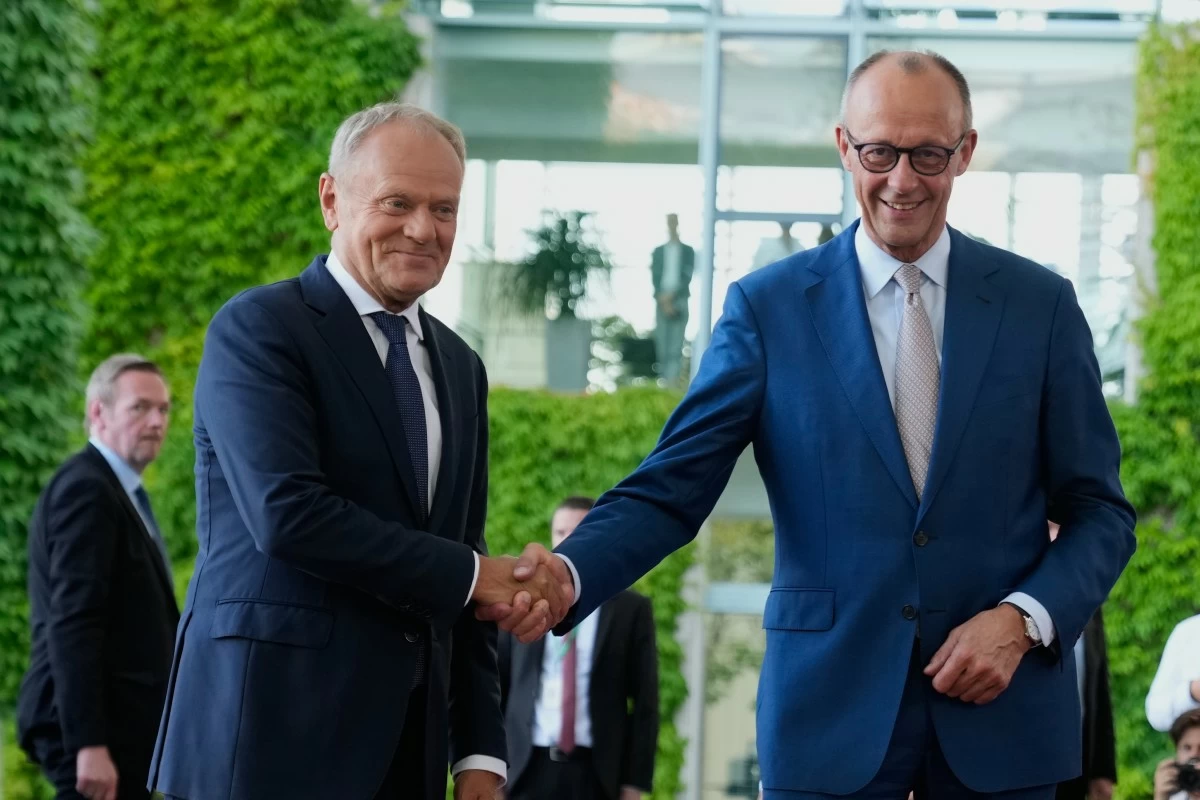
German Chancellor Friedrich Merz, right, welcomes Poland's Prime Minister Donald Tusk at the E5 NATO Summit in Berlin Germany, Wednesday, June 24, 2026. (AP Photo/Ebrahim Noroozi)

WARSAW, Poland (AP) — The European Union has disbursed the first 3 billion-euro ($3.4 billion) tranche of a 90 billion-euro ($101 billion) loan to Ukraine, the country’s prime minister announced Thursday at the opening of a conference on Ukraine's post-war recovery in Poland.

The conference, attended by key European leaders including German Chancellor Friedrich Merz and European Commission President Ursula von der Leyen, is both a fundraising forum and a message to Russia that Ukraine’s Western supporters are in it for a long haul.

“We are forced to innovate to survive and this has become our superpower,” Ukrainian Prime Minister Yulia Svyrydenko said, adding that Ukraine was grateful for the support promised to her war-battered nation.

European countries vow commitment — and investments — for Ukraine

Von der Leyen reasserted the EU's financial commitment to Ukraine, just days after the country officially started EU membership negotiations on June 15.

Since the beginning of Russia’s full-scale invasion in February 2022, EU countries have provided 200 billion euros ($225 billion) in economic, financial and military support to Ukraine, and approved 90 billion euros ($101 billion) more over the next two years in the form of an EU support loan, she said.

The EU also will start paying another 6 billion euros ($6.7 billion), a second tranche from the loan dedicated to drone production, “in the coming days,” she added.

In a separate initiative, European leaders meeting in Gdansk said they're kicking off a European equity fund dedicated to investments in strategic sectors of the Ukrainian economy.

“With an initial public package of up to 220 million euros, we are creating the confidence and the risk-sharing mechanism that private investors need to engage now,” Merz said. The fund originated at last year's recovery conference in Rome, and is supported by the EU, Germany, Poland, Italy and France.

He said that although public funding alone will never be enough to rebuild Ukraine, “by investing now and committing long-term capital, Europe’s is sending a clear message: we believe in Ukraine’s future within the European family.”

The Ukrainian delegation is planning to sign 160 deals totaling over 10 billion euros ($11.2 billion) during the conference in Gdansk, Svyrydenko said on Thursday.

Ukraine-Poland dispute fails to overshadow the conference

Svyrydenko led the Ukrainian delegation after President Volodymyr Zelenskyy pulled out just days before, following a dispute with Polish President Karol Nawrocki over World War II events that have strained the countries' relations.

Nawrocki this month stripped Zelenskyy of Poland’s highest state honor, because Zelenskyy named a military unit after a Ukrainian paramilitary organization accused of massacring Poles during the war.

The Ukrainian Insurgent Army, or UPA, fought for Ukrainian independence against both Nazi German and Soviet forces. But it is accused in Poland of wartime killings of tens of thousands of Poles, most in the Nazi-occupied regions of Volhynia and Eastern Galicia, which the Polish state qualifies as genocide.

Zelenskyy has since returned the award to Poland, with other Ukrainian officials also following suit.

Polish Prime Minister Donald Tusk said that Zelenskyy's absence at the conference might help reduce the tensions. Svyrydenko made no reference to the dispute in her speech.

"We can only build the future on the basis of truth, mutual respect and understanding the past,” Tusk said in his speech.

Related Tags

WORLDNEWS
ADVERTISEMENT
.most-popular .layout-ratio{ padding-bottom: 79.13%; } @media (min-width: 768px) and (max-width: 1024px) { .widget-title { font-size: 15px !important; } }

{{ articles_filter_1561_widget.title }}

.most-popular .layout-ratio{ padding-bottom: 79.13%; } @media (min-width: 768px) and (max-width: 1024px) { .widget-title { font-size: 15px !important; } }

{{ static_articles_1562_widget.title }}

.most-popular .layout-ratio{ padding-bottom: 79.13%; } @media (min-width: 768px) and (max-width: 1024px) { .widget-title { font-size: 15px !important; } }

{{ articles_filter_1563_widget.title }}

{{ articles_filter_1564_widget.title }}

.mb-article-details { position: relative; } .mb-article-details .article-body-preview, .mb-article-details .article-body-summary{ font-size: 17px; line-height: 30px; font-family: "Libre Caslon Text", serif; color: #000; } .mb-article-details .article-body-preview iframe , .mb-article-details .article-body-summary iframe{ width: 100%; margin: auto; } .read-more-background { background: linear-gradient(180deg, color(display-p3 1.000 1.000 1.000 / 0) 13.75%, color(display-p3 1.000 1.000 1.000 / 0.8) 30.79%, color(display-p3 1.000 1.000 1.000) 72.5%); position: absolute; height: 200px; width: 100%; bottom: 0; display: flex; justify-content: center; align-items: center; padding: 0; } .read-more-background a{ color: #000; } .read-more-btn { padding: 17px 45px; font-family: Inter; font-weight: 700; font-size: 18px; line-height: 16px; text-align: center; vertical-align: middle; border: 1px solid black; background-color: white; } .hidden { display: none; }
function initializeAllSwipers() { // Get all hidden inputs with cms_article_id document.querySelectorAll('[id^="cms_article_id_"]').forEach(function (input) { const cmsArticleId = input.value; const articleSelector = '#article-' + cmsArticleId + ' .body_images'; const swiperElement = document.querySelector(articleSelector); if (swiperElement && !swiperElement.classList.contains('swiper-initialized')) { new Swiper(articleSelector, { loop: true, pagination: false, navigation: { nextEl: '#article-' + cmsArticleId + ' .swiper-button-next', prevEl: '#article-' + cmsArticleId + ' .swiper-button-prev', }, }); } }); } setTimeout(initializeAllSwipers, 3000); const intersectionObserver = new IntersectionObserver( (entries) => { entries.forEach((entry) => { if (entry.isIntersecting) { const newUrl = entry.target.getAttribute("data-url"); if (newUrl) { history.pushState(null, null, newUrl); let article = entry.target; // Extract metadata const author = article.querySelector('.author-section').textContent.replace('By', '').trim(); const section = article.querySelector('.section-info ').textContent.replace(' ', ' '); const title = article.querySelector('.article-title h1').textContent; // Parse URL for Chartbeat path format const parsedUrl = new URL(newUrl, window.location.origin); const cleanUrl = parsedUrl.host + parsedUrl.pathname; // Update Chartbeat configuration if (typeof window._sf_async_config !== 'undefined') { window._sf_async_config.path = cleanUrl; window._sf_async_config.sections = section; window._sf_async_config.authors = author; } // Track virtual page view with Chartbeat if (typeof pSUPERFLY !== 'undefined' && typeof pSUPERFLY.virtualPage === 'function') { try { pSUPERFLY.virtualPage({ path: cleanUrl, title: title, sections: section, authors: author }); } catch (error) { console.error('ping error', error); } } // Optional: Update document title if (title && title !== document.title) { document.title = title; } } } }); }, { threshold: 0.1 } ); function showArticleBody(button) { const article = button.closest("article"); const summary = article.querySelector(".article-body-summary"); const body = article.querySelector(".article-body-preview"); const readMoreSection = article.querySelector(".read-more-background"); // Hide summary and read-more section summary.style.display = "none"; readMoreSection.style.display = "none"; // Show the full article body body.classList.remove("hidden"); } document.addEventListener("DOMContentLoaded", () => { let loadCount = 0; // Track how many times articles are loaded const offset = [1, 2, 3, 4, 5, 6, 7, 8, 9, 10]; // Offset values const currentUrl = window.location.pathname.substring(1); let isLoading = false; // Prevent multiple calls if (!currentUrl) { console.log("Current URL is invalid."); return; } const sentinel = document.getElementById("load-more-sentinel"); if (!sentinel) { console.log("Sentinel element not found."); return; } function isSentinelVisible() { const rect = sentinel.getBoundingClientRect(); return ( rect.top < window.innerHeight && rect.bottom >= 0 ); } function onScroll() { if (isLoading) return; if (isSentinelVisible()) { if (loadCount >= offset.length) { console.log("Maximum load attempts reached."); window.removeEventListener("scroll", onScroll); return; } isLoading = true; const currentOffset = offset[loadCount]; window.loadMoreItems().then(() => { let article = document.querySelector('#widget_1690 > div:nth-last-of-type(2) article'); intersectionObserver.observe(article) loadCount++; }).catch(error => { console.error("Error loading more items:", error); }).finally(() => { isLoading = false; }); } } window.addEventListener("scroll", onScroll); });

Sign up by email to receive news.