ADVERTISEMENT

Beyond OTPs: BSP strengthens fight against cyber fraud

Published Jun 26, 2026 12:01 am  |  Updated Jun 25, 2026 04:14 pm
The digital economy has transformed the way Filipinos save, spend, invest, and transfer money. With a few taps on a smartphone, financial transactions that once required long queues and paperwork can now be completed in seconds. Yet the convenience of digital banking has come with a growing threat: cyber fraud. As online scams, account takeovers, and unauthorized transactions become more sophisticated, the Bangko Sentral ng Pilipinas (BSP) deserves commendation for taking decisive action to strengthen the country’s financial defenses.
For years, one-time passwords (OTPs) sent through SMS or email served as a common layer of protection. But cybercriminals have become increasingly sophisticated. Phishing attacks, SIM-swapping schemes, malware, and social engineering tactics have shown that OTPs alone can no longer provide the level of security that modern digital banking demands.
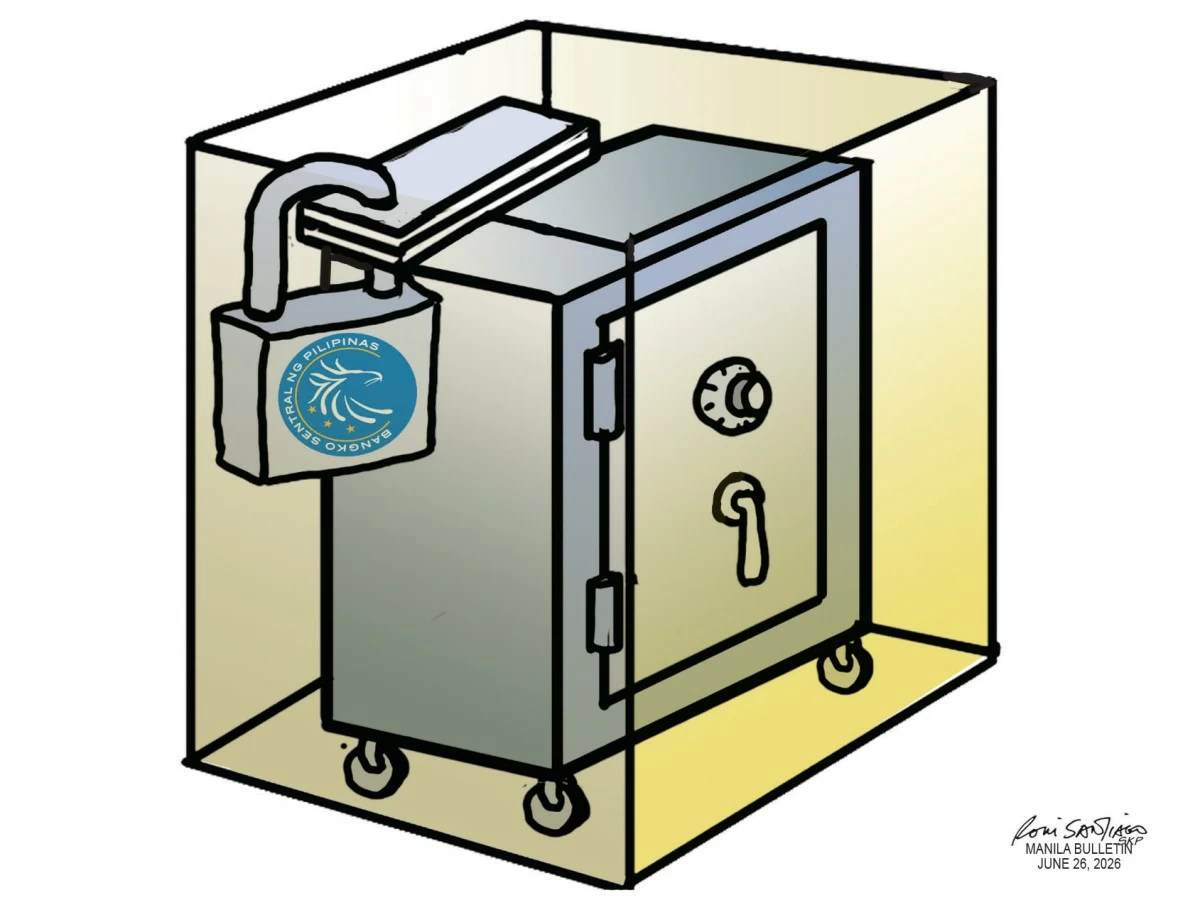
The BSP's Circular No. 1213 is an important shift from outdated defenses to smarter security. By encouraging the use of biometrics, behavioral analysis, adaptive verification, and passwordless technologies, the central bank is helping create a stronger shield against unauthorized access and fraudulent transactions. Equally significant is the requirement for BSP-supervised financial institutions (BSFIs) to strengthen fraud management systems capable of identifying suspicious transactions, unfamiliar devices, and unusual customer behavior before financial losses occur. These measures reflect a proactive rather than reactive approach to security.
However, the BSP circular alone cannot eliminate cybercrime. Financial institutions must fully embrace both the letter and spirit of the regulation. Compliance should not be viewed merely as a legal obligation but as a solemn responsibility to protect the trust and hard-earned money of their clients. Banks, digital wallets, and other financial service providers must invest continuously in cybersecurity infrastructure, employee training, threat intelligence, and customer education. In the digital age, security is a fundamental duty and not merely a competitive advantage.
Other government agencies also play crucial roles. The Department of Information and Communications Technology (DICT) must continue to strengthen the nation's cybersecurity framework through public awareness campaigns, capacity-building programs, and the development of secure digital infrastructure. At the same time, the Philippine National Police Anti-Cybercrime Group must be proactive in enhancing its investigative capabilities to identify, apprehend, and prosecute cybercriminals. Fraud syndicates evolve rapidly, and law enforcement must remain equally agile. Coordination among regulators, telecommunications providers, law enforcement agencies, and financial institutions is essential because cybercrime does not respect organizational boundaries.
The private sector also has a vital contribution to make. Technology companies can develop more secure authentication tools and fraud-monitoring systems. Telecommunications firms can strengthen safeguards against SIM-swapping and identity theft. Businesses that collect customer information must adopt responsible data protection practices and invest in cybersecurity defenses. The fight against cybercrime is not solely a government responsibility. It is a shared obligation among all stakeholders in the digital ecosystem.
Yet perhaps the most important line of defense remains the individual consumer. Even the most advanced security technologies can be undermined by carelessness or deception. Consumers must exercise vigilance by safeguarding personal information, verifying the legitimacy of messages and websites, using strong passwords, enabling available security features, and reporting suspicious activities promptly. Digital literacy is a necessity for personal financial security.
The BSP has taken a bold and timely step to protect online banking customers in an increasingly digital world. Its action sends a clear message: innovation must be matched by security. But lasting success will require a whole-of-society effort. Government agencies, financial institutions, private enterprises, and citizens must work together to build a culture of cybersecurity. The future of digital finance depends not only on technological progress but also on collective vigilance and shared responsibility.
Now, everyone must do its share to fight cyber fraud.

Related Tags

OTP CYBER FRAUD BSP
ADVERTISEMENT
.most-popular .layout-ratio{ padding-bottom: 79.13%; } @media (min-width: 768px) and (max-width: 1024px) { .widget-title { font-size: 15px !important; } }

{{ articles_filter_1561_widget.title }}

.most-popular .layout-ratio{ padding-bottom: 79.13%; } @media (min-width: 768px) and (max-width: 1024px) { .widget-title { font-size: 15px !important; } }

{{ static_articles_1562_widget.title }}

.most-popular .layout-ratio{ padding-bottom: 79.13%; } @media (min-width: 768px) and (max-width: 1024px) { .widget-title { font-size: 15px !important; } }

{{ articles_filter_1563_widget.title }}

{{ articles_filter_1564_widget.title }}

.mb-article-details { position: relative; } .mb-article-details .article-body-preview, .mb-article-details .article-body-summary{ font-size: 17px; line-height: 30px; font-family: "Libre Caslon Text", serif; color: #000; } .mb-article-details .article-body-preview iframe , .mb-article-details .article-body-summary iframe{ width: 100%; margin: auto; } .read-more-background { background: linear-gradient(180deg, color(display-p3 1.000 1.000 1.000 / 0) 13.75%, color(display-p3 1.000 1.000 1.000 / 0.8) 30.79%, color(display-p3 1.000 1.000 1.000) 72.5%); position: absolute; height: 200px; width: 100%; bottom: 0; display: flex; justify-content: center; align-items: center; padding: 0; } .read-more-background a{ color: #000; } .read-more-btn { padding: 17px 45px; font-family: Inter; font-weight: 700; font-size: 18px; line-height: 16px; text-align: center; vertical-align: middle; border: 1px solid black; background-color: white; } .hidden { display: none; }
function initializeAllSwipers() { // Get all hidden inputs with cms_article_id document.querySelectorAll('[id^="cms_article_id_"]').forEach(function (input) { const cmsArticleId = input.value; const articleSelector = '#article-' + cmsArticleId + ' .body_images'; const swiperElement = document.querySelector(articleSelector); if (swiperElement && !swiperElement.classList.contains('swiper-initialized')) { new Swiper(articleSelector, { loop: true, pagination: false, navigation: { nextEl: '#article-' + cmsArticleId + ' .swiper-button-next', prevEl: '#article-' + cmsArticleId + ' .swiper-button-prev', }, }); } }); } setTimeout(initializeAllSwipers, 3000); const intersectionObserver = new IntersectionObserver( (entries) => { entries.forEach((entry) => { if (entry.isIntersecting) { const newUrl = entry.target.getAttribute("data-url"); if (newUrl) { history.pushState(null, null, newUrl); let article = entry.target; // Extract metadata const author = article.querySelector('.author-section').textContent.replace('By', '').trim(); const section = article.querySelector('.section-info ').textContent.replace(' ', ' '); const title = article.querySelector('.article-title h1').textContent; // Parse URL for Chartbeat path format const parsedUrl = new URL(newUrl, window.location.origin); const cleanUrl = parsedUrl.host + parsedUrl.pathname; // Update Chartbeat configuration if (typeof window._sf_async_config !== 'undefined') { window._sf_async_config.path = cleanUrl; window._sf_async_config.sections = section; window._sf_async_config.authors = author; } // Track virtual page view with Chartbeat if (typeof pSUPERFLY !== 'undefined' && typeof pSUPERFLY.virtualPage === 'function') { try { pSUPERFLY.virtualPage({ path: cleanUrl, title: title, sections: section, authors: author }); } catch (error) { console.error('ping error', error); } } // Optional: Update document title if (title && title !== document.title) { document.title = title; } } } }); }, { threshold: 0.1 } ); function showArticleBody(button) { const article = button.closest("article"); const summary = article.querySelector(".article-body-summary"); const body = article.querySelector(".article-body-preview"); const readMoreSection = article.querySelector(".read-more-background"); // Hide summary and read-more section summary.style.display = "none"; readMoreSection.style.display = "none"; // Show the full article body body.classList.remove("hidden"); } document.addEventListener("DOMContentLoaded", () => { let loadCount = 0; // Track how many times articles are loaded const offset = [1, 2, 3, 4, 5, 6, 7, 8, 9, 10]; // Offset values const currentUrl = window.location.pathname.substring(1); let isLoading = false; // Prevent multiple calls if (!currentUrl) { console.log("Current URL is invalid."); return; } const sentinel = document.getElementById("load-more-sentinel"); if (!sentinel) { console.log("Sentinel element not found."); return; } function isSentinelVisible() { const rect = sentinel.getBoundingClientRect(); return ( rect.top < window.innerHeight && rect.bottom >= 0 ); } function onScroll() { if (isLoading) return; if (isSentinelVisible()) { if (loadCount >= offset.length) { console.log("Maximum load attempts reached."); window.removeEventListener("scroll", onScroll); return; } isLoading = true; const currentOffset = offset[loadCount]; window.loadMoreItems().then(() => { let article = document.querySelector('#widget_1690 > div:nth-last-of-type(2) article'); intersectionObserver.observe(article) loadCount++; }).catch(error => { console.error("Error loading more items:", error); }).finally(() => { isLoading = false; }); } } window.addEventListener("scroll", onScroll); });

Sign up by email to receive news.